
Germany · taz · · 3h
Feature film “Pressure” about D-Day: pressure from all sides
Deutsch (original) · Auto-translated to English
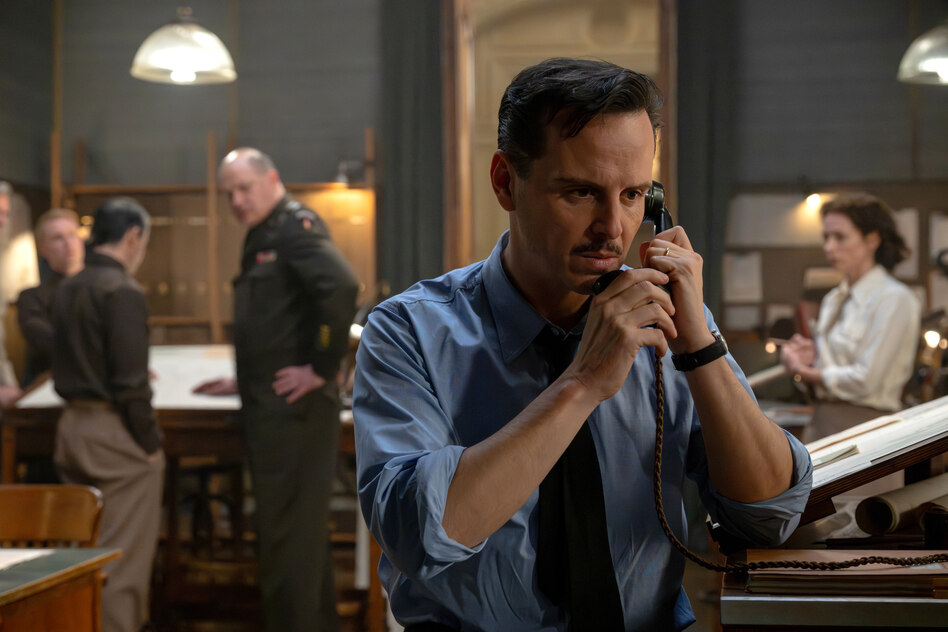
The fact that it rains constantly in the British Isles is a myth, but the weather still plays a big role for the British, and the umbrella has long been one of the indispensable props of a true gentleman. So it's no wonder that the English film "Pressure" just shy away from postulating that a weatherman and his weather forecast had a decisive influence on the outcome of the Second World War.
We are talking about Captain James Stagg, the leading Scottish meteorologist of his time, who was appointed chief meteorologist of the planned Operation Overlord in early 1944 and ensured that the Normandy landings were postponed by one day, from June 5th to 6th.
And that meant much more than simply postponing a trip for a day because of bad weather, because the opening of another front in Europe was a complex, complicated and extremely risky operation: The date at the beginning of June was chosen because there was a full moon in those days, a prerequisite for nightly preparations for the landing. For which it was necessary that the sea state in the English Channel was not too high, otherwise the Allied landing craft would not have been able to reach the coast.
“Pressure”. Director: Anthony Maras, with: Andrew Scott, Brendan Fraser and others. United Kingdom/France 2026, 100 min.
It was also not allowed to rain too heavily, as that would have prevented the preparatory bombing of the German positions. So a lot had to come together for the most elaborate invasion in history to have any chance of success, and one of the most important aspects of that was the right weather.
As is well known, even today, 80 years later, weather forecasts are still only partially reliable, despite the enormous amounts of data processed every day. In 1944, in analog times, meteorologists had significantly less data at their disposal and no computers to analyze the data volumes and calculate probabilities, but only their own experience and expertise.
It may sound terribly dry that “Pressure” is essentially about the conflict over two different methods of analyzing weather data. The fascinating thing about Anthony Maras' drama, however, is that it shows in an astonishing way how cinema is able to make any activity, no matter how mundane, seem enthralling and, yes, sexy, especially when it is not a physical activity but mental work.
One inevitably thinks of the numerous court films, which, especially in the Anglo-Saxon world, use the jury structure to show again and again how thrilling it can be when fate is changed through the sheer power of words. It helps, of course, when an eloquent, clever person like Stagg is played by Andrew Scott, an actor who acted as Moriarty in the BBC series “Sherlock” in equal measure dark and seductive, but above all radiated enormous intelligence.
Given his charisma, Scott can also risk making his character initially decidedly unsympathetic: from the first moment his Stagg takes up the new position, he exudes arrogant, but as it turns out, completely justified, arrogance, chases subordinates around, and doesn't care about scoring sympathy points. Quite different is his American counterpart, the meteorologist Irving Crick (Chris Messina), with whom Stagg quickly finds himself in a duel for the attention of the man who will ultimately make the serious decision: the American General Dwight D. Eisenhower (Brendan Fraser).
The two meteorologists use two different methods of weather forecasting: While Crick analyzes old weather patterns and uses patterns to make predictions for the future, Stagg tries to collect as much data as possible from weather stations and balloons, analyze them and thus come to a forecast.
Maras creates magnificent scenes here when Stagg presents his data to the assembled military leaders, knowing that the military wants a clear, reliable weather forecast, which of course he cannot give. Meteorology is not an exact science, but in this case an incorrect weather forecast would not just mean that you would get wet, but that thousands of soldiers would die and perhaps even the Second World War would take a different course.
It is doubtful whether a failure of the landing in Normandy would actually have resulted in a different outcome of the Second World War; it would undoubtedly have prolonged the war. For a pleasantly short, compact one hundred minutes, the responsibility for the welfare and woe of the troops in “Pressure” and with it the fate of Europe rests on the shoulders of the meteorologists, whose otherwise tranquil existence is for a moment at the center of world history.
Read the full story at the source
Source: taz