
Germany · taz · · 44m
Social cuts: Individual assistance for people with disabilities is threatened
Deutsch (original) · Auto-translated to English
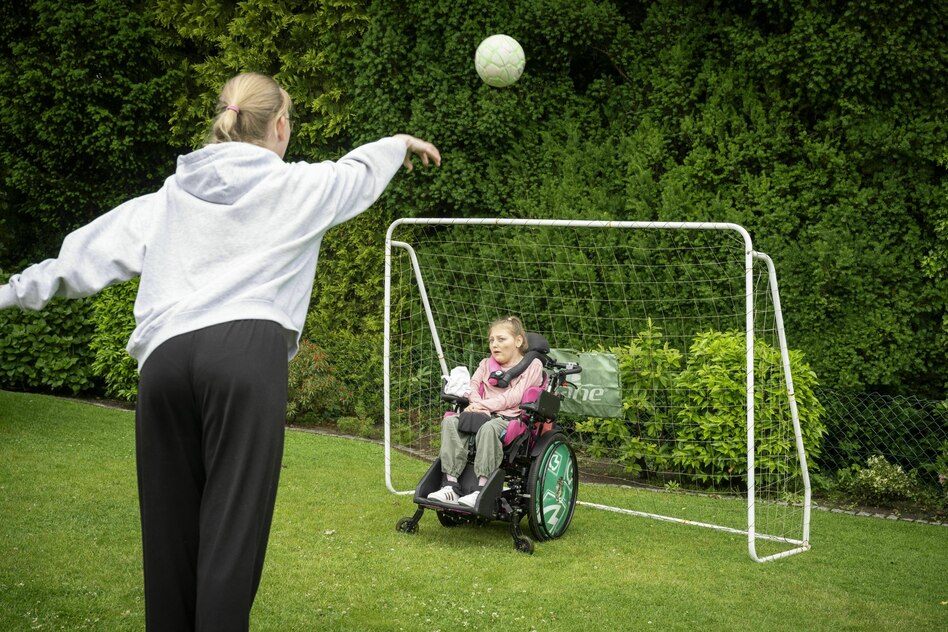
14 weeks of vacation a year are not always cause for joy. Martina Bell, laboratory technician and mother of a 22-year-old daughter, needs general planning for the time when her daughter's support center is closed. Because daughter Luisa has several limitations due to a rare genetic syndrome and has the highest care level of 5.
“During the holidays I have people I trust, young people from the volunteer service and a woman from Mexico, who look after Luisa,” Bell tells taz. Bell can then continue to work her part-time job in the laboratory despite the closed support center. The helpers are paid through the so-called “preventative care”, which allows up to 3,540 euros per year to be billed to the care fund to finance private helpers. This item is to be deleted in the planned Nursing Reorganization Act (PNOG).
“It would be a catastrophe for caring relatives if preventive care were to be eliminated as a result of the planned Care Reorganization Act,” explains Ulla Schmidt, federal chairwoman of Lebenshilfe. Lebenshilfe has launched a campaign warning of impending cuts in support for people with disabilities.
Three legislative proposals are pending. In the planned Care Reorganization Act, for which Health Minister Carsten Linnemann (CDU) is expected to present a revised draft next week, there are significant cuts not only in preventive care, but also through a new assessment system that makes it more difficult to get into a care level or even a higher level of care. Savings are also to be made in the so-called integration assistance, the assistance services for people with disabilities; a bill from the Federal Ministry of Social Affairs is due to come out at the end of the year.
Another bill for the structural reform of child and youth welfare from the family and education minister is to be dealt with in a first round on Friday (September 25th) by the Federal Council and then by the Bundestag at the beginning of October. According to the ministry, the draft relies, among other things, on “strong municipal structures instead of expensive individual aid” and is also intended to reduce costs. It stipulates that children with disabilities receive so-called “infrastructural educational assistance” in schools and thus increasingly supportive group offers. Lebenshilfe demands that “individual legal rights” to individual assistance must still be “legally regulated” and enforceable
According to the draft law currently available, so-called preventative care should be eliminated and partially replaced by, among other things, a monthly “social space budget” that is around 40 euros higher per month than the previously applicable relief amount. However, other services must also be financed from this budget than just replacement carers. This “budget” can no longer be saved, but must be used monthly. “This means that the aid that is increasingly required during the school holidays could no longer be adequately financed,” says Bell.
The planned reform of integration assistance, the costs of which have risen sharply in recent years, is raising great fears among affected families. The key word is “pooling”. This means that an assistant should look after several people with disabilities at the same time at university or during leisure activities. 1:1 accompaniment, where an assistant accompanies a single person with a disability, should become an exceptional case - as long as this is “reasonable”, according to the recommendations of the Prime Ministers of the states and the Federal Chancellor on the reform of integration assistance. “The service providers”, i.e. the authorities, decide on reasonableness. “Living in your own apartment with individual assistance is made considerably more difficult,” warns Lebenshilfe.
Petra Willich, consultant at the “Self-determined Life in North Hesse” (SliN) association in Kassel, reports to the taz that there are already cases in which only one assistant accompanies several children in class. “This is not possible for all children, it depends on the needs,” explains the consultant, “for example, if a child on the autism spectrum is overwhelmed by lessons and has to go out the door, then the assistant should of course go with them and then cannot look after the other children.”
When it comes to supporting people with disabilities who want to live independently and need help from assistants for several hours a day, Willich has observed that “the applications are now taking a very long time, it’s dragging on.” The responsible authorities sometimes tried to reduce the number of hours of assistance required in order to reduce costs. “If someone needs help 24 hours a day, they might only be approved for 22 hours,” says the consultant.
If you need support around the clock, you can get 25,000 euros a month in costs for integration assistance. A wheelchair user who needs help for three hours a day, on the other hand, may only charge 4,000 euros for support. Depending on the regional regulations, integration assistance is financed by local social welfare providers or by state authorities.
If this support for individual living is no longer paid, those affected would have to rely on residential facilities for adults with disabilities. The waiting times for these residential facilities can be several years, say those affected. The nightmare is that you might have to go to a nursing home for seniors at the age of 40 because there are no other alternatives.
The Federal Participation Act, which came into force in 2016 and is intended to implement the UN Convention on the Rights of Persons with Disabilities, was intended to transform integration assistance from a welfare benefit into a “person-centered benefit law”. According to Social Code 9, “social participation” services are provided in order to enable those entitled to benefits to “lead a life that is as self-determined and responsible as possible in their own living space and in their social space or to support them in this.” According to statistics, the expenditure on integration assistance for “social participation” rose from 14 to 21 billion euros from 2020 to 2025. That's why the states and municipalities are now sounding the alarm.
The question is how this will develop further. “Some people are very worried that they will no longer be able to live as self-determinedly in the future and will then have to go to an institution,” says Willich, “I can only tell them: we don’t know what’s coming yet.”
Read the full story at the source
Source: taz