
Germany · taz · · 53m
Parliamentary election in Morocco: The king's subjects are tired
Deutsch (original) · Auto-translated to English
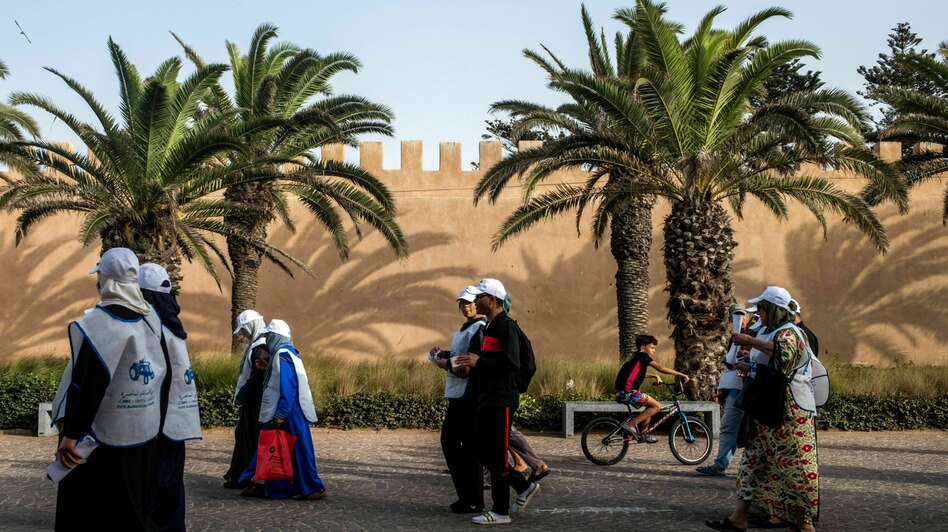
T he mild late summer weather has attracted many day trippers to Rabat's parks. On this Sunday in September, children are playing in front of the entrance to the medina, people are quietly discussing things and reading the newspaper. The Moroccan capital is recovering from the last few months with heat waves, floods after heavy rain and the rush of visitors to the Africa Cup of Football. Still there: a deep frustration with the increasingly expensive life in the country and a lack of perspective, especially for Morocco's youth.
Since the Gen Z street protests last fall and the storming of the Spanish enclave of Ceuta at the end of July, one thing has been clear: the majority of Morocco's youth feel excluded from the continent's biggest economic boom. In the election campaign for the parliamentary elections that took place on Wednesday, many of the 27 parties that took part only presented vague concepts for changing this. And at 38 percent, voter turnout was also as low as it was 20 years ago.
Because everyone in the country knows that the important decisions in the country are made by the king, together with a circle of close confidants. Only 2 percent of 18 to 24 year olds cast their vote on Wednesday. It is a clear rejection of the political elite. Of a monarchy that is viewed rather positively from abroad: as investment-friendly and well organized. From the outside it is difficult to understand why so many young Moroccans want to leave. But the non-voters, like the mass influx of thousands of Moroccan migrants on Ceuta a few weeks ago, are making it clear to the royal family: things cannot go on like this.
This article was made possible through the financial support of the Forschungsfonds Ausland e. V. You can support the research fund through a donation or membership.
A few days before the parliamentary election: Groups of young people march through the streets of Rabat and distribute flyers with campaign slogans. “Future”, “justice”, “a better life” are written on the colorful leaflets.
If you're not quick enough, you'll get party advertising handed to you. The nimble teams are practiced at this, they usually work for telephone companies or one of the many fashion stores that have opened in the meticulously clean shopping arcades of Rabat or Casablanca in recent years. “For 250 euros a month,” says one of the team openly. The student smiles professionally at passers-by and says quietly to the reporter: “Everyone wants to leave because of these low wages.”
A tourist couple from Saudi Arabia with Channel shopping bags in their hands also stands in front of the “Le Mall du Carousssel” shopping center. This morning you are probably the only ones who take a look at a flyer from the ruling party PAM.
Everyone else drops the pieces of paper as soon as they are a few meters away from the advertisers. An unusual picture in a city that has been committed to absolute cleanliness for years.
When the party's paid flyer distributors for “Authenticity and Modernity” moved on after a short time, dozens of colorful papers lay on the floor. Onlookers stop and shake their heads. “This rubbish is probably the only thing this election will bring us,” laughs a man in his mid-50s. When asked whether he will vote, he turns away angrily and walks on in silence. He looks around the square, perhaps to see whether an auxiliary officer in civilian clothes, a so-called Moqaddem, is standing nearby. Many Moroccans are certain that the eyes and ears of the Makhzen, the royal power apparatus, are everywhere.
And so the election campaign was dominated by a mixture of caution and anger. Since the wave of arrests last fall, only a few have dared to criticize publicly.
And the constantly rising prices, which do not match the record economic reports announced by the government, are also angering the king's many supporters.
Not only registered voters, but also many candidates stayed away from the elections. Only a few MPs or candidates appeared on the street. Interview requests went unanswered and many party offices remained closed on election day.
They also preferred to send advertising teams consisting of students to the PAM office. The Liberals are junior partners in the three-party governing coalition. Recordings are undesirable here, the atmosphere seems tense. Maybe because the citizens' ignorance of the political elite is particularly impressive here? Most passers-by give a wide berth. Anyone who asks about the party program will be kindly referred to the party website.
On television channels loyal to the state, the three governing parties RNI, PAM and Istiqlal repeatedly pointed out to voters the importance of the two historic missions they see Morocco facing in the next five years: the implementation of the autonomy plan for Western Sahara, i.e. the de facto annexation of the area to Morocco. And the implementation of the Football World Cup. Here, too, the sidewalk is littered with unread flyers.
A taxi driver sums up the opinion of many older Moroccans like this. "Voting is like pouring water on sand. Many parties support business people or the other way around. But they don't represent their voters."
Mohamed Chaoui is in his mid-50s and doesn't even bother with the party programs. Nobody knows them anyway. "We are interested in the increase in gasoline and gas prices and inflation. Not in foreign investments and new factories where you earn 350 euros. My son, at 28, still lives at home instead of starting a family."
Like 16 million others, around half of those eligible to vote, Chaoui registered to vote. He wants to vote for the PJD. The Islamists from the “Justice and Development Party” were the prime minister until 2021, but then lost 90 percent of their parliamentary seats. As in all Maghreb countries, religious forces squandered their reputation for incorruptibility after the Arab Spring in 2011. Because they also use their power mainly to give party members jobs in the public sector.
“At least inflation was lower under then Prime Minister Benkirane,” says taxi driver Chaoui.
On Thursday it was clear: the Liberals from the governing party PAM won the race. This means that the current government coalition will probably lead the country of 32 million people during the 2030 World Cup, for which construction, renovation and investment is already underway throughout the country.
The largest football stadium in the world is being built in El Mansouria, a few kilometers from the glittering world of the economic metropolis of Casablanca. The “Grand Stade Hassan II” will be completed in two years and will have a capacity of 115,000 spectators. One of the construction workers is Youssef, 21 years old, who grew up right next to the construction site, which is active day and night.
Like many residents of the “Bidonville”, the poor district, his family, like thousands of others, was relocated for the construction of the stadium and the associated infrastructure. Youssef is satisfied with his job as a laborer. “But like all my friends, the wages are not enough to start a family of my own.”
On July 31st, after a friend had already arrived in Ceuta motivated by a Tiktok video, he swam to the Spanish exclave with four colleagues from Fnideq. “It was a spontaneous adventure, but also an act of desperation,” he says. "Three days later I was working here again. You can't talk about it or you'll face imprisonment."
According to the human rights organization AMDH, of the 1,500 arrested over the storming of Ceuta, 59 are still in prison. After returning from Ceuta, they were arrested in their hometowns or on the way there. Most of them because they had posted photos or videos from Ceuta. Another storm was called for on Tiktok on election day. As long as my friends and I don't have a long-term, secure and better-paid job in El Mansouria, we will leave again at some point. Maybe to Melilla or directly to Europe. This is what our choice looks like.”
An older colleague at the next table in the café overheard and advised Youssef to stay. "Europe has also become more expensive and has changed. I think it's good that we don't have to experience chaos like in other countries around us. And the only reason for that is the king."
Others with whom the colleague plays cards want to vote for PAM because of the World Cup. "I will vote for her because of Fouzi Lekjaa, the head of the football association. As prime minister, he will bring the World Cup final to Morocco," says foreman Mohamed. In addition to Morocco, Portugal and Spain are also hosting the World Cup finals.
Lekjaa is a member of the PAM and is currently the Minister responsible for the state budget. As head of the national football association, he earned a reputation as a doer with the Africa Cup of Nations. "The king can't take care of everything, say many people who are asked about the topic. But the Africa Cup of Nations has hardly alleviated the social divide in the country. Airbnb landlords, hotels and large service providers have benefited.
“I had a job as a hostess for two months and looked after guest teams,” says Touria from Rabat. "After that it was over. Many of my colleagues, unlike me, had finished their studies and are keeping themselves afloat with temporary jobs. And living with their parents. That's not a perspective on life." Touria did not vote.
Something like this is currently being discussed everywhere in Morocco, Africa's model country for investors. But only behind closed doors. Few want to speak publicly about their economic situation.
Less than 10 percent of Moroccans between 24 and 35 years old have activated the voter registration necessary to cast their votes, far fewer than in the last election in 2021. “This is our cry for help from politicians,” says Sara in a cafe near the University of Rabat. She wants the abolition of child marriage, an end to the persecution of LGBTQ activists and the introduction of unemployment benefits. And unlike her friends, she voted and gave her vote to the FGD, the Federation of Left Democrats. "Your representatives speak openly about these taboo topics. We young people must not leave politics to the old right now."
Because videos have appeared on social media timelines in the last few days, especially among minors, calling for another storm on Ceuta, there are police officers again at the Casablanca Voyageurs train station and at the main train station in Rabat. 3,000 uniformed personnel were also sent to Ceuta's neighboring town of Fnideq. They will probably be stationed there long-term to prevent another storm.
“The World Cup has become a national project,” says Lamia Elfehaim from the Arab Reform Initiative. "But the focus on 2030 comes at a high price. The necessary investments in education, hospitals and other social services are being diverted from poor and rural regions."
For Nabila Mounib, Ceuta and the youth protests a year ago are indicators of social division in the country. The leader of the United Socialist Party (PSU) is a member of the Moroccan parliament. She calls for the redistribution of state spending on schools and hospitals. One of the few powers of parliament is the influence on the budget, she emphasizes.
The PSU is one of the few parties for which real party members campaign on the streets. Nabila Mounib also campaigned on the streets in Casablanca. "For young Moroccans, mega-projects like the new port of Tangier provide low-income jobs. And 3.3 million Moroccans continue to leave schools where it rains in the winter without a qualification."
As part of their private citizens' initiative “Second Chance School”, returnees from Ceuta should also be able to obtain a degree over the next five years. “Our ideas against the social division in the country are receiving more and more support,” says Nabila Mounib. But many of her fans also stayed at home on Wednesday.
Read the full story at the source
Source: taz