
Germany · taz · · 56m
Novel by Shida Bazyar: The Ghost from Off
Deutsch (original) · Auto-translated to English
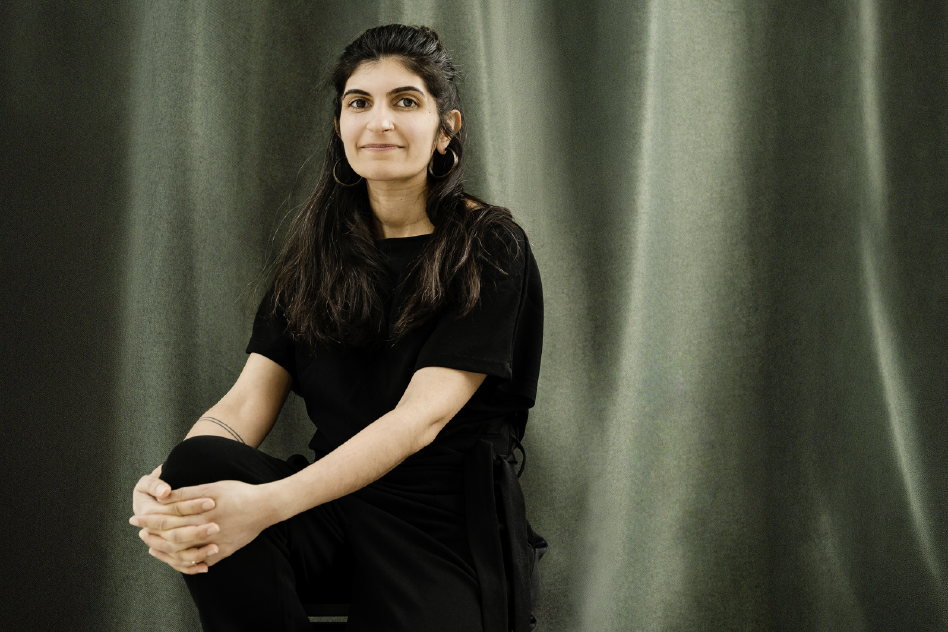
At the beginning of this book it is said about the scene of the event that it is a place “that is like so many other places and yet is only this one”. The writer Shida Bazyar calls him Heimesbach in fiction, based on the town of Hermeskeil in Rhineland-Palatinate, where she was born and grew up.
On a historical level, her new novel tells what happened in Heimesbach from the mid-1920s onwards: how the NSDAP local group was founded, how the place became a “Gaumusterdorf”. How many Heimesbach residents turned away from the Jews in the village and how the latter were sent to the camps. How on the night the Germans called “Kristallnacht,” the local synagogue was destroyed and desecrated. How the place became “Jew-free”. “They were early in the process,” it is said about Heimesbach, “in the murder process.”
Starting from this historical level, Shida Bazyar jumps into various other eras in “The Gaps”. At a time in which “after the dictatorship of the National Socialists (…) the dictatorship of indifference” reigned and in which, for example, the camp doctor of the SS special camp Hinzert, who was present at the executions, was quickly rehabilitated.
Shida Bazyar: “The Gaps”, Kiepenheuer and Witsch, Cologne 2026, 512 pages, 25 euros
It jumps to the late 1970s, when the series “Holocaust” is on German television, then to the late 1980s, when the Iranian couple Bahman and Parvaneh flee to Heimesbach as a result of the Islamic Revolution, raise their children there, find friends, take part in St. Martin’s parades and learn how to celebrate Christmas “properly”. Finally, into the 2010s, when the migrant children's generation comes of age.
In her debut “It's Quiet at Night in Tehran” ten years ago, Shida Bazyar wrote about an Iranian revolutionary who flees the mullahs' regime to Germany; She was nominated for the International Booker Prize 2026 for the recently published English translation. “The Gaps” is now on the shortlist for the German Book Prize and is considered one of the favorites, probably due to numerous enthusiastic reviews.
The book is about home and non-home, about continuities of xenophobia, but also about humanity and solidarity, which continue to exist alongside it. The themes of belonging and home are spelled out when Parvaneh once promises herself in a social gathering with German friends and instead of “in my hometown” says the words “in my Heimesbach…” and thinks in her inner monologue: “Her mind would only be able to feel home anyway if she said Watan (Persian: Heimat, editor’s note) to it, otherwise it was just a term, a shell, something interchangeable.”
The author chooses a special narrative voice for “The Gaps”: A dead woman looks at Heimesbach like a ghost from offscreen; she lived in the town as a refugee for three years, then went to the USA and died in an accident. This narrator now speaks to her sister Lu and tells her about Heimesbach's history. There are a lot of characters from many different times that Bazyar tells about, so you can ask yourself why this seemingly cumbersome narrative perspective is needed.
But like many things in the novel, this becomes clear as the plot progresses. The dead narrator represents the higher level of reflection; she oversees events with an Olympian eye and can assess how social phenomena continue. She can survey the century, looks into people's houses at different times, Bazyar makes her say:
"A place is the difference between the present and guilt, because places are always innocent, they are quite sure of that, even at night when they lie awake alone and think about it more closely. (...) A place is the product of its biographies and generations, it expands with every new birth and even death is not a loss for it, but the exponential growth of all its memories, at least for the days around the funerals, then that usually goes away again."
It's easy for readers to get caught up in such lines, similarly in the chapter "Everything went on, Lu. It just went on and on," in which the narrator summarizes the failures of local processing in the country of the "memory world champions".
The very late coming to terms with it in her hometown led Bazyar to write this novel - it was only when she read the non-fiction book "Jews in the Gaumusterdorf. On the trail of former Jewish neighbors in Hermeskeil" by Heinz Ganz-Ohlig (2018) that this idea matured, she writes in the afterword. She wants to close the “gaps”; those in the place and in the collective memory of the place. She describes the fictional Heimesbach as the "place where there was forever a gap in the air. As if something had been taken from the air and that's why it's perhaps so difficult to breathe when you want to go for a walk in the town, that's why perhaps every silence is an assertion, but no one is honest enough to say it out loud."
The story of the character Resi alone would have been material for a great historical novel: Resi worked for over six decades in a department store run by the Jewish couple Lichter, who were later murdered by the Nazis. The department store is simply reopened after the Nazi era and it becomes a “Wagner fashion store”. In one of the strongest chapters, Resi reflects with her granddaughter Tanja on her life and behavior during the Nazi era, remembers why she didn't want to become a BDM leader and why she resigned from the Jewish department store owners, even though she "never said a bad word about the Lichters" (incidentally, the chapter is August 1992, and pogroms are breaking out again in Rostock-Lichtenhagen).
Why Bazyar looks into different biographies at different times - you will understand that too with time. She is concerned with parallelism and simultaneity, she is concerned with differentiation. The friendly Mr. Völker, who helps Parvaneh and Bahman to settle in Heimesbach, is just as much a part of the story as the Kurdish couple Azad and Asrin, who bring a completely different migrant perspective to Heimesbach. Sometimes it's hard to follow as a reader; It's probably better to read the book twice to understand all the connections.
The regional dialect in the Hunsrück plays an important role. Whoever speaks it, whoever understands it and penetrates it, has become at home or at home; the others will always remain the others to a certain extent. Bazyar very delicately shows the mechanisms of being included and excluded in the village or small town; it seems like a commentary on today's stark political divide between the province and urban space.
Shida Bazyar stays close to her characters throughout the entire story. She is even able to deconstruct and describe a television documentary about a Jewish survivor of the place in such a way that the reader feels the lump in her throat getting bigger and bigger until the end of the chapter. In the overall construction of the novel, the dimension of horror becomes clear in the knowledge that a story similar to Heimesbach's could be told about hundreds of German cities.
The Gaps is rightly celebrated, both for its content and its form. The Nazi history and everything that follows it, and the “gaps” that resulted from it, form the center of the work. It's no wonder that the novel was already introduced as school reading material; Bazyar links German post-Nazi history extremely closely with the exiled Iranian perspective on German society and German politics. In view of a looming new authoritarian age, new realities of exclusion, persecution and anti-Semitism, “The Gaps” can be considered the novel of the hour.
Read the full story at the source
Source: taz