
Germany · taz · · 2h
Director Visar Morina in conversation: “We should talk more about money and monetary policy”
Deutsch (original) · Auto-translated to English
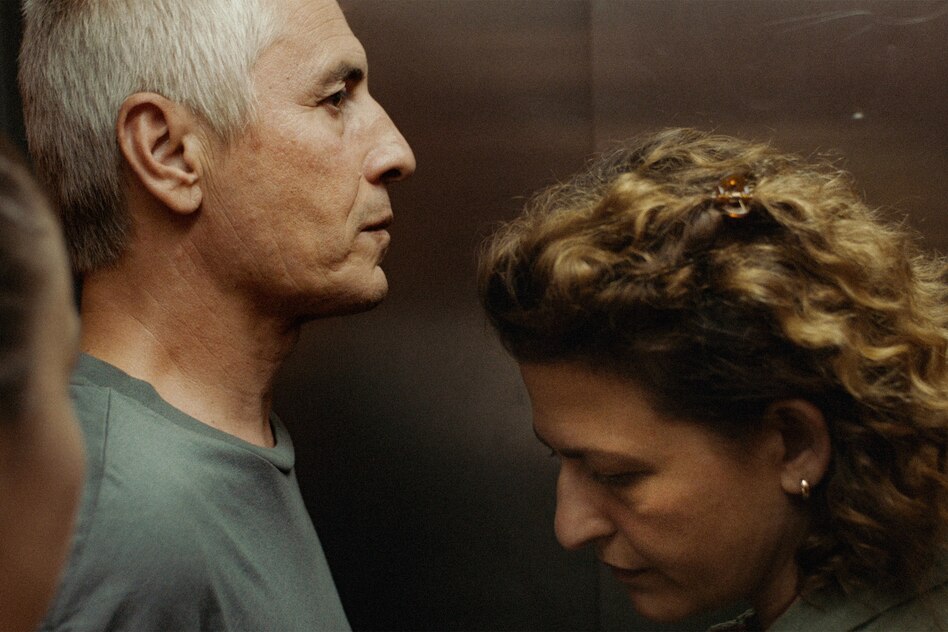
In “Of Shame and Money,” which won the Grand Jury Prize in the international feature film competition at the Sundance Festival, a couple in Kosovo fights against social decline. Rising rents, precarious work and debts not only put the family under pressure, but also their solidarity. Director Visar Morina, born in Prishtina in 1979 and came to Germany at the age of 15, tells the story of migration and belonging again after “Babai” and “Exile” - but this time primarily about money, class and the question of what poverty does to people. The taz spoke to him about economic dependence and Germany.
taz: Mr. Morina, your film shows people who work tirelessly and yet continue to decline. What does Shaban's failure tell us about the promise that performance leads to security and recognition?
Visar Morina: This promise is disappearing worldwide. The less money I have and the more everything becomes a question of money, the more likely I am to fall into a state of psychological wear and starve myself emotionally.
taz: In the film, almost every help creates a new dependency. What can solidarity look like under such conditions?
was born in Pristina in 1979. He studied film directing at the Cologne Academy of Media Arts. His feature film debut “Babai” was Kosovo’s Oscar entry in 2016. His second feature film “Exile” screened at the Sundance Film Festival in 2020.
Morina: I believe that if everything, really everything, is evaluated from a financial point of view, then solidarity also becomes a kind of investment, even if it is in one's own self-care. Around 2016 there was an interesting discussion about refugees owning cell phones. The cell phone as a luxury item did not fit into our image of a person on the run. A cell phone is the air a refugee needs to breathe: they have to be able to locate themselves and communicate. But to get back to the question: I don't know whether, in a thoroughly commercialized society, it is possible to offer help without also attaching a bill. There are still moments of solidarity in the film, especially between the couple, also to create contrast.
taz: You also saw your parents in Hatixhe and Shaban if they hadn't gone to Germany. At the same time, you describe Kosovo as a social laboratory. How personal is this view?
Morina: I talk about my parents to place the story and give me emotional access. For me, Hatixhe and Shaban are a couple who get caught between the tracks and try to ensure the survival of their children and their family. They are looking for a place in the world, as people, as a couple, as a family. And Kosovo as a social laboratory: through the many disruptions that society has gone through and because you can observe structures that are in the process of being re-emerged. You get a different feeling for how a society is formed. From a German perspective, some of it is more reminiscent of history books that you learned in school when there were no workers' rights and the like, but some of it is reminiscent of today when it comes to the development of money distribution. In this respect, for me Kosovo is a look forward and backward.
taz: Rising prices, unaffordable rents and precarious work determine the characters' everyday lives. Has the economic replaced the political?
Morina: For me it is one. I wouldn't know what the political would be without the economic. In the end it's all a question of money, or so it seems to me, as well as class and racism. I think we should talk more about money and monetary policy. I have a bit of trouble with the label “political film”. I often find the political aspect of such films to be a ribbon that you pick up from the packaging department after paying at the checkout. What was interesting to me about the character of Shaban was that over the course of the film he becomes aware of where he stands, how he relates to the others and under what circumstances. And in doing so he politicizes himself, at least that is what I mean by “political thinking”.
taz: Because a film always has to start from the concrete lives of its characters?
“Of shame and money”. Director: Visar Morina. With, among others, Germany/Kosovo/Slovenia/Albania/North Macedonia/Belgium 2026, 129 min.
Morina: I think that, at its best, a film tells something about the time and place in which we live, and I don't know how that can be done without showing the private and without showing the private effects of the place and time in which we live. So yes, even if it sounds trite, but yes, and I believe exclusively, otherwise it loses its concreteness and therefore becomes meaningless.
taz: You came to Germany with your parents and brothers when you were 15. How has your view of the country changed?
Morina: My view of Germany has changed. The way my family lives in Germany - one of my brothers teaches in Münster, another is a programmer at Volkswagen - and the fact that I can make films here speaks highly of this country. At the same time, I have the feeling that we are currently losing many of these things we take for granted.
Morina: For example, the fact that a Minister of State for Culture thinks he can remove Berlinale director Tricia Tuttle and call a meeting without inviting her. He needs a certain level of self-evidence about power in order to believe he can allow himself that. At the same time, the comparison between Kosovo and Germany makes me a little more conservative because I really appreciate many things here. I think it makes sense that public broadcasting does not depend directly on politicians' money. There are institutional structures that can be improved, but I think they are essentially very good.
Read the full story at the source
Source: taz