
Germany · taz · · 1h
Presentation of the Axel Springer Award: Peter Thiel, the leftist
Deutsch (original) · Auto-translated to English
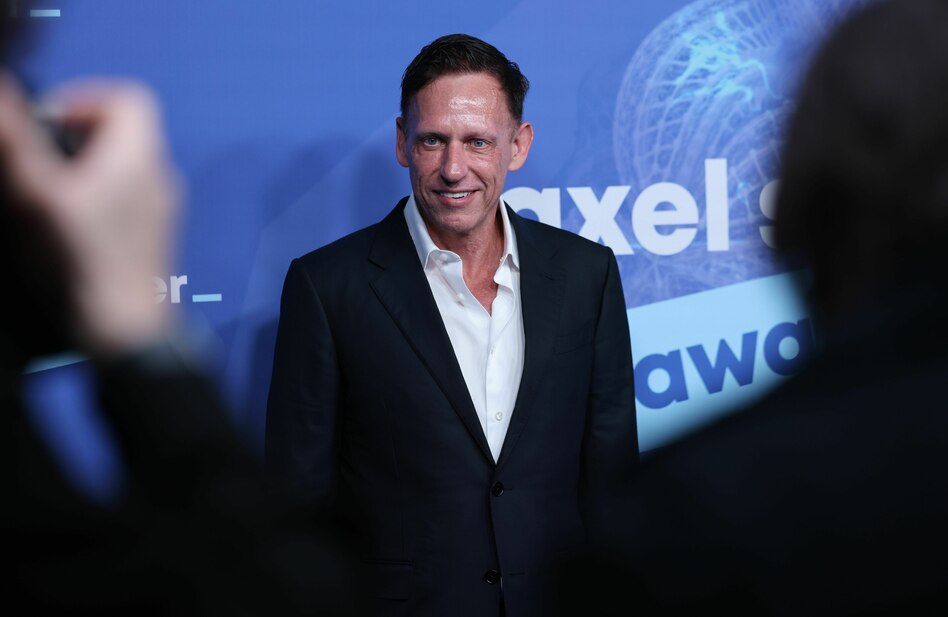
When tech billionaire Peter Thiel received the Axel Springer Award in Berlin on Thursday evening, he appeared on stage to be sympathetic to the Left Party's election victory.
You have to understand why so many young people in Berlin voted for Die Linke, said Thiel. If he said he understood why people vote for the AfD, everyone would think he was an AfD supporter. “But I thought that if I said I understood why people vote for The Left, then no one would think I was a communist sympathizer.”
Thiel went on to say that people were worried about housing and rent prices. If no one else talked about it, The Left would continue to win. But the party also has no answers, said Thiel, “and they will probably cap rents in Berlin and turn the city into a slum.”
Since the Axel Springer Prize is an “ideal prize”, no trophy was presented to Peter Thiel. Instead, the right-wing libertarian investor was showered with adulation that was unpleasant even by the standards of such events. Springer boss Mathias Döpfner called Frankfurt-born Thiel “the most influential German of our time” and “the best venture capitalist of the 21st century.”
Afterwards, a video played that retold Thiel's life: pictures from earlier years, videos from stock agencies, dramatic music and a woman's voice that can no longer keep up with the superlatives: "pioneer", "architect of a new era", "philosopher". A photo shows Thiel with Trump, whom the investor supported as one of the first rich donors in 2016.
The event hall in the Axel Springer House is bathed in blue-purple light this evening. There are a lot of older men in suits sitting in the not too many seats. Among these older men are not only Thiel friends, such as Palantir co-founder Alex Karp, but also ex-Welt editor-in-chief Ulf Poschardt and a somewhat bored-looking Markus Söder.
The host Döpfner aptly described his own house as “the epicenter of evil, the right-wing conspiracy” and a “magnet of dark forces”. He briefly spoke about the over 200 demonstrators in front of the building, some of whom came dressed as queer Gandalfs in the style of Tolkien fan Thiel. "Perhaps we should have had anti-Semites, Islamists and organized crime clan bosses here, then the event would have taken place without protests. This is Berlin, ladies and gentlemen."
Döpfner himself is also connected to Thiel through family ties. His son Moritz once worked in Thiel's family office. When Döpfner Junior became self-employed, Thiel subsidized his venture capital fund with $50 million. Both are investing, among other things, in the German drone start-up Stark Defense.
The eulogy for Thiel was given by Bari Weiss. Weiss made a name for herself as an “anti-woke” columnist at the New York Times in 2017. Last year, Trump confidant and Paramount boss David Ellison appointed her editor-in-chief of CBS News, even though she had no television experience. Weiss once saw herself as a left-liberal centrist. In reality, however, it functions more as a hinge between the Trump camp and the center, which in turn sets it apart from positions critical of the system from the left.
Weiss' speech only became exciting when she briefly interrupted her torrent of homage to indicate a small disagreement with Thiel - namely with a view to the press and the "important role it plays in preserving liberal democracy." She herself sees the press as "essential", as her "life's work", and as "an instrument of freedom". She didn't elaborate on what Thiel thinks about it.
He himself took the opportunity to clarify on stage a short time later. Many media outlets have now “degenerated into a left-wing hate factory.” Bari Weiss and Axel Springer, on the other hand, are the non-conformists in a “very one-sided media landscape”.
It is these small moments where the façade of the brilliant investor was broken through and behind it emerged a man whose business and his thinking may be leading humanity closer to the abyss. Weiss tried to turn the fact that Thiel was unable to say in a recent interview with the New York Times whether it would be a good thing if humanity continued to exist into a humorous punchline.
Like many of his fellow Silicon Valley tech bros, Thiel is fascinated by apocalypse scenarios. Technical progress must continue to advance despite all existential risks, and capitalism and innovation must be protected from the socialist danger. With his surveillance software Palantir, Thiel helps governments around the world control their populations, for example through “predictive policing”. Data analysis also helps the military develop AI-supported target detection and drone control.
There was another point that evening when this eeriness briefly flashed through - during a video message from the former world chess champion and conservative Putin critic Garry Kasparov. Kasparov said he met Thiel in 2009, and after a conversation the two decided to write a book together. But although they agree on the diagnosis of the problems, political differences quickly emerged.
Thiel's solutions "involved the most radical political means that exceeded even my own appetite for risk and disruption," Kasparov said. “To be honest, I even hesitated about whether I should even take in this message.” Kasparov concluded with a somewhat desperate appeal: “We, the people (…) must remember that our technology must serve the people.” Technology is neutral, but people “will always have the monopoly on good and evil.”
The organizers also showed a video message from Thiel's business partner Alex Karp - even though he was sitting in the front row of the hall. In his video for the "last German" Peter Thiel, Karp quoted not only Goethe, but also Heinrich Heine's "Winter's Tale": "A new song, a better song, O friends, I want to write to you! We want to build the kingdom of heaven here on earth."
Karp related these lines to Thiel's creative spirit and praised him as a warning about "the legitimate reasons for illegitimate movements, socialism in its current form." Marx's friend Heine, on the other hand, had something different in mind. He wrote his “Winter’s Tale” entirely in the spirit of early utopian socialism.
Read the full story at the source
Source: taz