
Germany · taz · · 3h
Queer life in Mecklenburg-Western Pomerania: Making you feel like you're not alone
Deutsch (original) · Auto-translated to English
In front of the main train station there are men in black tank tops, women with Pride umbrellas, children with their mothers and young people with Antifa rainbow flags. Around 1,000 people gathered in Neustrelitz. Christian Arnold Krüger is dancing in the middle. The 40-year-old wears a top made of small, shiny green and purple plates. His outfit shines and flashes in the sun from the hem to the pink flat cap. He's definitely shouting into his microphone. Today they are all fighting for everyone to be able to live and love how or whoever they want.
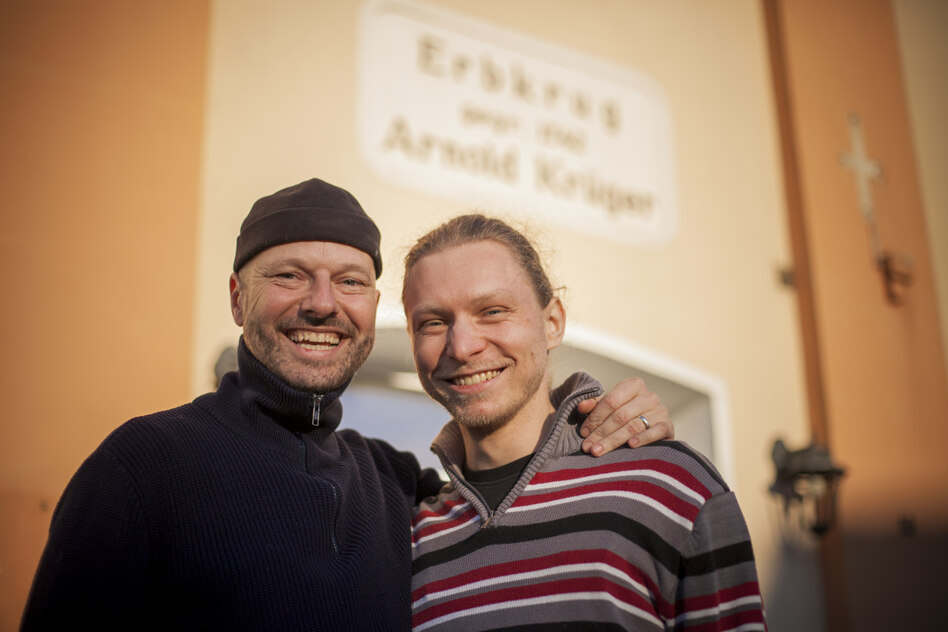
Krüger is the chairman of Queer-Strelitz e. V. The club organized the Neustrelitz CSD. The 40-year-old was born in Neustrelitz, but lived in Berlin for 20 years. For two years now, he and his fiancé Jens Purschwitz have been renovating an old family estate in his homeland. “We both talked about moving back to the village on the first date,” says Krüger. The two feel comfortable in the country: "People have gotten to know us for over two years now, they see that we work really hard and are not aloof Berliners," says Krüger, "And we say hello! That's very important in the village."
Even before Krüger moved to Blankensee, he was committed to Queer-Strelitz. In 2018 he helped set up a CSD in Brandenburg for the first time. Queer-Strelitz was founded in 2019. The association is planning joint mushroom picking, river trips, a queer beach volleyball tournament, cinema evenings, readings, queer Christmas parties and winter hikes. “Queer structures hardly exist here in the country,” says Krüger. “Queer clubs are so important because they give you the feeling that you are not alone and that you can lead an open life.”
At the same time, the rights of queer people are still a thorn in the side of many. This is also why Queer-Strelitz did not rent her own space. People meet privately in members’ living rooms. “Our colleagues from queerNB in Neubrandenburg have had the rainbow flag torn down, the entrance door sprayed or right-wing stickers stuck up so many times,” says Krüger.
Queer-Strelitz gives lectures to schools or to the police and organizes the CSD every two years. “We want to be visible, even for people who would otherwise never have anything to do with queerness, and break down their prejudices through direct contact,” says Krüger. With shining eyes, he tells of an encounter on the dance floor at the CSD aftershow: “Someone stranger just came, hugged me and told me that two years ago he was a neo-Nazi.” Then he once went to a CSD just to have a look. “He was totally overwhelmed by how friendly strangers he actually hated were to him,” says the CSD organizer. “It changed his life.” The former Nazi is now a regular CSD-goer and has restructured his circle of friends, says Krüger: “Every hour of work, every hair pulled out is worth it.”
In 2028, hundreds of people will once again demonstrate dancing through Neustrelitz. Christian Arnold Krüger is looking forward to it, but at some point he doesn't want to have to go out on the streets anymore: "I hope that at some point we no longer need a CSD, that friends, employers, family and society don't care whether you are gay, trans, straight or bi."
Read the full story at the source →
Source: taz