
Germany taz
Trial against Patricia Schlesinger: This can take time
The trial of former RBB director Patricia Schlesinger has begun in Berlin. The accusation is infidelity. The defenders disagree. more...
Deutsch (original) ·Auto-translated to English
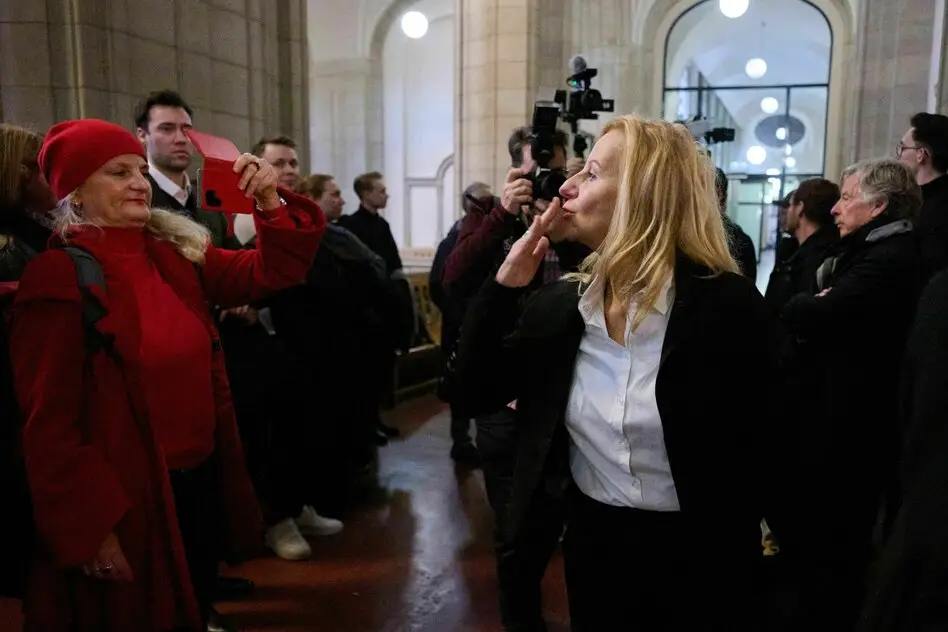
Patricia Schlesinger smiles. On Tuesday morning, she and her two lawyers quickly made their way through a crowd of people. Journalists are there, cameras, visitors and supporters of Schlesinger. She waved to one visitor and blew a kiss to another. She looks relaxed, confident of victory. So shortly after 10:30 she entered one of the largest halls in the Berlin district court.
Starting today, what is considered one of the biggest scandals in public broadcasting will be heard here. The public prosecutor's office accuses Schlesinger and three co-defendants of having damaged the RBB's assets.
In total, the four are said to have deprived the station of 1.8 million euros; it is about infidelity and fraud. The focus of the indictment is no longer everything that made the scandal so juicy four years ago: fine Italian parquet flooring on the executive floor, massage chairs for employees and a flashy company car. The Berlin public prosecutor's office is primarily accusing a system of salary supplements that was expanded under Schlesinger and increased the salaries of the management team.
Schlesinger is not the only one accused; the former administrative director of the broadcaster Hagen B., the former legal advisor Susanne L. and the former chairman of the board of directors Wolf-Dieter W. are also on trial.
Some of the defendants have already been through several lawsuits – under labor and civil law. Schlesinger has also already argued with the RBB in a Berlin court, including over her pension payment and the question of whether she has to pay damages to her former broadcaster. What the Berlin district court is now hearing, four years after Schlesinger's dismissal as RBB director, is the criminal matter.
The Berlin Public Prosecutor's Office accuses Patricia Schlesinger of damaging the RBB assets in 26 cases between 2018 and 2022; the other defendants are involved in fewer cases. Seven times it was said to have been particularly serious cases.
From April 2019, six members of the management, including Schlesinger himself, the accused general counsel and the administrative director, are said to have made annual target agreements. If they achieved this fully or partially, they received an annual bonus.
On Tuesday morning, the Attorney General broke down in detail who should have received how much bonus and when. There are sums between 27,000 and 56,000 euros that the management team is said to have received in addition to their annual salary for four years in a row. A total of 933,505 euros gross was paid, 223,722 euros to Schlesinger alone, according to the prosecution.
The allowances that Schlesinger and the head of the board of directors negotiated for taking over the chairmanship of ARD were also inadmissible. As per rotation, the RBB took over the chairmanship of the ARD in 2022. In return, the broadcaster granted the members of the management an additional 1,700 euros gross per month.
The spicy thing about it: The board of directors, which is responsible for controlling and supervising RBB's finances, is said to have known neither about this new remuneration system nor about the bonuses that were actually paid out. In doing so, Schlesinger and the chairman of the board of directors, W., had violated the broadcaster's principle of profitability and thrift. Schlesinger, the public prosecutor argues, wanted to “create a not insignificant additional source of income.”
The indictment consists of 498 pages, 46 of which are read out in the courtroom. The defendants' defense lawyers then took the floor and attacked the public prosecutor's office. All defense lawyers vehemently reject the allegations.
Nobody disputes that the bonus system was introduced and bonuses were paid for the ARD chairmanship. It's just wrong that the key supervisory bodies didn't agree to this. The public prosecutor's office did not even interview members of the board of directors during its three-year investigation. These could have confirmed that the board of directors had approved the allowance system.
Schlesinger's lawyer Oliver Sahan accuses the Attorney General's Office of "deliberate one-sidedness" in the investigation. The defense attorneys for Wolf-Dieter W. and Hagen B. cite minutes from board meetings from 2018, which show that not only the board of directors, but also the broadcasting board must have agreed to the payment of the bonuses.
Performance-related compensation, says Wolf-Dieter W.'s defense attorney, is a recognized instrument in public companies. Their introduction at RBB served to convert RBB into a modern broadcaster.
In contrast to the bonus system, two other parts of the indictment against Patricia Schlesinger seem almost silly. It's about dinner with Berlin's capital celebrities and a trip to London with her husband. Schlesinger regularly hosted small dinners in her apartment. For example, the head of the Munich Security Conference was there, another time the Berlin police chief or the chairman of the board of the Charité.
Schlesinger billed the broadcaster for these meals, which were not always clear to all participants that they were professional meals. The prosecutor meticulously explains what kind of food it was about: date, time, place and orders from Schlesinger ("table linen, dishes and glasses", in one case "fine dining"), what was available to drink - here the prosecutor stumbles when she recites the names of the wines, in any case: "alcohol in not inconsiderable quantities". In total, Schlesinger brought the station 4,871 euros with these meals. A trip to London with her husband, which is said to have cost the broadcaster 1,650.62 euros, was said to have been private.
But here too, Schlesinger's lawyer contradicts: The dinners corresponded to the commission of a director to represent her station to the outside world and to network in the city. The London trip was not private, but rather aimed at allowing Schlesinger to network with colleagues at the BBC. In both cases it was legitimate to bill the broadcaster.
The court has scheduled 56 days of hearings, which extend into the summer of 2027. A court spokeswoman explained the long hearing by saying that the proceedings were very complex with four defendants, many witnesses and documents that would have to be heard and viewed.
For the defense attorneys of Schlesinger and the other defendants, however, it is clear that the trial will take so long because the Attorney General's Office did not carry out its investigative tasks thoroughly in the run-up to the trial.