
Germany taz
Journalist about the extreme right: “We sense increasing brutalization”
The ability to act cannot arise from powerlessness, says Lotta Kampmann from Recherche Nord. From the confrontation with the extreme right. more...
Deutsch (original) ·Auto-translated to English
taz: Ms. Kampmann, how does Research Nord work?
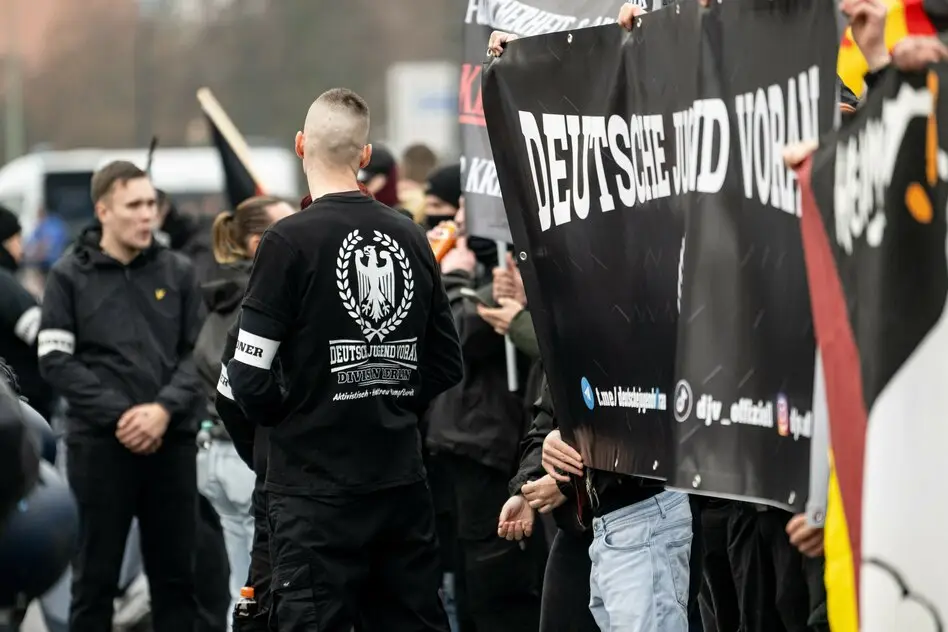
Lotta Kampmann: We take photos and videos at extreme right-wing events. We prepare the material by providing an analysis. A lot of what the extreme right does is public: the events are public, the people appear in public, their speeches are public. But few people look closely. We see ourselves as an interface between larger media companies, universities and the cultural sector and try to incorporate the topic everywhere.
Born in 1991, she is a journalist at Research Nord, an independent media project that researches the extreme right.
taz: Your work is protected by press law, but you still experience criminalization.
Kampmann: We are regularly threatened with investigations and lawsuits. One of our journalists was illegally observed by the Office for the Protection of the Constitution in the past - even though our journalistic work is completely legal. The Office for the Protection of the Constitution then had to admit that this was not legal surveillance.
taz: In addition to state repression, you are also exposed to violence from the scene. Her colleague André Aden had to move several times because of death threats.
Kampmann: There are simply militant, very violent neo-Nazi structures in Germany - who are known to have weapons and who we know about those who have left what they would do to us. I always turn around before stopping at my front door and going in. We have all thought about how we can protect ourselves, our families and our homes. Many colleagues drop out at some point because they have children who they don't want to expose to the risk, because they are burned out or traumatized.
taz: And yet you appear in public with your name and face.
Kampmann: There are too few people who do that. Social development happens as it happens. Right now I think it's important to do this work. In order to transport content, you need people to transport it.
taz: Has the violence against you increased?
Kampmann: We sense increasing brutalization. Neo-Nazis have always threatened us with death. What is new is the social back-up. There are now also middle-class people who are radicalized by right-wing propaganda, emotionalized and at the same time very self-confident because they feel like they are part of a movement on the road to victory.
taz: Is the extreme right on the road to victory?
Kampmann: The extreme right is trivialized. Democratic civil society is surprised by 44 percent AfD in Saxony-Anhalt, they will be surprised that the AfD also gets more percent than expected in Bremen. Or that the meeting took place in Potsdam, even though there had been a number of such meetings before. She will be surprised if a state-sanctioned vigilante group is set up in Saxony-Anhalt, where neo-Nazis roam the streets and “clean up” their neighborhoods. At the same time, we are also observing a great powerlessness. The ability to act cannot arise from powerlessness. From a confrontation with the extreme right. And only if we really understand it can it be successfully stopped.
Kampmann: Image materials from us contributed to organizations such as the right-wing extremist “Heimattreu Deutsche Jugend” being banned. Reporting on a Nazi in the AfD can cause him to lose his mandate. Sometimes teachers write to us and recognize their students in our photos. Who now finally have something tangible that they can talk to their parents about. But we are just one piece of the puzzle of what needs to happen.
“The shift to the right and its consequences”, round table discussion as part of the nationwide “Science Against Fascism” action week. On Monday, November 16th, 7:30 p.m., in the foyer of the Little House, St.-Pauli-Passage/Bleicherstrasse, Bremen, free entry
taz: Do you have intrinsic motivation?
Kampmann: I grew up in a town where a very militant neo-Nazi group committed murders. Friends were physically attacked because they looked “alternative.” I wanted to understand what kind of people are trying to kill my friends. And that stuck with me even many years later.