
World · taz · · 1h
Pentagon report on Iran war: cost at least $33 billion
Deutsch (original) · Auto-translated to English
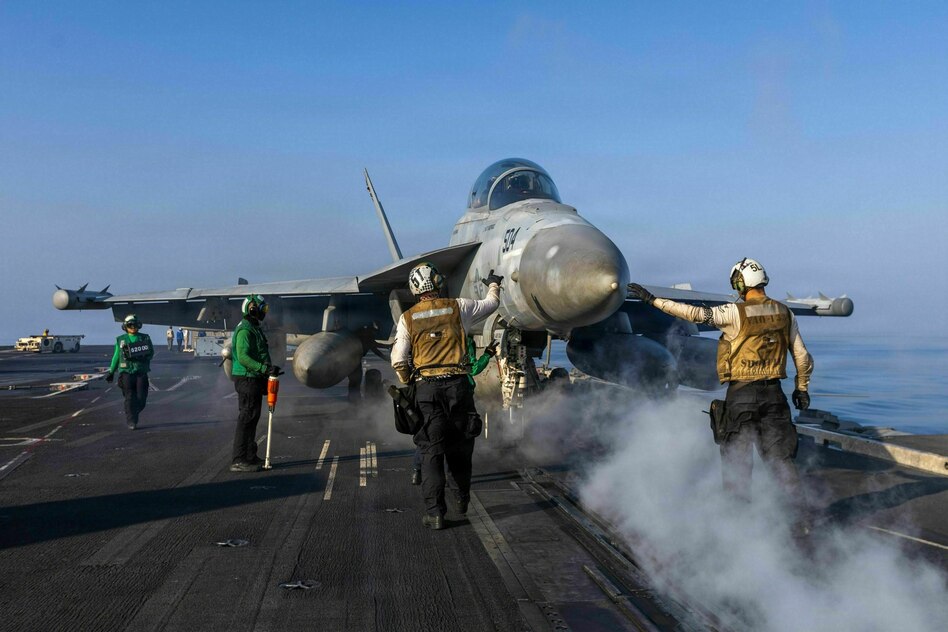
A new report from the US Department of Defense shows how the ongoing Iran war has affected the US military and beyond. The report speaks of ammunition shortages and other supply shortages that have arisen as a result of the costly conflict.
“The consumption of ammunition during Operation Epic Fury has led to strategic inventory shortages and highlighted supply problems within the defense industry when it comes to resupplying ammunition,” it says.
The Pentagon is working to resolve the capacity limitations. The ministry aims to “streamline procurement processes and production lead times as well as build stocks of critical materials, components and selected ammunition in order to be able to react quickly in an emergency.”
Media reports about ammunition shortages have been repeatedly denied by the government in the past. Defense Secretary Pete Hegseth said the ammunition problem was overstated during a congressional hearing in May. “We have all the ammunition we need to carry out our tasks,” he said at the time.
In November 2024, Donald J. Trump won a presidential election in the USA for the second time and has been in office as the 47th president since January 2025. He is driving forward the restructuring of public institutions and a change of course in foreign policy.
President Donald Trump said in a post on Truth Social on Monday that the U.S. is "producing more high-end, world-class weapons" than ever before. “They are delivered daily to our armed forces in the Middle East and beyond,” it said.
Two weeks earlier, Trump posted that the U.S. would have a “virtually unlimited” supply of ammunition. It was a response to ongoing critical media reports about ammunition shortages.
The Pentagon inspector general's report released Monday is the first from a government agency to detail the cost, scope and scale of the U.S.-Israel-led conflict. The report required by Congress covers the period from February 28 to June 30.
According to this, the war cost US taxpayers around 33.4 billion US dollars during the period in question. Of that, $22.3 billion alone went on ammunition. In addition, there are $3.7 billion for the loss of military equipment and $7.4 billion in other expenses.
According to US media reports, actual costs are said to be even higher. For example, the replacement of destroyed aircraft, repairs to US bases in the region and the maintenance of weapons systems are not included. The true costs are said to be up to 100 billion dollars.
Hundreds of buildings and facilities at U.S. bases in Kuwait, Bahrain, Qatar, the United Arab Emirates, Saudi Arabia, Iraq, Oman and Jordan were "damaged or destroyed" by Iranian attacks, according to the report. More than 20,000 US soldiers, their families and other diplomatic staff had to be evacuated.
The inspector general also addresses the role that European US bases have played so far. Up to 5,000 missions to support the war came from European bases. Nevertheless, President Trump strongly criticized the European allies because, in his opinion, they had not contributed enough.
The report provides no information whatsoever about the moral condition of the US military in the Middle East. In recent weeks, the poor supply situation on board a US aircraft carrier that has been underway for months has made headlines. There are even said to have been suicide attempts.
A short time later, the Pentagon announced that the USS Abraham Lincoln would be replaced by another aircraft carrier. The war, which, according to Trump, was only supposed to last a few weeks, has now been going on for more than six months.
Read the full story at the source
Source: taz