
Germany taz
Youth Olympic Games in Dakar: Dream of an Olympic return
For the first time, an Olympic event will take place in Africa with the Youth Games in Dakar. Despite its financial hardship, Senegal is paying a lot for this. more...
Deutsch (original) ·Auto-translated to English
Pape Mbaye swings his legs forward alternately. His upper body bounces to the beat as he tries out the new sports equipment on the coastal promenade in Senegal's capital Dakar in suit trousers, a shirt and open sandals. The plastic bag with fresh herbs from the market is carefully placed next to the bright yellow equipment. “A little exercise before going home never hurt anyone,” he shouts across the pitch in a good mood. Two teenagers trying out pull-ups a few machines away give him a thumbs-up and agree.
In the background, a bulldozer tirelessly distributes pile after pile of earth in the last sunlight. The brand new equipment park, overlooking the Dakar cliffs and the Atlantic Ocean below, is one of the latest completions as part of the preparations for the Summer Youth Olympic Games (JOJ 2026). It is the first Olympic event ever to take place on the African continent. Accordingly, the successful event is not only seen as a matter of honor for Senegal, but for the whole of Africa. “Africa welcomes, Dakar celebrates” is the appropriate slogan for this year's games in the Senegalese capital.
However, Dakar does not have to earn a reputation as a sports city. Even before the hype surrounding the first Olympic event in Africa with its countless neon signs, lavishly renovated stadiums and freshly planted flowerbeds, athletes dominate the streetscape. Every evening, when the sun sinks into the Atlantic and the daytime temperatures cool down, the waterfront promenade fills with joggers. On the beaches, wrestlers practice the moves of traditional Senegalese wrestling, “La Lutte,” while doing push-ups and strengthening their muscles.
Open spaces are transformed into football pitches where people play football until dusk, and early on Sundays, groups of racing cyclists dominate the streets, which are exceptionally low in traffic, while in the sea surfers compete to catch the best waves. Sport is part of everyday life in Dakar, with or without the Summer Youth Olympic Games. It takes place in the open air, by the sea and in the middle of the city.
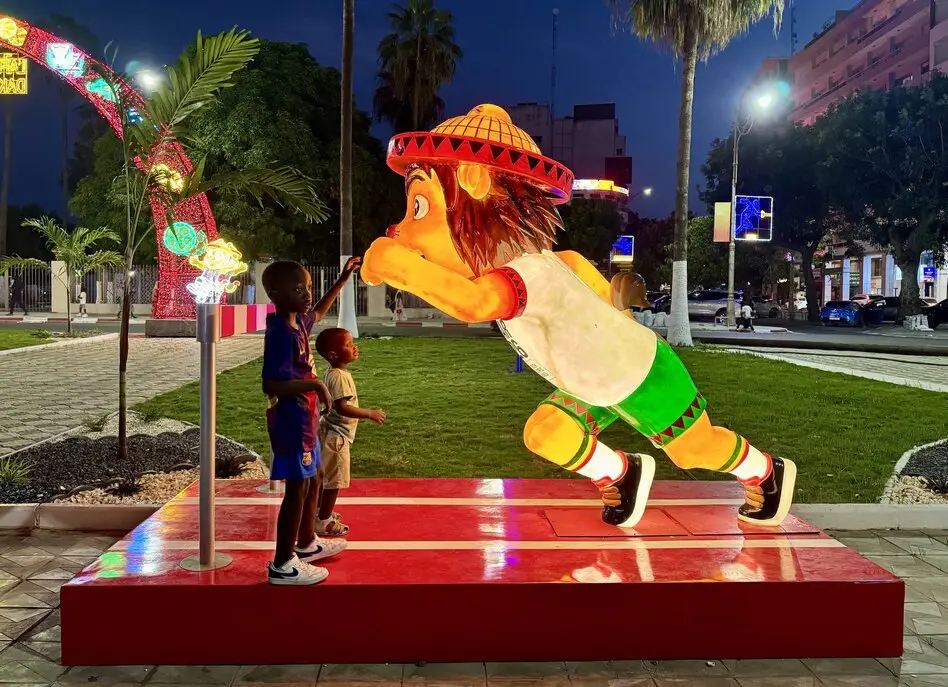
Now there is an opportunity to present this to the world. After it was initially quiet for a long time about the upcoming Olympic Games, a few days before the start there was a state of emergency in Dakar. The last zebra crossings on the streets are being painted under high pressure, the last flower beds are being laid out and construction work on the Olympic facilities is being completed. They are currently working day and night, reports a group of workers who are currently in the process of attaching the last parts of the five Olympic rings to the waterfront. At night, the installation will shine in colorful light with a view of the Atlantic. The various installations of the JOJ 2026 lettering in Dakar are already a popular meeting place to take selfies.
The games were originally supposed to take place in Dakar in 2022, but the corona pandemic forced a postponement. Four years late, the time has now come: from October 31st to November 13th, Dakar will be the stage for international young sports. Around 2,700 young athletes between the ages of 14 and 17 from all over the world compete against each other in 25 sports at the Youth Olympic Games. For the first time, skateboarding, the Chinese martial art Wushu and baseball are also on the program.
The competitions are spread across three locations: the Senegalese capital Dakar, the planned city of Diamniadio at the gates of the metropolis and the coastal town of Saly, where all beach and water sports take place. The games also set an example for equality. With 1,350 male and female participants each, gender parity is maintained, as in previous games. However, with 73 competitions for girls, for the first time there are as many as for boys. Another first is the participation of a refugee team in the Youth Olympics. The team, supported by the National Olympic Committees of Kenya and Uganda, includes six African athletes competing in the disciplines of athletics, judo and taekwondo.
“It’s a chance for the guests to get to know Senegalese hospitality,” says Pape Mbaye happily. The common expression “Teranga” in Senegal's local language, Wolof, not only stands for the friendly welcome of guests, but also an attitude of generosity and solidarity and the willingness to share. Siri Diop sees it similarly. The visitors are an opportunity to present yourself to the world. And perhaps a driver for foreign investment and jobs. The young woman has just taken a series of selfies in front of the not yet fully assembled Olympic rings on the promenade. But she has little to do with the games themselves. She won't watch the competitions. “No time, I’ll have to work,” she says.
According to the latest data from the Senegalese statistics agency, the unemployment rate among 15 to 34 year olds is more than 27 percent. A key reason is the lack of permanent employment opportunities. For those who have a job, the salary is often not enough to lead a worry-free life. The millions invested in sports infrastructure are also met with criticism.
“The money should be put into sensible sewers,” says Sira Diop. At the beginning of October, torrential rains painfully demonstrated that Dakar's poorly developed sewage systems are not prepared for rain. The floods caused enormous damage - including to the newly renovated streets and sports facilities - and cost several people their lives.
But Senegal's economic situation is tense. An audit of public finances found a previously unknown budget hole of the equivalent of $13 billion in 2024. Since then, the government's financial flexibility has been severely limited. Taxes have been raised, prices have risen and the government is cutting corners wherever it can.
The trust of international partners in the country's economic stability has also suffered, and a dispute between President Diomaye Faye and former Prime Minister Ousmane Sonko is paralyzing the country. Sonko's latest threat to use his opposition majority to block votes on a revised budget for this year and spending plan for 2027 had caused Senegal's dollar bonds to plummet in value.
And yet Senegal is determined to organize the Games as best as possible. Accordingly, the 2026 budget allocated around 139 million euros for the Youth Olympic Games infrastructure program, and the French development agency AFD also granted Senegal a loan of 80 million euros to renovate sports facilities and create local sports venues.
At the same time there is a massive clean-up. New lanterns were put up, potholes were patched, even the small traders and beggars were driven away from around the competition venues so that the desired image of the modern metropolis would not be affected. In this regard, they are particularly proud of the newly completed train line, which, in addition to a 100 percent electric bus line, now expands the city's local transport offerings.
Pape Mbaye is also feeling the economic situation. But he still can't understand the criticism of the games. “There are complainers everywhere,” he says, examining the pull-up device. For him, the games offer a nice distraction from everyday worries. “And we will continue to invest in things like this sports park even after the games,” he explains optimistically. Maybe he will also watch one of the demonstration sports. In addition to the official, paid competitions, ten other disciplines, including surfing, climbing and karate, are intended to inspire young people in Senegal and the region to new sports free of charge. When it comes to surfing, for example, those interested can get on the board themselves and train with Senegalese professionals.
At the same time, the local sports scene has the opportunity to present itself to a larger audience. Mbaye is convinced: The games will not only bring new sports facilities, but ideally also tourists, a good image and a sustainable upswing.