
Germany · taz · 38m
New Pisa study published: Tiktok is bad for your physical condition
Deutsch (original) · Auto-translated to English
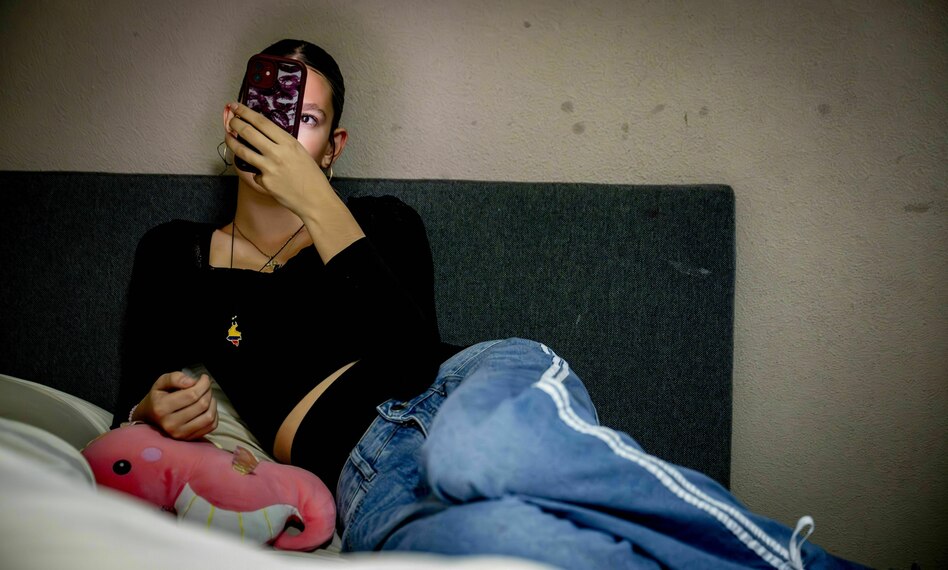
The smartphone, in particular: Social media is ruining reading skills, the gap between stronger and weaker students is widening - and what is anything but helpful: a school system that sorts out students early on. These are perhaps the most remarkable results of the new Pisa study by the Society for Economic Co-operation and Development, OECD. As in the last PISA survey in 2022, Germany performs well in the three tested fields of mathematics, natural sciences and reading skills, with the average value of the around 90 participating countries - the worst with 26th place in mathematics.
However, the results are worse than ever: around 20 percent of 15-year-olds no longer even reach a basic level in the skills tested - such as understanding simple texts. For the first time since 2006, the natural sciences are no longer above the OECD average.
The OECD carries out the PISA survey every three years. 760,000 students in 91 countries took part in 2025 – representative of 33 million 15-year-olds worldwide. First carried out in 2000, the study has since sought to find out how well young people can apply acquired knowledge to solve everyday problems.
The answer in 2025: It works like this. In particular, reading stamina for longer, complex texts and thus the ability to actually understand information and connections suffered, the researchers write. This is particularly unfortunate because poor reading comprehension also has a negative impact on performance in other subjects - for example, a lack of understanding of word problems in math.
What is interesting is that the gap between the genders and between students with and without a migration background has not widened. However, the study authors make a connection to social media consumption, albeit cautiously. “Skimming social media feeds and processing information quickly could lead to a deteriorated ability to engage with complex contexts,” the report said. The number of “hurried readers” was particularly high, particularly in education systems where students reported a high level of distraction from digital media.
At the same time, the group of high-performing young people remains relatively stable across the entire range of test countries - while the weaker students perform worse and worse and are increasing in number. Almost a third, 29 percent, of the students now belong to the group of those who cannot understand even simple texts or cannot deal with prices and units of measurement in mathematics (i.e., in principle, have difficulty shopping in the supermarket).
The differences in performance are greatest – in other words, the school systems are most unfair – in Luxembourg and the USA. But Germany doesn't fare well either: it is one of ten countries - alongside the Netherlands, Turkey and Romania - in which the choice of school determines 50 percent of learning success. “Where such academic selection is linked to social background, injustices can be reinforced,” write the study authors. “Some benefit, but such an education system cannot ensure good learning conditions for everyone.”
As a counterexample, the educational researchers cite Finland or Iceland, where school choice has almost no influence at all on the performance of young people. In both countries, in contrast to the German school system, children learn together for a long time.
Finally, the Pisa study also approaches the smartphone question with caution: should they be banned during school hours or not? It depends, is the diplomatic answer. After all, there are useful learning apps, and kids these days should also learn to do online research. However: it depends on the dose. If schools allow cell phones, there must also be rules for this. A sensible piece of advice - but putting it into practice is currently a constant concern at many parents' evenings.
Read the full story at the source →
Source: taz