
Germany · taz · · 1h
Obituary for artist Cecilia Boisier: The thin thread
Deutsch (original) · Auto-translated to English
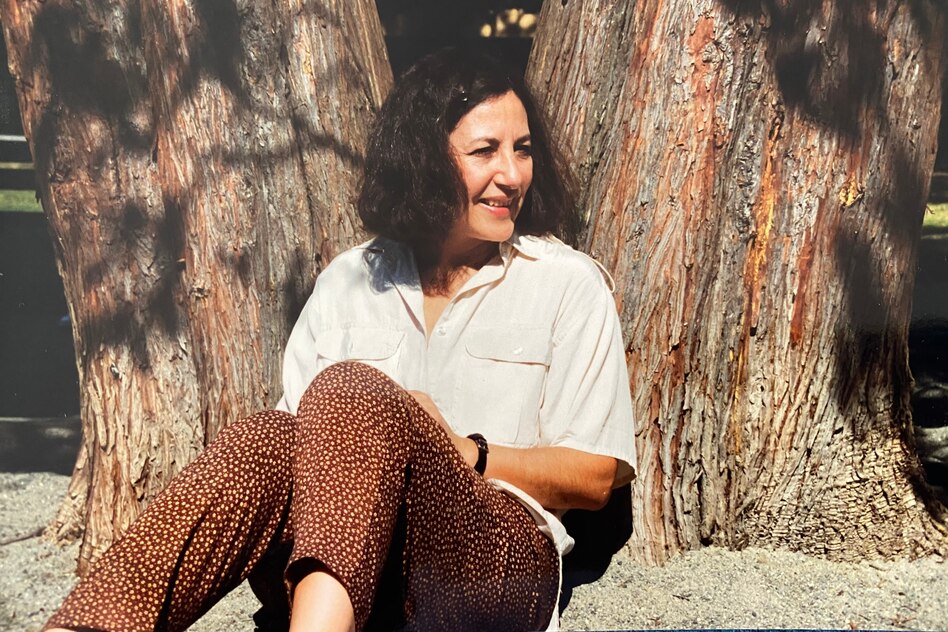
When I met Cecilia Boisier three years ago, I was looking for pictures for a group exhibition in Frankfurt. She knew exactly which friend was hanging which of her paintings and helped me get them together, because she hardly had anything left: when she moved to the age-appropriate apartment, she hadn't been able to take the works with her from the basement; moisture had destroyed some of them, and she had given the rest to friends.
On her wall hung a single picture, “My Moon” (2003), a woman sleeping in the moonlight, reminiscent of “Sleeping II” (1981). Then she asked where I had been for the past twenty years, when she still wanted this exhibition and still had the strength to paint. The question wasn't just for me. Cecilia Boisier died in Berlin in September 2026 at the age of 83.
Cecilia Boisier was a painter. She was one of the artists in exile who helped shape Berlin in the 1970s and 1980s: with groups, exhibitions and workshops that she set up herself, and with pictures that tell the story of arriving in this city. Born in Santiago de Chile in 1943, she studied art and art education and saw herself as a cultural worker during the Unidad Popular years.
In February 1974 she fled to Buenos Aires with her two sons, an unfinished painting on the roof of her car, and came to West Berlin in April 1975. Here she founded the Chile Cultural Center with other exiles, to which Krista Tebbe from the Kreuzberg Art Office gave a room in 1977 and from which the mural group El Frente emerged, which designed a gable wall at Checkpoint Charlie.
The exile, she said, affected the women twice: the men looked for work outside, the women bore children, housework and the lost home alone. What gave her support in Berlin was the solidarity among women. She often felt kept at a distance from the Berlin art world; She found allies in other artists, especially those who, like her, had come from abroad.
In 1983, she and a working group in “Chilenas – Inside and Outside” at the Kreuzberg Art Office brought together around forty female artists who continued to work under censorship in Chile and in exile. For the catalog she wrote about the history of Chilean painting and the role of women artists. She wanted to “snatch from oblivion” those about whom hardly anything had been handed down. She later described herself as a defender of women's culture and became a member of the women's museum “The Hidden Museum”.
She also organized exhibitions in a shop where she worked and ran an art workshop at the SUSI women's center. She made a living from teaching, but she saw it as part of her art: nothing was worse for a child, she thought, than telling him he couldn't do something. Her pictures were also dedicated to women's freedom of action: in “Without Baggage” (1984), a woman goes decisively into the unknown and trusts in her own strength.
She wanted representational art that could be immediately understood. As she wrote, she avoided “sensationalized images of pain and humiliation.” Her paintings and drawings from the time of exile show waiting: the empty chair at the table of her sister, whose husband was imprisoned by the dictatorship; again and again the letter, “the thin thread” that can maintain belonging. She often painted large and planned precisely: to create the perspective of her pictures, she stretched threads across the width of the studio wall.
In “Stadtzaun” she placed the blue and red of Chile on a Berlin street. Later, when she didn't have the space to do so, she said looking back that she painted what she could, and that wasn't a little. Boisier often chose the back view: her figures do not demand sympathy, but rather let us stand next to them and look in the same direction. For her, painting understandably was an attitude.
Several of her paintings can now be seen in the exhibition “Kreuzberg: Art and Migration since 1960” in the Gropius Bau, including “Sleeping II” with the letter. The Berlin Museum, our partner in this project, is showing works that it acquired from her in “Divided Life” in the Ephraim Palais. She didn't make it to either of the two exhibitions in September. In November 2025 I visited her in a nursing home in Westend together with Patrizia Dander, with whom I curated the exhibition, and her granddaughter Melissa Skármeta Moraga. She said her true love was what she painted. The only picture hanging on the wall of her room was “My Moon”. She took it with her.
She spoke about getting older without sugar-coating and about her life with gratitude. In her book manuscript “Pictures of a Life’s Journey” there is the poem “Candlestick”. From the first two verses: "Greedy for light / I look for it around me, / find it in things / feel it in people. / I follow it and learn / to capture it in pictures, / to ignite it in others." She succeeded in both, in the pictures as well as in the many that she trusted to paint.
Read the full story at the source
Source: taz