
World taz
Mikhail Khodorkovsky on Russia: “You should talk to Putin”
The former oligarch was sentenced to prison in his homeland. Today he lives in exile. A conversation about sanctions, war and Russian opposition. more...
Deutsch (original) ·Auto-translated to English
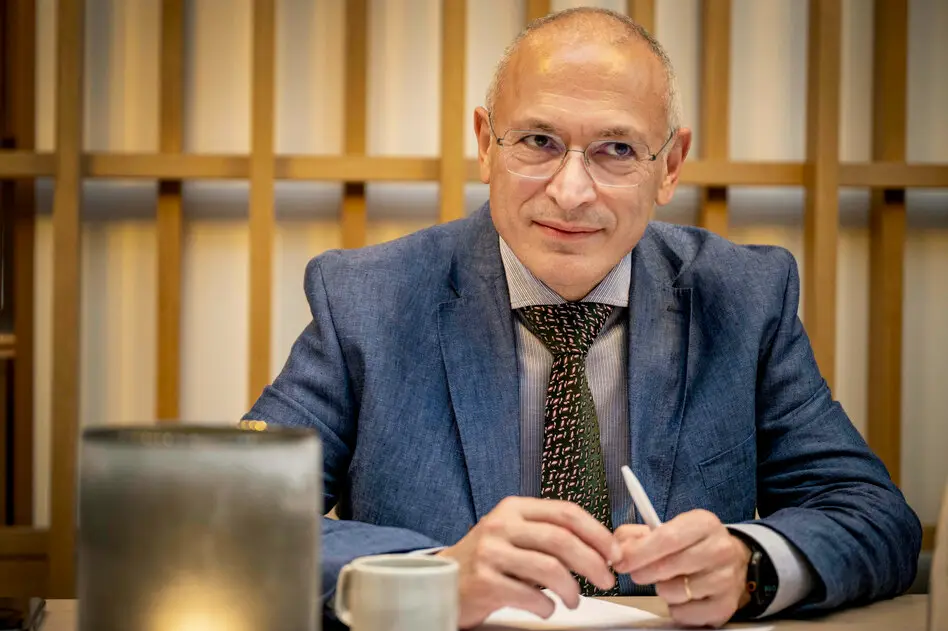
taz: Mr. Khodorkovsky, when will this war end?
Mikhail Khodorkovsky: When the war began, military experts told us that, based on the experience of previous wars, such wars either end within six months or last up to eight years. I thought that was complete nonsense. But now I fear they were right.
taz: Do the people in Russia want this war?
Khodorkovsky: No, Russian society does not want war. 81 percent would like the war to end. That's a lot. But only about a third are willing to compromise or make concessions to Ukraine. This is not because the Russians suddenly need foreign land. Everyone understands that Russia is big enough. Rather, over the last five years a fear has developed that we will all fare badly if we emerge from the war as losers. Not just Putin, but all of us.
In February 2003, Mikhail Khodorkovsky, now 63, did the unthinkable: he confronted Vladimir Putin about corruption at a meeting with Russian oligarchs. Shortly afterwards, Khodorkovsky's oil company Yukos - at the time Russia's largest - was effectively incorporated into the state oil company Rosneft. Khodorkovsky was imprisoned in a Siberian camp for ten years for tax evasion. Since his liberation, he has lived in exile in London and supports Russian opposition groups.
Khodorkovsky: It is caused, among other things, by propaganda, but also by one's own understanding that war reparations or punishments are due. We have to explain to people that the main consequences of this war have already occurred, that a serious blow has already been dealt to people's prosperity. And that things will only get worse if the war continues. That is exactly our task, the task of those Russian media that work from abroad.
taz: Will Putin even manage without war? Or can he continue to wage war as long as he lives?
Khodorkovsky: He believes he can. He has been in power for 25 years now. During this time there was the Chechen War, the Georgian War, the Crimean War. And now this large-scale Ukraine invasion. This means that he resorts to war whenever there is a problem with his popularity and whenever there is a problem with the political stability of his regime. There was a fifth war, the one in Syria. Putin also tried to consolidate Russian society around himself. It didn't work. Putin has learned from this that he cannot consolidate society on the basis of a distant war. You have to fight against the neighbors.
taz: And what should the West do? He imposes sanctions and supports Ukraine. But is that enough?
Khodorkovsky: In the West - and in this case I mean Western Europe - there is a constant desire to look for a solution. Does anyone know of a magic bullet that we can use to solve everything? And all without leaving our offices. Like you, I don't know of a silver bullet. All I know is that war today is a war of economies, a war of social norms, and a war of consistency on the battlefield. If Western Europe produces as much ammunition per year as Russia does per month, then Western Europe is a lightweight. If a shell made in Western Europe costs four times as much as one made in Russia, then the European economy will most likely not survive this war. That is why, in the fifth year of the war, the obvious solutions are clear to everyone.
Khodorkovsky: I am convinced that without a show of strength it will not be possible to agree with Putin on terms that are sensible for Europe. And I am sure that it will be absolutely impossible to negotiate a long-term peace with him.
Khodorkovsky: Because there are already antagonistic contradictions on key issues between Europe and Putin. Are you ready to recognize the annexation of Ukrainian territories? No, because this would be a precedent for Europe, the consequences of which are unforeseeable. But for Putin this is a central question. Are you prepared to recognize Putin's right to political control over the territories that were part of the former Soviet bloc? No. Are you prepared to return NATO to its pre-1999 borders? That's probably difficult. But these are his central demands. That is why there are antagonistic contradictions here, on which there will simply be no possibility of agreement. But that doesn't mean you shouldn't talk to him.
Khodorkovsky: For example, about the question: Did you try to carry out an act of sabotage at Leipzig Airport? Will you do that again? If so, you will get a harsh answer. Not just the closure of the Russian House in Berlin. Don't be surprised if you run into problems in countries where Germany has traditionally done well. So let's find an agreement. If you stage a story like that at Leipzig Airport again, don't be surprised if something happens to you too.
taz: Russia actively interferes in domestic politics, not only in Germany, but also in the USA and France. The West is apparently doing nothing.
Khodorkovsky: That's not absolutely necessary. You don't necessarily have to proceed symmetrically here. Putin is not afraid of the West interfering in Russia's domestic politics because he isolates himself almost completely. But there are enough things he's afraid of.
Khodorkovsky: He is worried about his shadow fleet. Or that the West will no longer turn a blind eye to violations of the sanctions regime. Or that Russian ships are no longer refueled in many places around the world. There are many aspects and places where you can make Putin feel small, unpleasant nastiness.
This text first appeared in wochentaz, our weekly newspaper from the left!
Every week, wochentaz is about the world as it is – and as it could be. A left-wing weekly newspaper with a voice, attitude and the special taz view of the world. New every Saturday at the kiosk and of course by subscription.
taz: How long can the Russian economy withstand sanctions and attacks on refineries, data centers and other factories?
Khodorkovsky: All of this is unpleasant for him, problematic, but not so critical that it would destroy Putin's ability to continue the war. When refineries no longer produce enough fuel, he has to raise prices to reduce consumption. He somehow balances between all these possibilities. Russia will not collapse even if the Internet fails completely.
taz: You were a major entrepreneur yourself. Does the economy still support Putin?
Khodorkovsky: Just like all tycoons under the conditions of an authoritarian regime: if there is no possibility of taking part of the money abroad, unfortunately I am forced to get closer. I constantly tell the West: you made a big mistake at the beginning of the war when you blocked the outflow of capital from Russia. In doing so, you secured $100 to $150 billion for Putin and gave him greater loyalty from the business elite than if those billions could have been directed somewhere in Western countries. Well, it's never too late to start.
Khodorkovsky: I would suggest to the Russian political and economic elites a kind of roadmap for their personal exit from the war. I'm not sure if this will work for many, but it will work for some. A division of elites is always good, it is always useful.
taz: Is there even a Russian opposition?
Khodorkovsky: The opposition in the true sense of political science are those people who can actually lay claim to power. Not at some point, but right now - otherwise it is not an opposition. In Russia you cannot currently claim power. The people the West sees as the opposition are actually just the resistance to Putin.
taz: Will the resistance unite?
Khodorkovsky: It's always very funny when the West says: "You can all unite." Yes, a dictatorship can unite. If I am the boss, then everyone else is below me. In a democratic opposition, each of us represents a specific group of people who have their own interests and their own views. There are those who, like me, are supporters of, let's say, more conservative, free-market views. And there are people who are supporters of far more left-wing views. There are people who advocate greater consolidation of Russia. There are people who want Russia to collapse.
taz: So there can be no unity?
Khodorkovsky: When it comes to fighting the Putin regime or ending the war, we of course act together. But still, we have different views on different topics. You can hardly bring a left-wing university professor together with a large industrialist. At most, to fight together against the fascist plague.