
World taz
End of sports sanctions against Russia: It is not too late
The sports sanctions policy in the case of Russia has probably failed. But new statutes could strengthen international law in sport. more...
Deutsch (original) ·Auto-translated to English
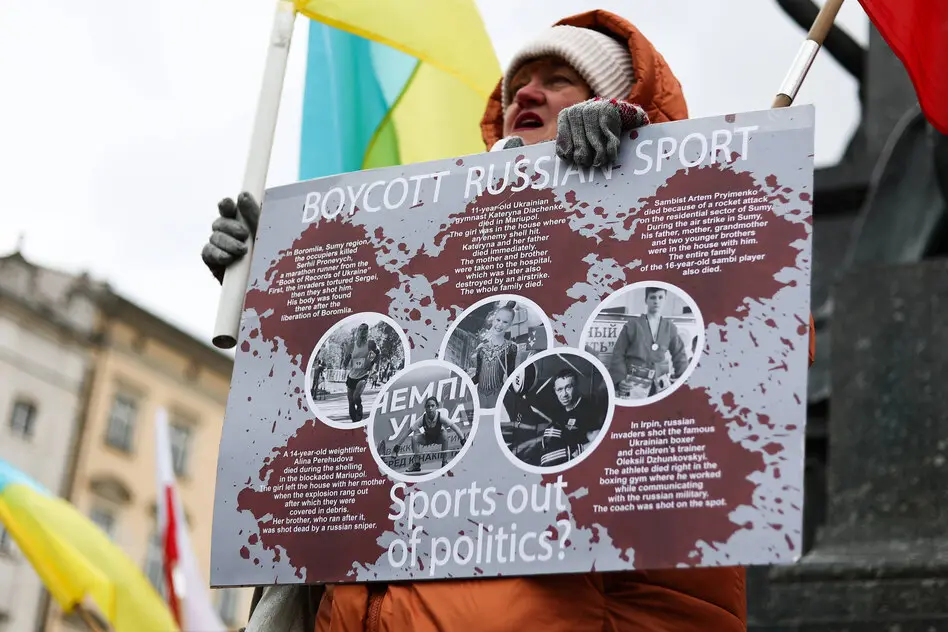
Ice hockey is in a dilemma before the 2027 World Cup in Germany. With the re-admission of Russia by the Court of Arbitration for Sport (possibly even at the expense of Ukraine), there is a threat of an almost unsustainable situation, Russian war propaganda and boycott chaos. If, on the other hand, Russians were denied visas, that would be bad for Germany's Olympic bid. It is difficult to see a way out. However, this predicament is also self-inflicted.
Russia was only able to sue again so easily because it has only been blocked since the attack on Ukraine because of “security concerns”. The world association has failed to renew its statutes and introduce sanctions for aggressive war or occupation based on international law. This is not just an ice hockey problem, but affects all sports. Only the IOC has a little control: its charter prohibits one association from forcibly integrating another. But that proved easily contestable, with Russia changing its sports federation structure.
Such toothless statutes are no coincidence. No state has any interest in the genuine implementation of international law in sport - in order not to be vulnerable itself. The European bloc against Russia was also concerned with geostrategy. So there is no need to complain loudly that the front is crumbling.
Many people initially saw an opportunity in taking action against Russia, especially in weaker states. But the implicit promise that this was an issue of international law quickly became nothing. The war of aggression against Iran, the transformation of Venezuela into a de facto US colony, and above all Israel's alleged genocide of the Palestinians with European weapons - all of this has completely invalidated the Russia sanctions.
When it came to the issue of Israel and its illegal occupation, they became a political boomerang and there were major fan protests. You can think what you want about the effectiveness of sports sanctions (the Russian case has shown their limits again), but if you use them, it must be credible to other peoples that they will also benefit if the worst comes to the worst. Otherwise the issue will immediately be reduced to a regional conflict.
Now any sanction will probably soon be a thing of the past, because without fixed and enforceable penalties, the logic of money quickly becomes more important. The next boycott debate – in the midst of global rearmament – is certainly not far off.
Meanwhile, Russia's attacks on civilians, torture and kidnappings continue. There is a lack of solution perspectives. The war has shifted from a war of self-defense to a war of proxy war, in which tens of thousands per month die needlessly on a front that is barely moving. Instead of thinking about inevitable compromises for the benefit of as many people as possible, German politicians are preaching more rearmament and an apparently almost unavoidable major war in the future.
This shows that even well-founded sports boycotts can become a problem. They can cement and deepen an entrenched conflict. There has always been a lack of a power-critical debate on sports sanctions policy in Germany. Someone who is thinking about a targeted combination of sports sanctions and sports diplomacy instead of just hoping that as many sports bans as possible will make Putin give in. This approach has probably failed.
And yet, the Russian case has brought more attention than ever to the political playing field of sport. It is not too late to advocate for new international sports statutes. They are in the interests of the vast majority of people.