
Germany · taz · · 3h
Lobby criticism of the Minister of Economic Affairs: Katherina Reiche and her Lex Eon
Deutsch (original) · Auto-translated to English
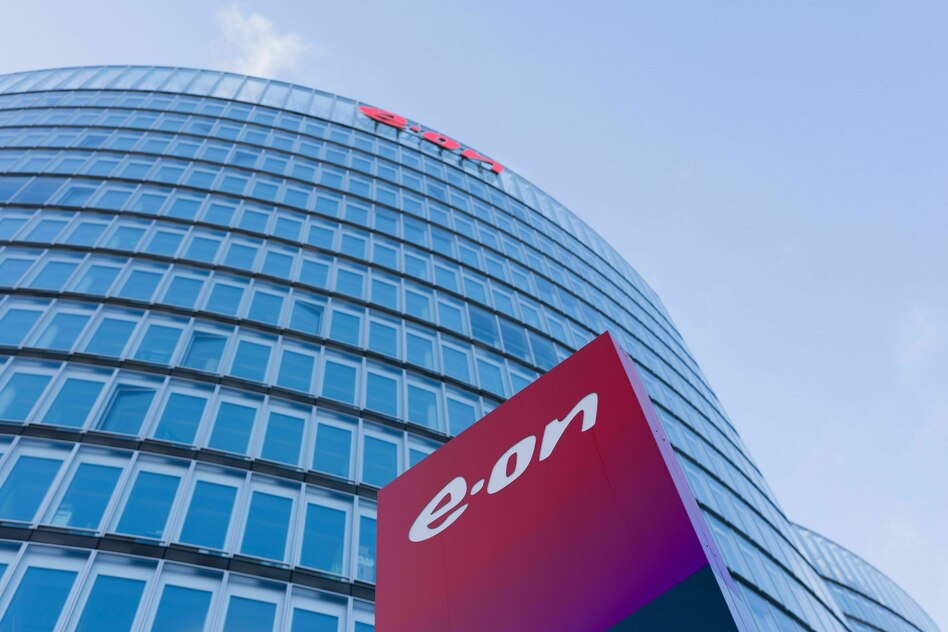
Did Federal Economics Minister Katherina Reiche, the former manager of the Eon subsidiary Westenergie, write a “Lex Eon”? In the coming days, the network package, which has already been approved by the cabinet, will be discussed in the Bundestag committees.
Renewables experts and associations have been picking apart the draft for months because it would stifle the construction of wind and solar systems in Germany. On Tuesday, the Federal Association for New Energies (BNE) followed up: A BNE analysis shows that subsidiaries of the Eon Group in particular are likely to benefit from the new regulations of the network package. The CDU politician Reiche was boss of the Eon company Westenergie between 2020 and 2025.
The federal government should not “allow itself to be harnessed to the wagons of individual corporations,” said BNE managing director Robert Busch. And called for what he saw as the biggest sticking point in the network package to be completely removed: the so-called redispatch reservation. He sets “exactly the wrong incentive,” says Busch. Network operators would become “more efficient on paper,” but the bottlenecks in Germany’s power grids remained.
The background: Due to the great success of the energy transition, more and more wind and solar systems are feeding more and more electricity into increasingly overloaded power grids. If, for example, too much wind power from the north cannot be completely transported to the south, the network operators reduce generation in front of the bottleneck and at the same time increase it behind the bottleneck using other power plants: the intervention is called redispatch.
The costs of this “bottleneck management” have more than doubled since 2015 to a good 3 billion euros in 2025. Of this, 430 million euros went to compensation for the throttling of wind and solar systems to their operators, the large remainder to fossil reserve or replacement power plants.
Reiche wants to reduce these costs - apparently at the expense of renewables. The redispatch reservation massively restricts compensation for renewable energy operators: If new wind and solar parks are built in overloaded grid areas (“hot spots”), there should be less compensation for part of the regulated electricity. According to the network package, operators have to forego up to around a fifth of their income for up to six years. This is intended to prevent systems from being built “without seeing eyes” in bottleneck areas and being compensated at the expense of the general public, says Reiche. Critics counter that this makes the earnings situation uncertain, financing renewables through banks becomes almost impossible and the energy transition is slowed down.
The BNE now explains that rich law primarily benefits their former breadwinner. Eon's network subsidiaries in particular benefited from the redispatch reservation. Between January 2023 and April 2026, around 73 percent of the regulated redispatch quantities in the distribution network were accounted for by Eon companies such as Westnetz, Bayernwerk, Edis, Hansewerk or Avacon.
The accusation that the minister is acting as a bailiff for the energy companies is not new. Sometimes it's about too many new gas power plants, sometimes it never meets with environmental associations. But now, with Reiche's help, Eon seems to be getting the redispatch reservation into law, which the energy company itself introduced into the political debate five years ago - research by fragdenstaat.de had shown this for the first time. In 2024, Reiche even personally lobbied Linkedin for the redispatch reservation. The Eon Group is likely to be its “main economic beneficiary,” says BNE.
To date, the costs for redispatch have been passed on through network fees. They affect the bills of electricity customers, but not the profits of the energy companies. That should change. Since the Federal Network Agency, which regulates the industry, wants to provide incentives for network operators to build lines or substations, redispatch costs will in future be included in the so-called efficiency comparison.
This would make network operators with less redispatch better economically: efficient network operators would then be able to earn higher returns according to the regulators' requirements. This is intended to create incentives for the monopolists to renovate the completely overloaded German electricity networks. The BNE believes that the redispatch provision is counterproductive. Because it makes it possible to “reduce part of the regulatory-relevant cost pool without eliminating the network bottleneck.”
The redispatch reservation is necessary as an “instrument for the spatial control of the further expansion of renewables,” says a spokesman for the Federal Ministry of Economics when asked by taz. In addition, it does not affect large areas, but is only intended to have a “selective effect in particularly burdened network regions and reduce additional costs”. The ministry generally does not comment on allegations of lobbying against rich people.
“The claim that Eon is the main beneficiary of the redispatch reservation turns cause and effect on its head,” writes a company spokesman in a statement for the taz. The Eon network operators have so far “integrated more renewable power into their networks than all other German network operators combined”. The accusation of having lobbied for this is not denied: “The fact that we see the consequences of regional renewable energy expansion that is not sufficiently synchronized with the grid particularly early and clearly is the logical consequence of this enormous achievement and special responsibility for the energy transition.”
Read the full story at the source
Source: taz