
Germany · taz · · 1h
Electricity motorway delay: Suedlink construction near Heilbronn stopped for the time being
Deutsch (original) · Auto-translated to English
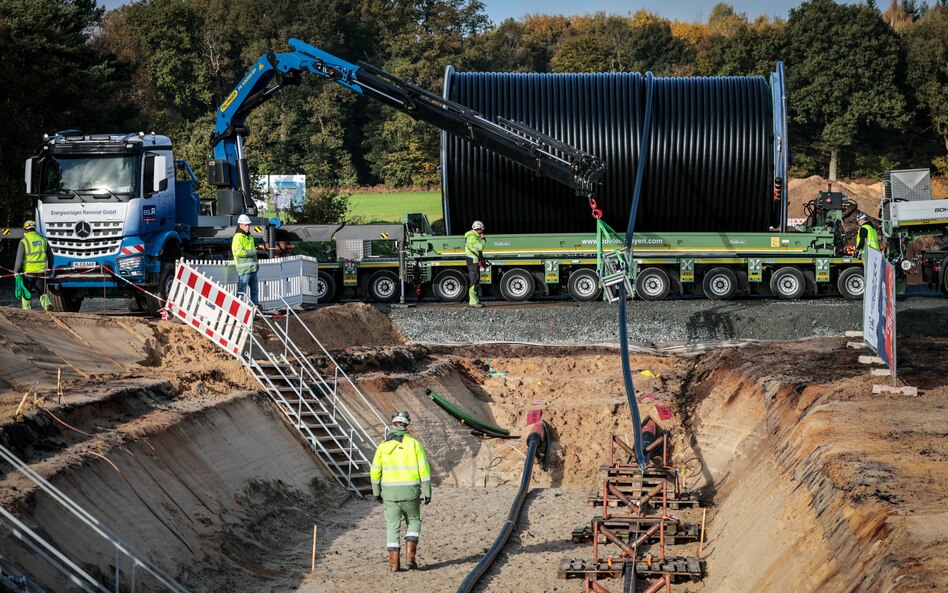
The transmission system operator TransnetBW has surprisingly stopped the construction of the Suedlink direct current line at the Bad Friedrichshall salt mine due to “new geological findings”. An “alternative solution” is “currently being worked out in technical detail,” the company said on Tuesday. Nevertheless, the network operator is still committed to putting the cable connection into operation at the end of 2028.
The 700 kilometer long high-voltage line runs from Schleswig-Holstein to Baden-Württemberg and Bavaria. In the future, it will bring wind power to the consumption centers in the south, or temporarily also solar power to the north. It is a joint project between the transmission system operators TransnetBW and Tennet.
The problems that have now arisen concern a 16-kilometer section of the route that was supposed to lead through the mines of Südwestdeutsche Salzwerke AG at a depth of 200 meters. In addition to the Elbe crossing near Brokdorf, the crossing of the salt mine is the second large special structure along the route that is being realized entirely as an underground cable. The pits are located near the Leingarten-Großgartach converter station near Heilbronn, where Suedlink will be linked to the existing network.
When the area around the mine was explored with horizontal drilling in 2019 and 2020, there was no evidence of critical water inflows, explains TransnetBW. But now the construction work has revealed “indications of a possible water-bearing fault zone” and “necessitated a renewed assessment of the overall situation”. The additional expenses are “within the project’s planned cost and risk provisions”.
Whether a new planning approval decision will be necessary for the replanning is “the subject of ongoing discussions,” says TransnetBW. If this were the case, the project could be significantly delayed, which could lead to an additional increase in network fees that end up as an item on consumers' electricity bills.
“It can be assumed that without Suedlink more redispatch will be necessary than with Suedlink,” says Christoph Maurer, managing director of the specialist consulting company Consentec in Aachen. Redispatch is the often expensive intervention by network operators in the electricity market to compensate for bottlenecks in the network. The costs have so far been passed on to the network fees.
If commissioning is delayed, this could also mean that the network reserves in southern Germany - i.e. power plants that solely serve system stability and do not participate in the regular electricity market - will be needed even longer than planned, says Maurer.
However, whether delayed completion of the route would also slow down the expansion of renewable energies is more of a political than a technical question. In this case, it is possible that larger areas could temporarily fall under the planned redispatch requirement. With this instrument, the federal government would like to slow down the expansion of systems in capacity-limited network areas as part of its network package.
Read the full story at the source
Source: taz