
Germany · taz · · 2h
Arabic cuisine: The herb that doesn't dare
Deutsch (original) · Auto-translated to English
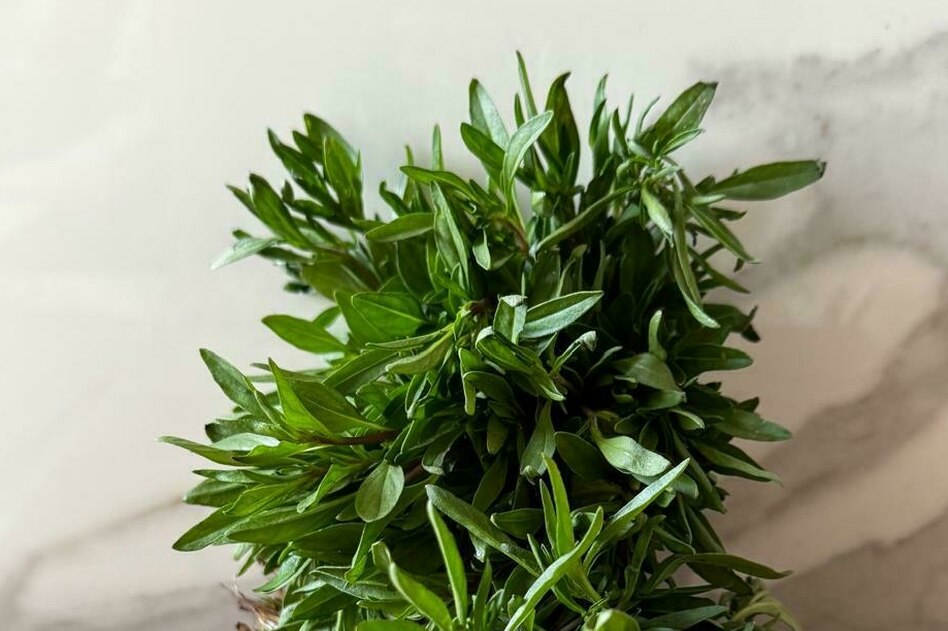
Know-it-all, my browser's image search explains: "This herb is fresh tarragon (Artemisia dracunculus), known for its anise-like aroma." “No, it’s not,” I answer the chatbot offended and am about to simply close the laptop. The robot is not the first to try to downplay everything about the image presented to it.
You can see a plant with lanceolate leaves about the size of a ring finger and a white, rounded stem. So far, so Estragon. It's hardly surprising, then, that the many people I've shown the picture to over the last few years have come to similar conclusions, some even trying to appease and lecture me with completely erroneous considerations like purslane or dill. Nothing about it was true.
This text first appeared in wochentaz, our weekly newspaper from the left!
Every week, wochentaz is about the world as it is – and as it could be. A left-wing weekly newspaper with a voice, attitude and the special taz view of the world. New every Saturday at the kiosk and of course by subscription.
The lush green herb in the picture is called za’atar. I know this because I bought it myself in an ordinary supermarket while visiting family on the Arabian Peninsula, for the equivalent of around 50 cents. There and in the Levant it is used fresh, primarily as a basic ingredient for salads. The taste is reminiscent of thyme and oregano: spicy, but not spicy. And then there's that peculiar note of citrus - a little sour, a little tart. Pleasing, but not too complex: the George Clooney of the herbal snail.
Almost every day during this vacation I ate what the English-speaking Internet calls “Wild Thyme Salad”: a bunch of za’atar, lemon juice, a little olive oil, salt and pepper. Optionally supplemented with grilled olives or pomegranate seeds, accompanied by some bread and labneh – it could always have stayed that way. And why not? After all, I lived in Frankfurt am Main at the time and had good connections to Berlin, so I would probably find something there.
But back home I quickly encountered the first obstacle. Because Za'atar (the German transcription of the Arabic زعتر) not only means all kinds of thyme plants, and generally various culinary herbs, including the one I so coveted, but also a spice mixture of oregano, roasted sesame and sumac. The same one that first appeared in Jamie's and Yotam's cookbooks and then in German kitchen cupboards.
The more urgently I searched the Internet, the more names for the herb I was looking for appeared: In addition to za'atar and "wild thyme", also marjoram and oregano, often with the addition of "Syrian". With “Bible Hyssop” it even became briefly transcendent. I just wanted to have a worldly feast!
So I scoured Arab supermarkets in Frankfurt and Berlin, held my photo of herbs under everyone's nose like a holy picture, and asked employees and friends for help. In acute phases, there were visits to restaurants based solely on a vague sighting of Za'atar or its name derivatives on the menu - in vain. The highest of feelings: rocket, garnished with the spice mixture from the supermarket shelf.
The reactions to my showing of pictures varied between disinterest, astonishment and pity. Occasionally my picture seemed to be recognized, but no one knew why the delicious herb wasn't available here. That again surprised me. Among the countless food trends that have emerged through the interpretive sovereignty of wealthy amateur chefs - matcha, yuzu, bonito, ube - shouldn't za'atar, which is so down-to-earth and apparently exclusive, have its own personality?
This cycle of longing, searching, anticipation and disappointment repeats itself every six months to this day. Recently I professionalized my search. I found what I was looking for in a database at the American University of Beirut. In addition to the common recipe and a picture that showed exactly the long-leaf plant I miss so much, I found a botanical name: Origanum syriacum. So no thyme after all?
I reached for the now familiar digital herbarium “Plants of the World,” a freely accessible online collection with more than 1.4 million entries, taxonomic descriptions and images. A furry bush with small oval leaves smiled towards me. We knew each other. Because in dried form it not only forms the basic ingredient of the spice mixture that is almost ridiculously prominent in this text, but is also sometimes the protagonist of geopolitical conflicts and an important Levantine cultural asset, as I had already learned on my odyssey through several academic articles. This may all be important, perhaps even much more exciting - but I wasn't looking for oregano.
Hurt, I turned my back on science and from then on focused on quantity. Restaurateurs such as suppliers, seed producers, herb gardens, farms, plant dealers: everyone received emails from me. In the meantime I got a hint that it could also be a type of savory. While in this country the small-leaved, shaggy and grandma-like winter savory, Satureja montana, is honored and - particularly creatively - usually cooked with green legumes, the large species Satureja hortensis, summer savory, is an internationally versatile and serious opponent.
And lo and behold: my search, which was so concrete, found fertile ground. On the website of a seed producer in Münsterland I finally found an image that came very close to what I was looking for. Euphoric, I was already imagining my story and was about to overcome the only 500 kilometers that separated me from what had been mine for so long. Frankfurt and Berlin had failed in terms of cuisine; the home of Catholicism and horse breeding was more sophisticated than any metropolis.
Disillusionment followed the next morning: Yes, the plant in my picture must be savory, the farmer who, unlike my previous contacts, confirmed to me on the phone. However, the variety that he grows himself is significantly smaller; The section of the image on the website was obviously misleading. He is not a particular specialist in savory, he took over the farm and the seeds 20 years ago, but I suspect that the variety in my picture could be the “Saturn” variety - a variety whose seeds are only offered by two farms in Germany.
That left me with one last excursion to the local wholesale market, which, professional that I am, I visited during the day rather than during rush hour at three in the morning. Instead of clarification, there are empty halls, loading platforms and smoking forklift drivers. But even the wholesalers I considered subsequently only gave me written rejections. Nobody could do anything with the pictures and descriptions.
The way home took me frustrated to a supermarket. Maybe it was a final act of cruelty, maybe the world wanted to reconcile with me: at the front of the vegetables I discovered summer savory in small bags.
Significantly, from a producer who had already put me off but wished me success in my search. It is not za’atar. Too small, too peppery, not enough acid. More Cruise than Clooney. But chopped with romaine lettuce and the usual garnishes is still a recommended substitute. I also ordered seeds of the “Saturn” variety. Sowing is given for March to April.
Read the full story at the source
Source: taz