
Germany · taz · · 3h
Supplier of rough diamonds: Botswana reaches out to De Beers
Deutsch (original) · Auto-translated to English
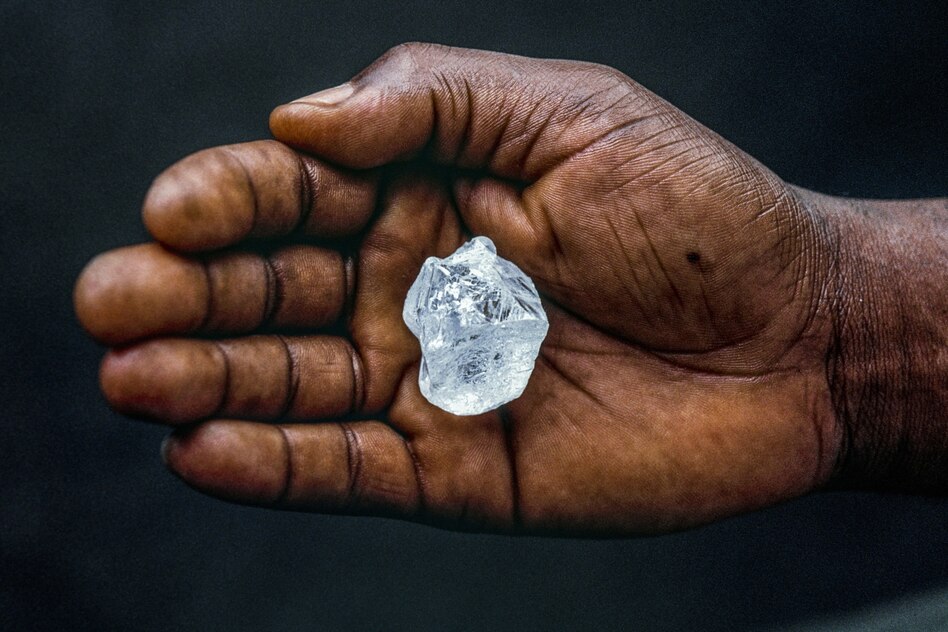
Botswana has been inextricably linked to diamond production for decades. In 1969, just two years after the country's independence, the government took a stake in De Beers, now the world's largest diamond company. This is one of the reasons why the country, which was once one of the poorest in the world, is now in fourth place in terms of economic output per capita in Africa. The population benefited from the diamond wealth through, among other things, investments in health and education as well as in social programs.
But changing consumer habits, a market saturated with lab-grown diamonds and overall declining global demand are putting Botswana's economy under pressure. The once prosperous country must reduce its heavy dependence on natural resources.
Colleagues from 16 African countries are taking part in the 5th Africa workshop of the taz panter foundation. This also creates a 64-page, elaborately designed magazine. It can be ordered by email to stiftung@taz.de with the subject “Africa Magazine” and your name and postal address. Thank you!
The magazine's texts also appear here on taz.de.
Would you like to support the taz Panter Foundation:
• or via the foundation’s account details:
Nevertheless, the government is considering increasing its 15 percent stake in De Beers and thereby increasing its influence over the group. The majority owner, the British mining group Anglo American, announced in the summer of 2026 that it would sell its 85 percent stake in De Beers - and Botswana has a right of first refusal.
Anglo American would ideally like to sell to the Global Diamond Consortium, which in turn includes the diamond-producing states Angola and Namibia. “The government of the Republic of Botswana welcomes the fact that other diamond producing countries are taking part,” said Botswana’s Minister of State Moeti Mohwasa.
The transaction represents a real opportunity to reposition and strategically position Botswana in an industry that has contributed significantly to the development of our nation, said Mohwasa. But he left it open whether Botswana wanted to submit its own offer, participate together with another interested party or seek an arrangement with the Global Diamond Consortium.
The country's economic challenges are likely to worsen in the near future. The diamond-dependent economy shrank by 2.8 percent in 2024 and another 0.7 percent in 2025. And even if positive growth is expected again in 2026, public finances are under pressure.
“Diamond prices and revenues are being weighed down by increasing competition, changing consumer preferences and the rise of lab-grown diamonds,” the World Bank warns in a recent report. As a result, Botswana has “partially lost” its role as a leading supplier of rough diamonds on the global market. While the diamond industry remains a cornerstone of the national economy, the sector has been in decline for several years.
At the same time, Botswana's public debt has risen from a good 22 percent of annual economic output in 2023 to almost 40 percent in 2025. The country's financial reserves have largely been used up.
The World Bank recommended fiscal discipline, private sector development, investment in human capital and sustainable management of natural resources to Botswana.
Botswana wants to transform itself from an economy heavily dependent on diamonds into an internationally competitive state that can negotiate with the major powers of the Global South from a position of strength. Greater control over the diamond company De Beers should help, as will investments in renewable energies and the attempt to make Botswana's economy more independent of a single raw material.
Support the taz panter foundation and its international projects with a donation. Learn more
The race for Africa's natural resources has long been in full swing. Major powers and emerging economies alike are seeking access to critical raw materials from the Global South. And above all, the demand for materials needed for the energy transition is increasing rapidly.
Diamonds are not considered a critical raw material for the energy transition. Nevertheless, Botswana can become a role model for other resource-rich countries in the Global South. The example shows how a state with enormous natural resources can find itself in economic distress if its bargaining power is limited and multinational corporations from the Global North control a large part of the value creation.
The attempt to expand its influence over De Beers even though the diamond business is shrinking initially seems paradoxical. In fact, Botswana is taking an important step to strengthen its bargaining power and secure better prices for its raw materials. A dominant influence over De Beers would give the country more weight compared to foreign buyers.
The key question, however, is how Botswana will use its additional influence to transform and industrialize the country. Diamonds will continue to play a central role in Botswana's economy in the coming years. But in addition to higher income, the country must be able to retain as much of the added value as possible from its raw material wealth within its own country - for example through local processing and the creation of jobs.
A stronger position at De Beers could therefore form an important basis for a broader strategy for raw materials-driven industrialization and economic transformation. This would allow local suppliers, manufacturers and technology companies to take on a larger role within the value chain.
This strategic advantage, as well as the prospect of increased revenue and a stronger geopolitical position, could help the country increase its resilience in the face of the inevitable decline in the importance of the diamond industry. Most importantly, the resulting revenue could help finance economic diversification and climate change adaptation strategies.
Read the full story at the source
Source: taz