
Germany · taz · · 44m
100 years of jazz legend: The power of cosmic music
Deutsch (original) · Auto-translated to English
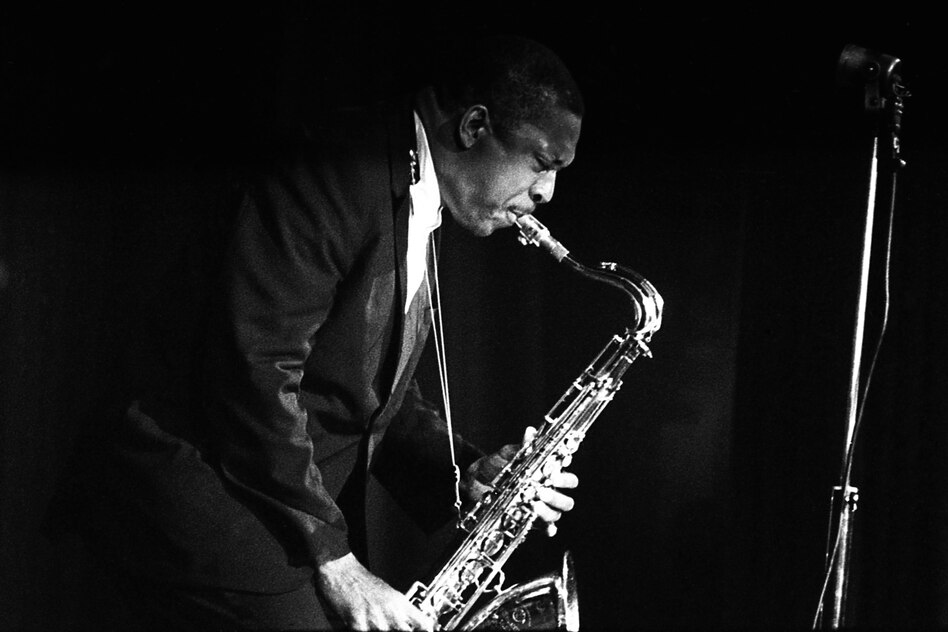
"I would like to be a saint," said John Coltrane in an interview when asked how he imagined his future. At a time when the US jazz saxophonist did not yet know that he would not have much time left. Twelve months after the conversation, the artist died on July 17, 1967 after a short but severe battle with cancer at the age of just 40.
However, Coltrane's wish was to come true. Shortly after his death, he was honored in countless songs. The homages range from pop jazzer Tom Scott to the singer and proto-rapper Gil Scott-Heron to New Age pioneer John Klemmer. There are also entire albums in the spirit of Coltrane, especially by his widow Alice and his colleague Pharoah Sanders, who founded the genre of spiritual jazz.
But the saxophonist's influence was not limited to jazz. The list of musicians who have worshiped Trane is long: Jerry Garcia, Carlos Santana, Patti Smith, Joni Mitchell, Neil Young, Bono, Devonté Hynes in rock and pop, and Terry Riley, La Monte Young and Philip Glass among composers, to name just a few.
The fact that Coltrane is actually regarded as a musical pillar saint is certainly due to his early, tragic death. He achieved the real miracle necessary for any canonization with his album “A Love Supreme.” Recorded in a few hours on December 9, 1964, in the four parts of the suite, Coltrane not only improvised melodies and solos accompanied by his quartet, but he literally preached with his tenor saxophone.
The lyrics can be found inside the cover: “All for God / Thank you God / Amen” – a piece of spiritual music full of intensity and emotions. Coltrane jumps from register to register, overblowing his instrument, making it scream, whisper, plead and croak so that it resembles the expression of a human voice. The work was avant-garde, but at the same time found a wide audience beyond jazz in the flower power era. Not surprisingly, San Francisco even has a parish dedicated to Saint John.
Coltrane's rise to one of the most important musicians of the 20th century was anything but predetermined: Born on September 23, 1926 in a small town in the US state of North Carolina, John William Coltrane grew up in a religious and musical family. He learned to play the alto saxophone at school. Only later did he switch to his signature instrument, the tenor. When he lost his father at 13, John took refuge in music and practiced for hours. Discipline and a self-critical search for perfection accompanied him throughout his life. From 1949 to 1951 he played in the big band of bebop hero Dizzy Gillespie. The musical success went hand in hand with a heroin addiction. He then ended up stranded in Philadelphia as an accompanist.
His career could have ended here if Miles Davis hadn't arrived in 1955. The trumpeter urgently needed a saxophonist for his combo. His drummer Philly Joe Jones suggested his friend Coltrane. Coltrane's extroverted style on the saxophone was an ideal counterpart to Davis' reduced, precise trumpet tones. Because of his drug addiction, Miles soon threw the saxophonist out again, only to have him come back after an interlude with piano legend Thelonious Monk.
John Coltrane realized he had to change his life. He went into withdrawal in 1957 and from then on paid attention to his health, became a vegetarian and meditated. Although he began releasing recordings under his own name on the Prestige, Blue Note and finally Atlantic labels, he continued to work for Miles Davis, including on his groundbreaking work “Kind of Blue” (1959).
Coltrane's breakthrough as a bandleader came in 1961 with “My Favorite Things.” In the title track of the album he introduced the soprano saxophone into jazz. On the other hand, he became a pioneer of world music with his solo, as his style of playing is based on scales from India. Coltrane had previously incorporated Caribbean, Brazilian and African elements into his pieces. “My Favorite Things” also marked work with pianist McCoy Tyner and Elvin Jones on drums. With the bassist Jimmy Garrison they formed a quartet, through whose interaction Coltrane finally became a defining figure in jazz.
The quartet's style-defining recordings are closely linked to the jazz label Impulse, where Coltrane experienced his creative and commercial peak. Coltrane's increasing opening and restless liberation of music in the early 1960s caused controversy and rejection: Is this still jazz? To counter this accusation, his record company quickly sent him into the studio with swing master Duke Ellington in 1963.
Coltrane's concerts were loud, ecstatic and full of energy. His long, eruptive solos were interpreted as outbursts of black anger given the socio-political situation in the USA between the Vietnam War and the civil rights movement. The saxophonist himself was interested in politics and was impressed by Martin Luther King and Malcolm X. However, he saw his music more as connecting and uplifting.
John Coltrane shared this approach to universalistic, cosmic music in which different musical traditions and religious ideas are combined with his second wife, the pianist Alice McLeod, with whom he had three sons. After “A Love Supreme,” Coltrane expanded his quartet to include young musicians such as Archie Shepp, Pharoah Sanders and Rashied Ali for the albums “Meditations” and “Ascension” (both 1966). Shortly before his death, Coltrane had finally arrived at free group improvisation.
As with all musicians whose work remains unfinished, with Coltrane one wonders what would have happened next. Would he have electrified jazz and adapted to fashions like Miles Davis? The fact that Coltrane advertised an electronic saxophone speaks against this, but he never used the instrument for his recordings and concerts.
Alice Coltrane showed a different direction. In 1972 she released the album “Infinity,” for which she arranged recordings of her husband with a string orchestra. Their argument for this step, which was harshly rejected by critics: Coltrane had intensively studied the work of the composer Igor Stravinsky (1882–1972) and looked for ways to expand his tonal palette. This album is only gradually gaining due recognition.
In 1963, John Coltrane stated: "Why music has this power is still not fully understood. Controlling it should be the goal of all artists. Or so I believe." The path shown by John Coltrane is far from reaching its end point.
Read the full story at the source
Source: taz