
Germany · taz · · 2h
Legendary punk concert in Berlin's SO 36: They are restless, obsessed and know no limits
Deutsch (original) · Auto-translated to English
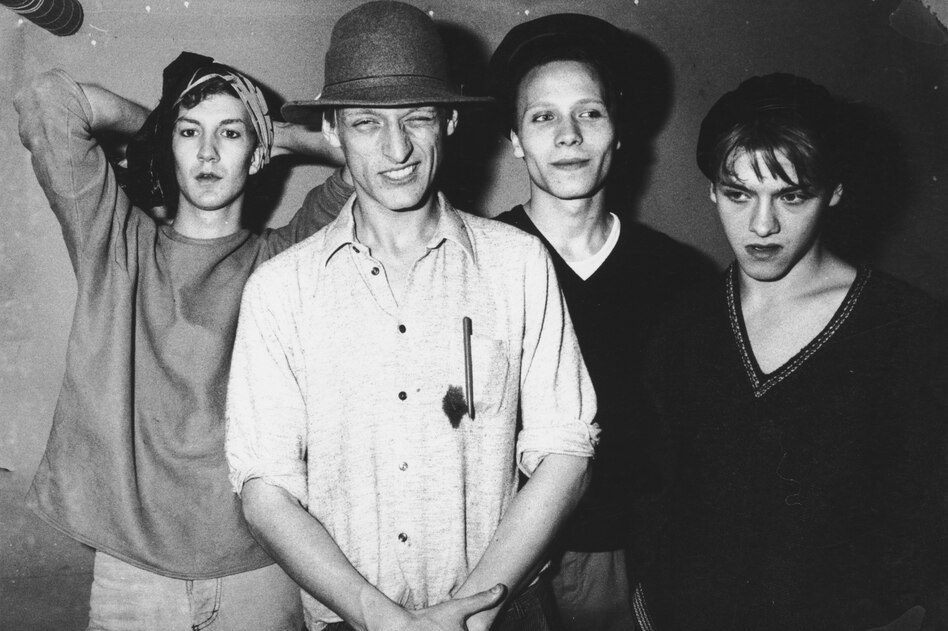
The 50th anniversary of punk will be celebrated everywhere in 2026, with reference especially to the big bang in Great Britain in 1976 and famous British bands such as Sex Pistols, the Damned and The Clash. But punk is the story of a movement that was both international and yet very local. Every scene had at least its own version of punk. This also led to exchanges across national borders in the subculture. For example, when the Danish punk band Sods was attacked on stage in the Kreuzberg club SO36 - and they took the whole thing pretty cool because: West Berlin.
The Sods, who later renamed themselves Sort Sol (in German: Black Sun), were the first and most famous Danish punk band. Formed in Copenhagen in 1977, the original line-up consisted of Steen Jørgensen (vocals), guitarist Peter Schneidermann (aka "Peter Peter"), Knud Odde on bass and drummer Tomas Ortved. The band also published their own fanzine The Latest Crap from the Sods, driving the Danish punk scene and working closely with the punk-affinous poetry and art scene in Copenhagen. “It was more the images, the iconography of punk that attracted me,” as Knud Odde later emphasized. Today his outstanding graphic works are often exhibited in museums.
The Sods were musically experimental; their songs ranged from energetic, provocative pieces like “R.A.F.” to the Red Army faction (“They fight the whole society /It’s like watching a piece of poetry!”), to the post-punk melancholy of a piece like “Marble Station”. The Sods were not at all unknown in West Berlin; their records were sold, among other places, in the Kreuzberg record store “Scheissladen” on Großbeerenstrasse. Their punky reggae song “Copenhagen” was also playing in the bars. Before they performed in the walled city themselves, the musicians of the Sods had already attended concerts at SO 36, where they had seen Pere Ubu from Cleveland and Hamburg's Palais Schaumburg as the opening act.
The author: Marie Arleth Skov is a Danish art historian who has lived in Berlin since 1999. Her research focus is on surrealism and the punk movement of the 1970s and 1980s.
The panel: On Wednesday, September 30, 2026, Skov will be a guest at the taz-Cafe at the panel “Rebellion in the Underground. On the Origin of Punk”. Starts at 7 p.m
"Part of the Berlin scene consisted of very experimental New German Wave, which I really liked, and then there were a lot of street punks. I remember Berlin as a gray city with a lot of rain and a sex monster in every apartment - or was that Zulawski's film 'Possession'," says Peter Peter, referring to the psychological horror drama In the Shadow of the Wall from 1981. Perhaps it is not a coincidence that Peter Peter resorts to the film reference here In recent years he has been working very frequently with film music, among other things. for Nicolas Winding Refn (e.g. for the “Pusher” trilogy). Sort Sol's most famous song, "Let Your Fingers Do the Walking" (1993), was featured in Ole Bornedal's film "Nattevagten" (Night Watch, 1994) - and was also my first introduction to the band as a teenager.
The Sods had a "small fan base" in West Berlin - especially after The Clash were considered a sellout in the punk scene due to their contract with the major label CBS - according to Knud Odde. The Danes, on the other hand, could (still) be considered an underground group and the concert organization was correspondingly modest. “We were stuck at the zone border with the GDR for a long time, and since our budget was tight, we drove back that same evening.”
The Sods concert was organized by KZ36, an event venue and collective. KZ36 stood for “communications center” and the Kreuzberg postcode 36; The fact that the name was extremely provocative was taken into account: "It was a problem for one or two left-wing philistines. Good name!", as Andreas Heske from Beton Combo, who was one of the initiators, noted. In addition to concerts in their own backyard on Waldemarstrasse, the collective also held outsourced concerts in the larger SO36.
This was also the case in March 1981, when the KZ36 invited people to the “big action dance” in the SO36. As is usually the case at the concerts organized by KZ36, three bands played this evening: the Neukölln punk band Ixtoc-1, the Nicoteens from Ingolstadt and the Copenhagen Sods, who were announced in the Berlin city magazine TIP as the “highlight of the evening”.
There was also a hint of what would later become a problem: "While the Sods were still very much into hardness punk on their first album 'Sods', released in 1979, their new LP 'Under en Sort Sol' is an incredibly exciting step towards psychedelic music."
The debut album wasn't called "Sods" but "Minutes to go" but the description of the music is accurate: In 1981 the Sods were already on their way to a melancholy, spherical new wave sound with slow, dark tones. The band followed a poetic, avant-garde tradition, which can also be seen in the titles of their albums: “Minutes to Go” referenced the volume of poetry of the same name by William S. Burroughs and others from 1960. The Sods album title “Dagger and Guitar” (1983) in turn referred to the first book by the Danish CoBrA artist Asger Jorn from 1952.
At SO36 that evening in March 1981, however, there was a lack of understanding for such avant-garde escapades. Peter Peter: "The Kreuzberg audience was prepared to hear songs from 'Minutes to Go', but we had already stopped playing them before the record was released. We had an extra guitar with us and TS Høeg on the saxophone. That was probably too much of a good thing."
The audience reacted aggressively and started throwing beer cans onto the stage. One of them injured guitarist Jan Ørslev; the band had to leave the stage in a hurry. The Sods were surprised by the aggressive mood, but Neubauer musicians Blixa Cash and Alexander von Borsig came backstage to applaud the Sods for eliciting such a drastic reaction from the West Berlin audience, as Jan Poulsen describes in his band biography, "Under en Sort Sol." After all, punk was all about waking people up and getting them fired up. Approach by pushing.
There had been more trouble in SO36. The artist Martin Kippenberger, for example, ran the club in 1978-1979 with a mixture of irony and arrogance and deliberately provoked the regular guests with increased beer prices (on tap instead of in cans!) and “Luxury in SO36” posters. In 1979, a group of masked punks vandalized the SO36, stole the cash register and distributed flyers that read: “Destroy the SO36 – Punks against consumer shit!” After a fight with the punk “Rat Jenny,” Kippenberger immortalized his bruised and bandaged face in the painting entitled “Dialogue with Youth” (1981).
It is possible that this still-simmering dispute and its consequences contributed to the heated atmosphere at the Sods concert. Either way, punk as a rebellious subculture carried a contradiction within itself. That's exactly what makes it so attractive: the movement wasn't designed for consensus, but rather for debate; the collision and pushing each other around in pogo dancing – physical, mental – was intrinsic. Just don't get lazy.
"I traveled to West Berlin with the Sods and saw their concert at SO36, there was trouble! That was probably one of the most extreme experiences I've ever had at a concert," says Danish artist Nina Sten-Knudsen.
In the late 1970s and early 1980s, as a member of the artist group “King Kong”, she created light, slide and film installations for rock concerts. Her body art series involved auto-aggressive injuries and she created installations reminiscent of partisan battles. Punk fit the bill: "When I heard Sods play for the first time, I was completely overwhelmed. It grabbed me straight away!"
That evening in Kreuzberg, too, Nina Sten-Knudsen was particularly fascinated by the energy and passion of the crowd: "They were the wildest people, so angry! I thought to myself: I should move here!" A few years later she did the same. So the Sods concert in SO36 became a kind of international subcultural understanding through unrest and obsession.
Read the full story at the source
Source: taz