
World · taz · · 2h
War in Ukraine: A lot of criticism, little concrete
Deutsch (original) · Auto-translated to English
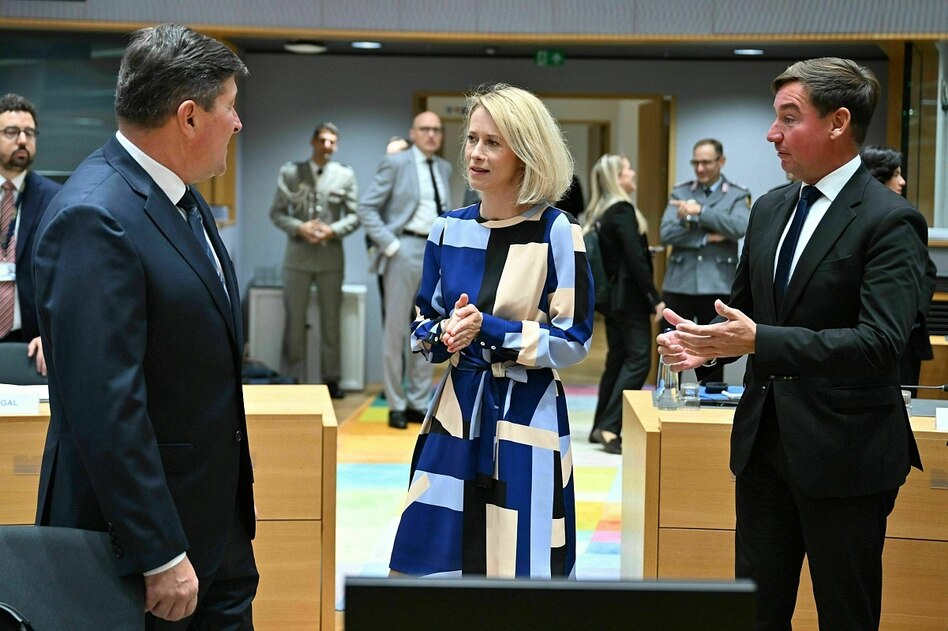
The EU has accused Russia of a lack of willingness to engage in serious peace negotiations. Ukraine must therefore continue to be equipped with weapons, said Foreign Affairs Representative Kaja Kallas after a meeting of EU defense ministers in Brussels on Monday. She announced that the EU would once again provide more money for this.
However, the ministers did not make any firm commitments to supply additional Patriot defense systems to Ukraine. There was also no majority for a new crisis mechanism, as proposed by EU Commission President Ursula von der Leyen, to respond to hybrid threats.
Kallas nevertheless tried to sell the meeting in Brussels as a success. She said she sees her view confirmed that Russia does not want peace. This was shown by the meeting between Federal Foreign Minister Johan Wadephul (CDU) and Russian Foreign Minister Sergei Lavrov in New York at the weekend.
Wadephul and Lavrov broke up irreconcilably after the surprising encounter and then made accusations at each other. There are many countries outside Europe that take the view: “Speak to the Russians and then there will be a result,” said Kallas, commenting on the event.
However, the talks in New York showed “that Russia is really not interested in peace at all,” emphasized Kallas. Kallas also fended off criticism of her own work. As the EU's chief diplomat, she should actually take the initiative herself.
Kallas explained that Wadephul sought talks with Russia instead, pointing out that Germany also provides the most help to Ukraine. However, the foreign representative, who is considered a hardliner in Russia policy, did not announce any diplomatic initiatives of her own.
There was no new impetus from the defense ministers either. There were “unfortunately no new commitments” for additional air defense missiles for Ukraine, said Kallas. With a view to the EU naval mission in the Red Sea, two countries have indicated that they could provide additional ships. But there were no firm commitments.
The debate about a possible new crisis mechanism with which the EU could respond to hybrid attacks by Russia also failed to produce any tangible results. Many defense ministers have emphasized that such a regulation “necessarily has to be in addition to NATO,” said Kallas after the meeting in Brussels.
Von der Leyen spoke out in favor of a security protocol modeled on Article 4 of the NATO Treaty in her speech on the state of the EU in Strasbourg two weeks ago. It could be used in “hybrid attacks” such as the drone incident at Leipzig Airport, according to Brussels.
However, after Leipzig, the German federal government did not consider it necessary to call a NATO crisis meeting. EU committees were also not involved. It is therefore unclear what added value a new crisis mechanism could bring. Many EU states fear that this would create unnecessary competition with NATO.
Kallas said it was about a protocol for attacks “below the threshold of armed aggression.” Danish military intelligence recently warned that such attacks from Russia could become more frequent. However, there is usually a lack of evidence. This is also why the EU and NATO have not yet found a parade.
Read the full story at the source
Source: taz