
Germany · taz · · 54m
Climate killer aviation: fewer contrails, slower global warming
Deutsch (original) · Auto-translated to English
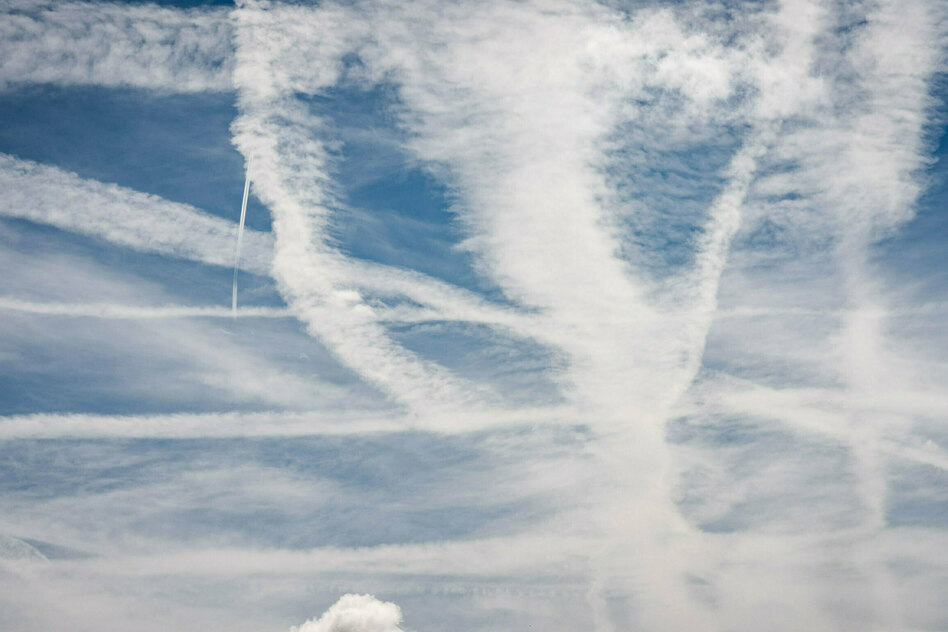
Global warming caused by aviation can be delayed by ten years if contrails are avoided. This is the result of a study by the transport NGO Transport & Environment, which is available to taz. According to the report, which will be published this Tuesday, air transport's contribution to global warming could be shifted from 0.08 degrees in 2040 to 2050 without contrails. Halving the climate effects of contrails could save up to 23 percent of global CO₂ emissions from aviation. This corresponds to the annual emissions of up to 50 million gasoline-powered cars. As many as are currently approved in Germany.
The predicted delays in global warming sound minimal, but can have enormously positive consequences for the global climate. In addition, avoiding contrails is one of the simplest and most cost-effective methods of reducing the climate impact of aviation. Pilots can avoid them by making minor changes to flight routes without requiring significantly more kerosene. At the same time, contrails are currently responsible for around half of the greenhouse gas effect of international air traffic - i.e. around one to two percent of total global CO2 emissions.
"Preventing contrails is a simple climate measure with a big impact. We now have a unique opportunity to get these climate change accelerators under control," says Anna Comino from T&E.
Contrails form at high altitudes when hot exhaust gases meet very cold, moist air. The inconspicuous lines in the sky become ice clouds. They let sunlight through, but retain the heat radiated from the earth like a blanket - and thus prevent it from escaping into space. The warming effect predominates, especially at night, as no sunlight is reflected, but the earth radiates heat. The effect only occurs on a few flights, for example over the Atlantic. The climate-friendly effect occurs when the cold layers of air are simply flown around.
The tourism group Tuifly saved 80 percent of greenhouse effects in tests with slight altitude and route corrections on 5 percent of its flights. There were only delays of a maximum of two minutes, and Tuifly is sure that the passengers probably didn't notice much.
This winter, a consortium including the British government and air traffic control services will conduct the world's first test in Atlantic airspace.
Not only is there currently a lot of research into avoiding contrails in aviation, politics is also active: The EU Commission recently proposed free emission certificates for airlines that manage to avoid contrails as part of the revision of the EU emissions trading system (EU-ETS). T&E recommends that the European Parliament and the EU member states support the initiative.
Read the full story at the source
Source: taz