
World · taz · · 2h
Israel before the parliamentary election: Opposition gathers against Netanyahu
Deutsch (original) · Auto-translated to English
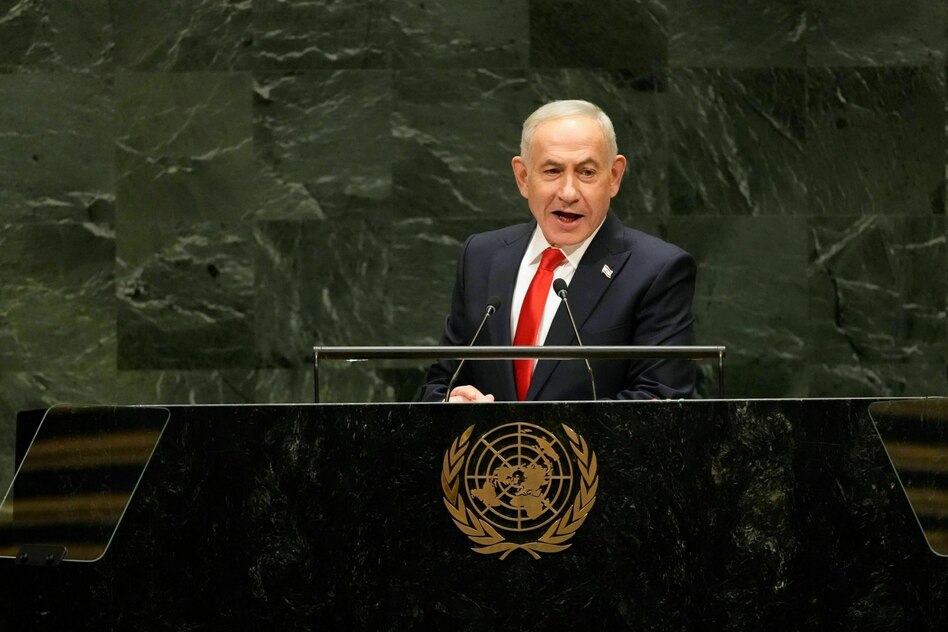
Several Israeli opposition parties want to work together to prevent Prime Minister Benjamin Netanyahu and his coalition from winning the parliamentary elections on October 27th. “We are aware that these elections are crucial for the future of the country,” said a joint statement from the Jewish opposition parties on Saturday evening. They will work together to increase voter turnout, combat fake news and smear campaigns and set the fundamental principles for the next government.
Participants in the meeting were former military chief Gadi Eisenkot, who is considered Netanyahu's main challenger, former heads of government Naftali Bennett and Jair Lapid, who are running with a party alliance, Jair Golan from the center-left party The Democrats and also Avigdor Lieberman from the nationalist Israel Beitenu party. Arab opposition parties were not represented. The Knesset election is the first since Hamas' terrorist attack on Israel on October 7, 2023 and the Gaza war that followed. It is expected that security policy failures before the Hamas attack will be a crucial issue for voters. (ap)
Far-right Israeli Finance Minister Bezalel Smotrich called on Sunday for an annexation of areas in southern Lebanon and the Gaza Strip, as well as a "war" by the Israeli army against Palestinians in the occupied West Bank. “I want us to annex at least up to the Yellow Line in Gaza and up to the Litani River in Lebanon,” Smotrich said on Sunday in a podcast for the Israeli news website Ynet. “What would deter the enemy if a war ended on the same lines where it began?” Smotrich asked, adding: “I think we have to go to war in Judea and Samaria to dismantle the Palestinian Authority, which supports terrorism.” The minister used the biblical name for the West Bank.
The so-called Yellow Line in the Gaza Strip delimits the area controlled by the Israeli army, which makes up more than 60 percent of the Palestinian territory. In Lebanon, where Israel and the pro-Iranian Hezbollah militia have fought in recent months, the Israeli army occupies a ten-kilometer-wide strip in the south of the country. Smotrich is the leader of a right-wing extremist party that calls for annexation of the entire West Bank. Israel has occupied the West Bank since the Six-Day War in 1967. Around three million Palestinians and more than 500,000 Israeli settlers live there. The settlements are illegal under international law. (afp)
Israel's army says it has killed a Hamas commander who is said to have held hostages in the Gaza Strip during the war, including several German-Israelis. The commander was fatally hit in an attack in the northern Gaza Strip on Tuesday, according to a joint statement from the military and the domestic intelligence service Shin Bet. During the Gaza War, the member of the Hamas military wing was involved in the captivity of nine hostages, including the German-Israeli brothers Gali and Ziv Berman and the German-Israeli Alon Ohel. The three were released as part of a ceasefire agreement in October last year.
There has actually been a ceasefire in the Gaza war since October 2025; But there are always fatal attacks. Recently, Israel increased its air strikes again and, according to the military, deliberately killed high-ranking members of the Islamist terrorist organization Hamas. On October 7, 2023, fighters from Hamas and other extremist organizations killed around 1,200 people in Israel and kidnapped more than 250 others as hostages to Gaza. The unprecedented attack sparked the Gaza War. Since then, more than 74,000 Palestinians have been killed in the Gaza Strip, according to the Hamas-controlled health authority. (dpa)
Israel's Attorney General Gali Baharav-Miara has extended the tender for the construction of a particularly controversial settlement project in the occupied West Bank. The deadline for submitting offers for the construction of thousands of apartments in the E1 housing project will be postponed by a month, her office announced on Sunday. The date is now after the parliamentary election on October 27th in order to reduce the risk that the tender will be used for “election propaganda”. The controversial E1 settlement project east of Jerusalem was approved last year after decades of standstill. In July, the Israeli Ministry of Housing announced the construction of more than 1,200 of the planned 3,400 apartments in the area between East Jerusalem and the Israeli settlement of Maale Adumim.
Critics say the construction of the massive settlement would effectively divide the West Bank into northern and southern parts, further reducing the prospects for a viable Palestinian state. Germany, France, Great Britain and Italy called on the Israeli government to end the project in August. Several Israeli organizations also filed a lawsuit against the tender. However, a Jerusalem court rejected an urgent application against the E1 project a good two weeks ago. The court argued that there was still enough time for a legal review before the construction project was implemented.
Israel has occupied the West Bank since the Six-Day War in 1967. Around three million Palestinians and more than 500,000 Israeli settlers live there. The settlements are illegal under international law. Under Prime Minister Benjamin Netanyahu, Israel has pushed ahead with settlement construction in the West Bank. His government also includes several far-right ministers who openly support annexation of the West Bank. Before the parliamentary elections on October 27th, the government is pushing ahead with further construction projects. (afp)
According to a new survey, public opinion in Germany and other important European countries has shifted further against Israel and in favor of the Palestinians in the wake of the Gaza war. In Germany, for example, in the so-called HU-EF barometer, 19 percent of those surveyed said that the conflict had made them “more pro-Palestinian.” In 2024 the proportion was still 14 percent. The proportion of those who said they “think more pro-Israel” since 2024 fell from 9 to 8 percent. 46 percent (2024: 54 percent) said the war had not changed their opinion. 23 percent (20) did not provide any information, 5 percent (4) explicitly stated that they did not want to answer this question. “Welt am Sonntag” first reported on the biennial survey conducted by the DAAD Center for German Studies at the Hebrew University of Jerusalem. For this purpose, at least 1,000 representatively selected people were surveyed in Germany, France, Great Britain and Poland.
In Poland, the increase in those who have “become more pro-Palestinian” since 2024 was particularly strong – from 14 to 30 percent. In France the number rose from 13 to 16, in Great Britain from 17 to 18 percent. The proportion of respondents who said they had become more “pro-Israel” fell by one percentage point in each country – from 5 to 4 percent in Poland, from 7 to 6 percent in France and from 11 to 10 percent in Great Britain. Another important finding: In three of the four countries examined, a clear majority of respondents thought that anti-Semitism was a problem in their country. In Germany it was 56 percent, in Great Britain 55 percent and in France 63 percent. Only in Poland fewer people agreed with this statement than disagreed with it - 29 to 31 percent. 15 percent in Germany, 12 percent in Great Britain and 12 percent in France said that anti-Semitism was not a problem in their country.
According to the survey, there are clear differences in the interpretation of the causes of anti-Semitism. In Germany, the political right (41 percent) and Muslim migrants (42 percent) are seen to a similar extent as the main source of anti-Semitism in the country. In 2024 the numbers were 48 and 45 percent. In Poland, too, the political right (30 percent) and Muslim migrants (24 percent) are seen as the main causes. In Great Britain and France, on the other hand, the share of the political right in anti-Semitism (14 and 12 percent) is estimated to be significantly lower than the influence of the population as a whole (21 and 23 percent) and, above all, the influence of Muslim migrants (27 percent each). (kna)
Read the full story at the source
Source: taz