
Germany · taz · · 2h
Investor lawsuits against states: How Russian oligarchs are suing states
Deutsch (original) · Auto-translated to English
Nobel Prize winner in economics Joseph Stiglitz recently called it a form of “legal terrorism”: investor-state arbitration, or ISDS for short. States with investment protection agreements give investors the right to sue them before private arbitration courts if they feel they are being restricted by political actions. This can be the case with environmental laws or with the excess profits tax, which was recently discussed in connection with the fuel rebate. Many companies also use ISDS to obtain compensation for future calculated profits.
German investors are particularly keen to sue, and at the same time lawsuits against the Federal Republic are increasing, as a current study by the environmental organization PowerShift, which was published on Wednesday, shows. There are currently four known ongoing lawsuits against Germany.
The negotiations are secret - and the compensation amounts are usually much higher than in national courts. In addition, it is primarily about whether investors were treated unfairly, not about environmental or social issues. Since 1975, plaintiffs have been awarded $123 billion in this way - although these are only the figures that have become public.
The industrial raw materials group Klesch Group, for example, is suing the federal government over the introduction of an excess profits tax in 2022 that was intended to skim off windfall profits from price increases as a result of the Ukraine war. The Swiss company Azienda Elettrica Ticinese (AET) is suing over the coal phase-out and is demanding compensation of around 100 million euros, even though the company only invested 23 million euros in the affected power plant in Lünen in the northern Ruhr area. The common argument: future profits would be lost.
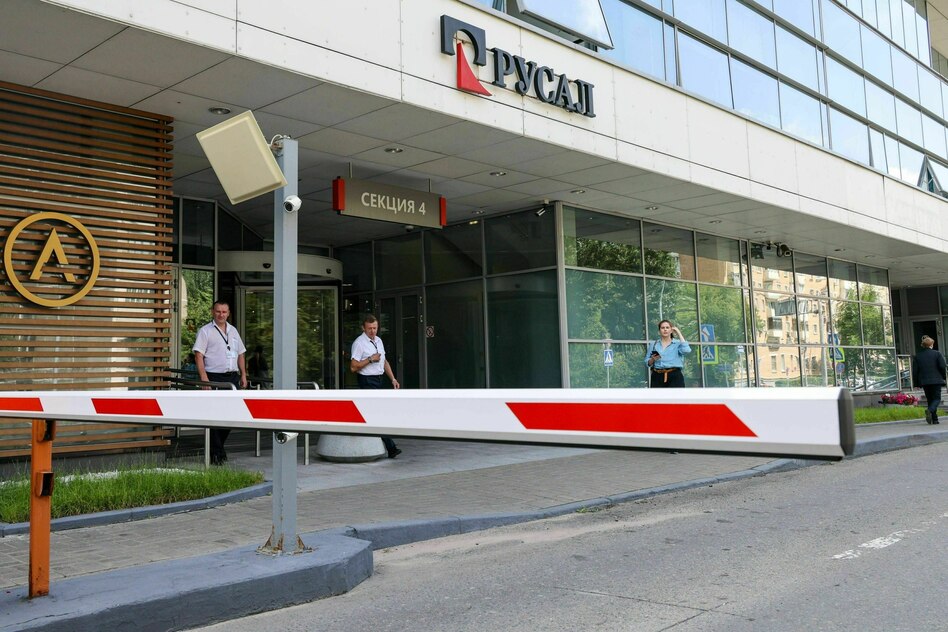
Just this year, the Russian aluminum company Rusal sued Germany on the basis of a bilateral investment protection agreement from 1989. This lawsuit is part of a new trend against the European Russia sanctions policy. Powershift counts 23 corporate lawsuits since 2022 from Russian-sanctioned companies and oligarchs against EU member states. They are demanding more than $42 billion in compensation. There are also 10 lawsuits against Ukraine.
The political implications of these complaints only recently became clear: at the end of September, the EU removed two Russian oligarchs from the sanctions list. One of them was Mikhail Fridmann. The Putin supporter had previously sued Luxembourg in a private arbitration court for $16 billion. The country then advocated for its removal from the list out of “national interest”.
Friedmann alone is complaining about ISDS proceedings in three cases as a person whose assets have been frozen - against Luxembourg, the Netherlands and Great Britain - and in three cases via his companies.
“The Friedman case is a breach of the dam,” says Fabian Flues, investor-state arbitration expert at PowerShift. He fears that even more Russian oligarchs could now use this tool.
In the 18th sanctions package from July 2025, the EU adopted a series of measures to curb these waves of lawsuits. Accordingly, EU states should not recognize the judgments of private arbitration courts on sanctions and should not pay if they are sentenced to do so.
The problem, according to Flues, is that these cases do not come before arbitration courts in Europe. The plaintiffs argue that they are not getting a fair trial in Europe. The arbitrators, who can appoint the plaintiffs, then choose a seat in Singapore or Dubai. Friedman's lawsuit against Luxembourg was heard in Hong Kong.
As of now, there has been no completed procedure due to the Russia sanctions. How Europe intends to implement the measures from the sanctions package will only become clear when judgments are made.
Only a few EU countries, such as Lithuania, have so far complied with Brussels' request to terminate bilateral agreements with Russia. But that would be the “logical step,” says Flues. One reason why countries shy away from this is the long “sunset clauses”, which stipulate that investors can sue many years after the contract has been terminated.
This is also how a spokesman for the Federal Ministry of Economics explains it when asked: "A termination of investment protection contracts has no effect on short-term lawsuit risks because these contracts each agree on a follow-up effect for the period after they expire. In the case of the agreement with Russia, this is 20 years."
“The problem is, the longer you wait, the longer the sunset clause lasts,” counters Flues.
But Flues finds it even more problematic that the contracts with Ukraine are not being terminated. “If Ukraine joins the EU, this would have to happen anyway because ISDS procedures between EU member states violate EU law.”
And this also happens: Russian oligarchs are suing Ukraine through European shell companies or subsidiaries, including in Germany. AEROC Investment Deutschland GmbH, based in Munich, filed a lawsuit against Ukraine in July 2025. The subject is the nationalization of the Ukrainian subsidiary AEROC LLC, which operated two concrete plants. AEROC is owned by Russian oligarch Andrei Molchanov's LSR Group.
“It is an absurd situation that the EU is trying to raise money for Ukraine, and at the same time Ukraine is being put under pressure by such lawsuits and has to put money and effort into the proceedings.” For Flues, the situation is clear: “In times of multiple crises, states must be able to react quickly and have room for maneuver - and fundamentally abolish parallel justice for corporations and oligarchs.”
Read the full story at the source
Source: taz