
Germany · taz · · 3h
In times of change: We are not the good guys
Deutsch (original) · Auto-translated to English
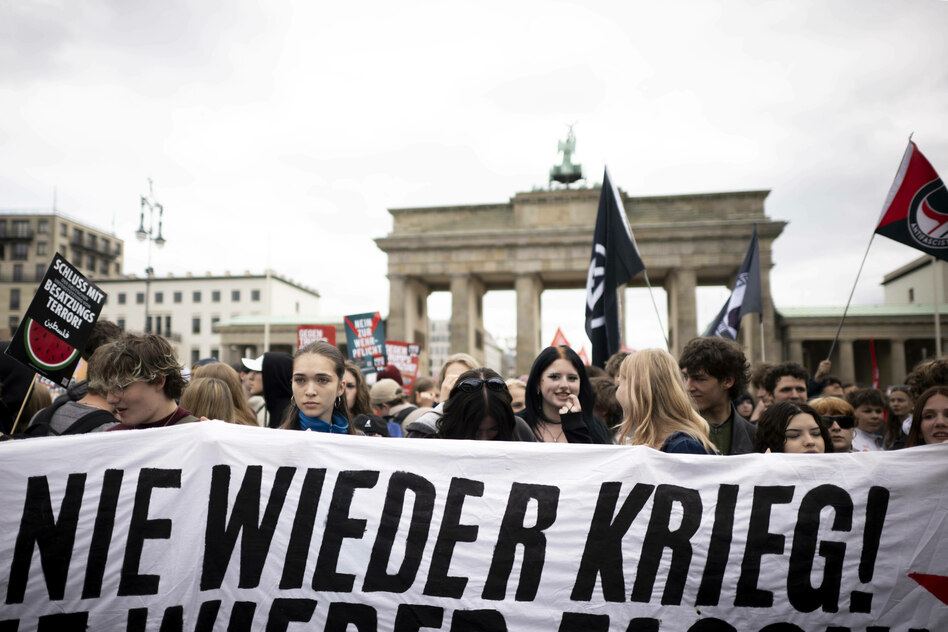
When you approach seventy in Germany, you look back on a long period of peace. Sometimes I see 30-year-olds or 3-year-olds now and ask myself: Will you see war? Everywhere you look, there are advertisements for the Bundeswehr, articles about civil defense, the small number of bunker sites, the threat from Russia. And an unprecedented upgrade: 600 billion euros are being made available for this in Germany quite quietly until 2029. For comparison: the “pension at 63” costs 10 billion per year. Have I studied too much history when the thought comes to me: “It feels like pre-war times”? And it could happen as it has sometimes happened: everyone feels they are in the right - and then the horror begins.
was an editor at NDR in the education and science departments until 2020. Most recently, the book was published by Kröner-Verlag: “The Riddle of Rudolf Steiner. Irritation and Inspiration”.
But aren’t “we” really in the right? The core argument was formulated immediately after the Russian attack on Ukraine: This brutal breach of international law meant a “turning point” and the rules-based international order was being destroyed by Russia. And because the guilt was so obvious, there was no longer any need to dwell on the question of when and where this rules-based order ever existed.
The recent history of the West is also a chronicle of violations of international law, from the Vietnam War to the invasion of Iraq and Israel's violations of international law, which were tolerated for decades, to the most recent attack on Iran. The cynical formula is: The West is firmly committed to the rules-based order - as long as the other side is involved. This double standard also explains the much-lamented fact that the Global South reacted quite indifferently after Putin's attack on Ukraine. Of course, dependencies on Russia also play a role, but above all a clear view that the West is not in the moral position to lecture others on these issues.
The taz is an independent, left-wing and opinionated daily newspaper. We have been arguing in our comments, essays and debate texts since the taz was founded in 1979. We often cannot and do not want to agree on an opinion. That's why you'll find some completely opposing positions here - all part of the very broad left-wing spectrum of opinions.
Strange how little these simple facts appear in the dominant discourse in this country. He follows his “we’re right” mantra in a daze. But on the Internet you can hear all the other voices. In addition to some crazy voices, there are also moderate, experienced, worried ones. For example, those of Günter Verheugen, Klaus von Dohnanyi, Jeffrey D. Sachs. The fact that one was once considered a capable EU commissioner, another was considered an intellectual ray of hope in German politics, and the third was a renowned economist and UN special advisor, none of that apparently counts.
Now their entire argument is dismissed as being based on Russian narratives. But the question is not whether they are right on every single point - neither are others. The question is whether their arguments are within what would be discussed in a reasonable discourse. They are well within the limits, but are hardly ever seriously considered.
Or is the threat so great that ranks need to be closed more sharply? Here too, a look at reality helps. Russia's economic power is half that of Germany, i.e. a fraction of what Central and Western Europe alone has. Of course, a regime like Putin's can mobilize its resources much more brutally and switch to a war economy. However, this also has its limits.
The US House of Representatives has just passed a new, comprehensive package of sanctions against Russia. Russia itself is unlikely to risk an attack on NATO in the foreseeable future, NATO Supreme Commander in Europe Alexus Grynkewich recently stated. That doesn't mean that Russia poses no danger; it is still a nuclear power. But the rest, the hybrid attacks, the drone attacks, have to be classified correctly: Asymmetrical warfare is always the weapon of the weaker. Of course you have to defend yourself against it.
Now is the time for a new peace movement. But what direction could it have in terms of content? Beyond a diffuse “We are for peace”? It's a shame that there hasn't been an open debate about this in this country for years. And that every aspect that did not fit into the internal Western narrative was defamed as “right-wing” or close to Putin. At the same time, this indirectly and unintentionally causes enormous damage to political culture: certain relevant questions are only asked by “the wrong people”, such as the AfD or the narcissist duo Sahra Wagenknecht and Oskar Lafontaine. You don't even want to be for peace with them.
It's a disaster. There is a lack of an international peace movement with a sober, humane, freedom-based foundation. In the direction of Russia, it should unequivocally demand an end to the barbaric attack on a sovereign country. Heading west, however, their first guiding principle would be: We are not the good guys. We are more powerful, we live more comfortably, but the arrogance of the West must come to an end.
It would not be a dreamy peace movement. Rather, it would have clear standards under international law. At the same time, however, a pragmatic realpolitik approach that states: The most powerful players in the world, the USA, China and Russia, will never really submit to rules for a long time. This is an unpleasant fact. But it is one, and neither is in a position to give the other a moral lecture. On this basis, it is simply a matter of containing the most dangerous potential and, despite all differences, grudgingly taking into account the interests of the other side. Just as it did for decades during the Cold War.
As Gustav Stresemann, Foreign Minister of the Weimar Republic, once put it, it is important to pursue cool politics with a warm heart. In this way, new avenues for talks and negotiations could open up and more peaceful conditions could gradually come into reach.
Read the full story at the source
Source: taz