
Germany · taz · 2h
The Greens and the Left win in Halle: Won and yet lost
Deutsch (original) · Auto-translated to English
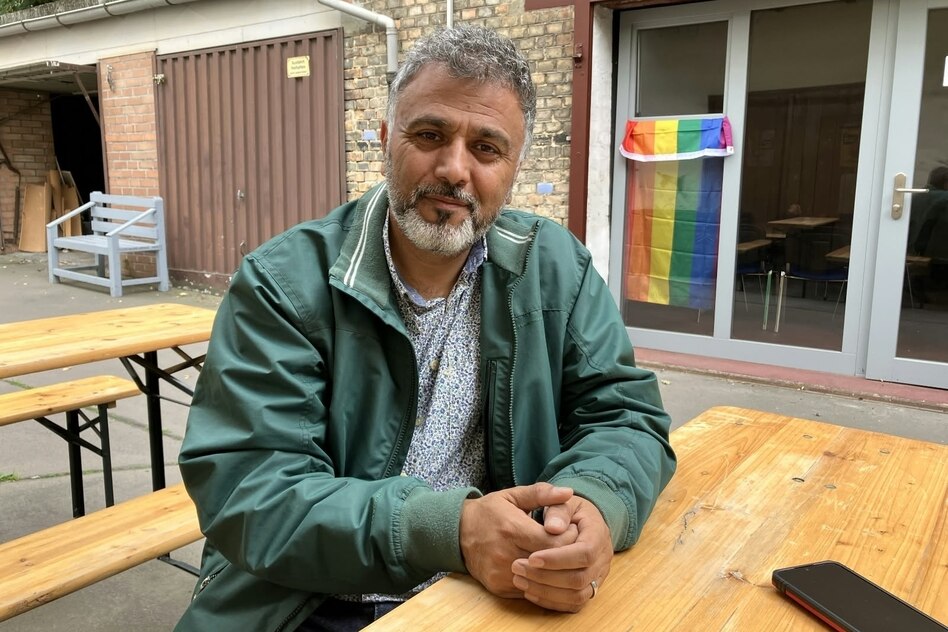
When Mamad Mohamad talks about the outcome of the state elections, the word “would have” is often used. On Monday afternoon he was sitting in a backyard in Halle an der Saale, with a laptop in front of him and his cell phone next to it. Mohamad is managing director of the state network of migrant organizations in Saxony-Anhalt. On Sunday he was elected to the state parliament on the Green Party list. But he can't be happy, says Mohamad.
There is a cell phone tripod next to the Green politician. He actually wanted to record a short video the whole time to classify the election. But that hasn't worked yet. He's been talking to people all day long who ask him what's next for them. Many are unsettled. Should they pack their bags? Close your store? Is your school leaving certificate still worth it if the AfD revokes it anyway?
Mohamad shakes his head and sighs. “We actually did something great.” A few months ago his party was polling at 3 percent. Now she has got almost 9 percent. He looks down briefly. “The fact that the AfD has a 4 at the front hurts a lot.”
One day after the state elections, the political situation in Saxony-Anhalt is still unclear. At around 44 percent, the AfD does not have an absolute majority like the democratic parties would have in a coalition. What does this do to people who fight for a cosmopolitan society in Saxony-Anhalt?
After the AfD bar had risen over 40 percent in the very first forecast at 6 p.m. the previous evening, Mohamad no longer wanted to see the other numbers. "I couldn't sleep afterwards. I lay in bed all night with thousands of thoughts," he says. If the CDU had at least a few percentage points more, then a democratic government would be possible. What if the BSW hadn't made it?
Things actually went so well for the Greens, Mohamad says again. The strenuous, months-long election campaign. The thousands of conversations. In his Halle II constituency, the left-wing candidate Gitta Hartenstein-Wiermann won the direct mandate. Mohamad also campaigned for them “to prevent the AfD from becoming a direct candidate”. When it comes to second votes, the Greens are at 23.3 percent, only just behind the AfD. The situation is similar in the neighboring constituency of Halle III: There the leftist Jannik Balint won the direct mandate and the Greens even became the strongest force in the second votes. Mohamad shakes his head again. "We won. But we also lost."
About 80 kilometers away in the state capital Magdeburg it was raining lightly when David Begrich locked up his bike a few hours earlier. The social scientist and theologian works for the “Miteinander” association in Magdeburg, which has been committed to combating right-wing extremism in Saxony-Anhalt since 1999. This Monday morning the club invited people to a press conference at the “einewelt haus”. Together with the Saxony-Anhalt Refugee Council, the Protestant Academy and the free Radio Corax, the aim is to find out what happens after the election.
Begrich quickly goes up the steps to the “einewelt haus”. It is located in Magdeburg's old town and therefore in the third constituency that did not go to the AfD, but to a left-wing candidate: Mustafa Groener. Here too, the Greens had over 20 percent of the second votes. What all three constituencies have in common is that an urban environment, some students and traditionally left-wing people live in them.
Before the press conference begins, Begrich sits down briefly in an office chair for a conversation with the taz. What's next in Saxony-Anhalt? It is not yet entirely clear what will follow from the election results, says Begrich. “The key question will be: Are the AfD and BSW entering into a power-political interaction?”
However, it is important that civil society receives support from outside Saxony-Anhalt. This is not only important for the federal state. “If it is now possible to maintain democratic cores in civil society, it will delay the emergence of authoritarianism in other regions.”
And support doesn't just mean donations, but also attention. After this election result, Begrich emphasizes that we should not simply go back to business as usual. The AfD's program in Saxony-Anhalt is one of the most radical in German history. “And that got more than 40 percent,” says Begrich. Shortly afterwards he has to go off again, hold discussions and prepare. create attention.
Back in Halle. On a shopping street in the middle of the city, Martin Thiele says he had already expected an “unsightly election result”. But when the first forecast came, he was frightened. “I didn’t see it coming that the AfD would be able to record such gains in votes.” At first he let it sink in and then called friends in the city “to somehow get rid of my frustration.”
Thiele is managing director of Aidshilfe in Saxony-Anhalt South and is helping to organize Christopher Street Day (CSD) in Halle next weekend. As a bisexual man, he feels comfortable there in the center of the city. It is the constituency in which the Left won the first votes and the Greens won the second votes. “Here I would walk through the streets holding hands with a boyfriend,” he says. He doesn't dare do that in the outskirts or other areas of Saxony-Anhalt. “The atmosphere there has always been difficult.”
But what is different there in the middle of Halle than in the rest of Saxony-Anhalt? Thiele looks around, up and down the street. “The shops here show well that we have a migrant-dominated environment here,” he says. In the Paulusviertel, also in the constituency, the more left-liberal educated middle class in Halle live. “That is simply the voter potential of progressive parties.” He is not surprised that the Left and the Greens get high results.
In the last few weeks, Thiele has been primarily concerned with organizing the CSD: getting people to speak, expanding networks. This year, so soon after the election, the event has a special meaning. “This is the first major demonstration in which the solidarity, democratic, freedom-loving Saxony-Anhalt comes together,” says Thiele. “I think more people will come this year.”
There have already been several calls circulating on the Internet under the motto “We will not allow ourselves to be intimidated”. Thiele hopes that the CSD will send a signal to the people who did not vote for the AfD. They should continue to feel safe and seen, even outside the progressive strongholds in Halle and Magdeburg.
However, Thiele also believes that the mood in Saxony-Anhalt can change again. “The people who voted for the AfD can certainly be convinced of a different political offer.” However, this requires an appropriate offer. The democratic parties now have to work on this, both at state and federal level, says Thiele. “And then we can only hope that something can be done in the next few years.”
Mamad Mohamad hopes so too. “We have a lot of work to do in the next five years,” he says in front of his cell phone tripod in the backyard. The first group meeting starts on Tuesday. “The first decisions are already on the table, and things are now happening in no time.” At the same time, he tries to talk to people a lot and take away their uncertainty. "But 44 percent AfD. Of course I can't be happy about that," he then says again.
But there is a number that gives him some hope. If he looks at the absolute result, the AfD got just over 570,000 votes. It sounds a little less bad for him.
Read the full story at the source →
Source: taz