
Politics · taz · · 1h
Border war in the Hindu Kush: dead in Pakistani air strikes in Afghanistan
Deutsch (original) · Auto-translated to English
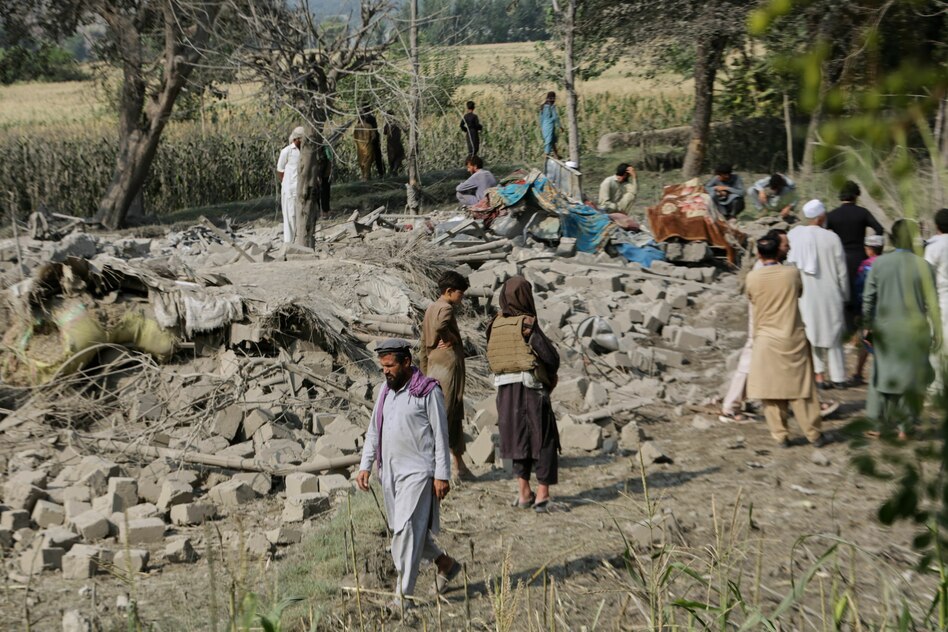
afp/ap/taz According to the Taliban government in Kabul, at least three people were killed in Pakistani air strikes in two provinces in eastern Afghanistan. In contrast, two Pakistani security officials said Monday's airstrikes killed 28 suspected militants. The information provided by both sides could not initially be independently verified.
In an attack in the Afghan province of Kunar on Monday night, a residential building in the Nurgal district was “completely destroyed,” said deputy Afghan government spokesman Hamdullah Fitrat in the online service X. The dead were three members of a family. Four other people were injured.
A Kunar police spokesman told AFP the attack in the province was carried out by Pakistani aircraft. According to government information, two locations in Paktika province were also attacked. A shop and an uninhabited house were destroyed. However, there were no deaths or injuries.
Afghan Taliban government spokesman Sabihullah Mujahid condemned the “aggression.” He announced an “appropriate response”.
On Friday, at least 31 people were killed in an explosion and gun attack on a police station in Pakistan's Khyber Pakhtunkhwa province, which borders Afghanistan. A local militia allied with the Pakistani Taliban claimed responsibility for the attack.
Pakistan has repeatedly blamed fighters from the Pakistani Taliban group Tehreek-e-Taliban Pakistan (TTP) for previous attacks. The Taliban government in Afghanistan denies involvement.
The TTP is organizationally separate from the Taliban ruling Afghanistan, but ideologically allied with them. Islamabad accuses the government in Kabul of providing protection to militant groups and enabling cross-border attacks. Afghanistan rejects this.
Both countries have a long history of militant fighters using their neighboring country as a refuge - often with the tolerance or even support of the local military. In addition, the border drawn by the British colonial power between the two states is controversial and is not officially recognized by Afghanistan, for example, regardless of who is currently in power in Kabul.
Although the Afghan Taliban came to power in 2021 with the support of Islamabad, Pakistan does not like their unexpectedly independent and relatively India-friendly course. According to Islamabad's doctrine of “strategic depth,” Pakistan cannot afford to have a hostile neighbor to the west in its conflict with its eastern archenemy India. This is where Pakistan derives its repeated interference in Afghanistan's internal politics.
Pakista's accusations against the Taliban in Kabul have led to massive tensions and armed clashes between the two neighboring countries. According to the UN, dozens of civilians were killed in Pakistani air strikes in Afghanistan in June. Pakistan has also expelled several hundred thousand Afghans from the country in the last two years, including many who had come to the country since the 1980s. (han)
Read the full story at the source
Source: taz