
Germany · taz · · 2h
Healthcare in Africa: The long road to your own vaccine
Deutsch (original) · Auto-translated to English
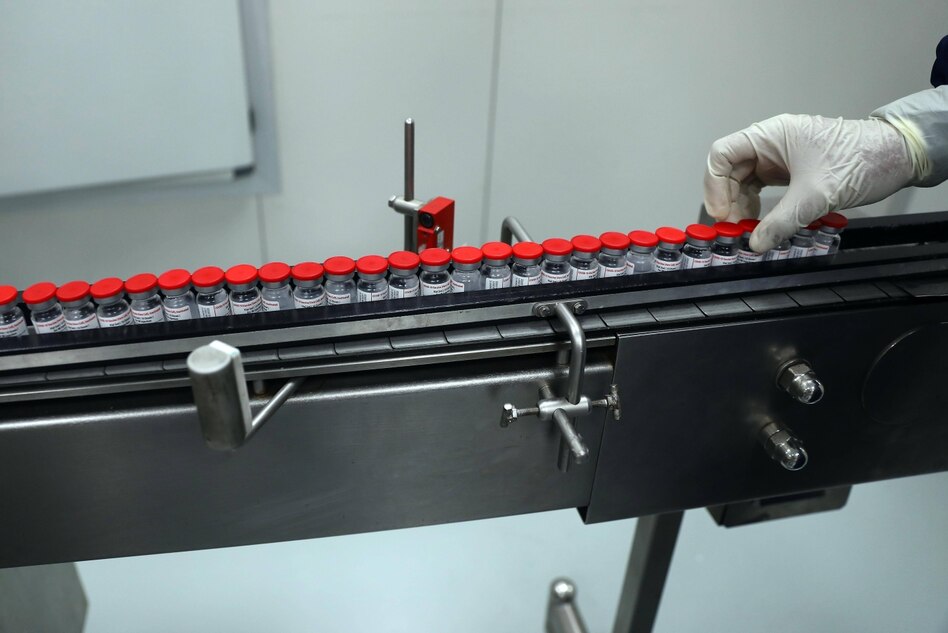
The member states of the African Union (AU) agreed in 2020 to produce at least 60 percent of the vaccines needed on the continent themselves by 2040. Own vaccine production is intended to reduce the continent's vulnerability to global supply bottlenecks - such as during the corona pandemic. Heavy import dependency has often delayed access to vaccinations during health crises, costing lives and exacerbating existing inequalities.
With their own production facilities, African countries would be better prepared for disease outbreaks and could react more quickly. In addition, vaccine costs would fall in the long term. Finally, qualified workers could be trained and industrial development promoted.
When the AU agreed on the target in Addis Ababa in 2020, Africa was producing just 1 percent of the vaccines used on the continent. Six years later, little has changed, says Chiluba Mwila from the Africa Centers for Disease Control and Prevention (Africa CDC).
Colleagues from 16 African countries are taking part in the 5th Africa workshop of the taz panter foundation. A 64-page, elaborately designed magazine was also created. It can be ordered now by email to stiftung@taz.de with the subject “Afrika-Magazin” and your name and postal address. Thank you!
The magazine's texts also appear here on taz.de.
Would you like to support the taz Panter Foundation:
• or via the foundation’s account details:
The proportion may now be even lower as some production facilities have closed. Africa is working on producing up to eight particularly important vaccines itself in the future, including those against human papilloma viruses (HPV), yellow fever, malaria and measles-rubella, pneumococci, rotaviruses, cholera and a six-fold vaccine, including against hepatitis.
Countries such as Senegal, Algeria, Tunisia, Morocco, South Africa and Rwanda have already started investing in domestic vaccine production.
“The race has begun,” says Mwila. But there are challenges with financing, the availability of qualified specialists and market access. “If Africa wants to achieve its goal, the continent must address these issues strategically,” said Dr. Mwila.
Building a fully functional vaccine factory could take up to seven years and require significant investment. In addition, more than 95 percent of active pharmaceutical ingredients continue to be imported.
Support the taz panter foundation and its international projects with a donation. Learn more
Production on the continent continues to focus primarily on the packaging of pharmaceuticals and less on the upstream production steps and the development of our own products. Nevertheless, Africa is making gradual progress, says Mwila. More and more countries are investing in production facilities that enable commercial production of vaccines.
By 2024, South Africa, Egypt, Morocco, Ghana and Senegal had either already built such facilities or were preparing to do so. Corresponding projects are being planned in Tanzania, Kenya, Nigeria, Rwanda, Uganda and Ethiopia.
Vaccinations are one of the most effective public health measures, says Mugisha Nkoronko, President of the Medical Association of Tanzania (MAT).
Import dependency “endangers health security across Africa,” he says. “When people are exposed to preventable diseases, productivity and life expectancy decline, and overall socioeconomic development suffers.” And many vaccine-preventable diseases occur primarily in tropical regions, where outbreaks are particularly common, said Nkoronko.
There is a “discrepancy between Africa’s disease burden, health policy priorities and the availability of vaccines.” Nkoronko recalls the vulnerability of global vaccine supply chains during the coronavirus pandemic and recent geopolitical conflicts. “Events such as tensions in the Strait of Hormuz, the war in Ukraine and other global conflicts have impacted supply chains for critical medical supplies,” he says.
“We are making significant progress,” says Tanzania’s chief pharmacist Daudi Mmasi. He expects visible results by 2030. The government of Tanzania has provided 400 hectares of land for the construction of an industrial park. In the long term, the import share of health products should fall by 85 percent. In May 2026, the government signed a memorandum of understanding between the Ministry of Health and the German pharmaceutical company Sartorius for the development of a pharmaceutical industrial cluster in Dar es Salaam.
Mtebe Majigo, a professor of clinical microbiology and immunology at Muhimbili University, says Tanzania has skilled workers for vaccine production. However, he is worried about the infrastructure.
“This is an extremely competitive industry and manufacturers are unlikely to share their proprietary knowledge with others,” says Majigo. Vaccine production requires extensive preparation, especially in the development of antigens and antibodies. “This remains one of the biggest challenges that Tanzania must overcome if it wants to become self-sufficient in vaccine production,” said Majigo.
However, not everyone is convinced that domestically produced vaccines will immediately gain the public's trust. Librarian Rehema Msigara, for example, said she would be hesitant to use such vaccines in the first few years. First of all, she wants to be certain about their quality. Msigara says she has heard of cases of “medical negligence and corruption, as well as the procurement of substandard medicines”. She would rather wait until production is established and demonstrably meets quality standards. Msigara is not the only one.
According to Chiluba Mwila from Africa CDC, African countries have now received financing commitments of a good $10.2 billion to advance their own production of medical devices. Donors include the Gavi vaccination alliance, the EU, the African Export-Import Bank and the African Development Bank.
Read the full story at the source
Source: taz