
Germany · taz · · 1h
Health crisis in Uganda: Uganda's fight against Ebola
Deutsch (original) · Auto-translated to English
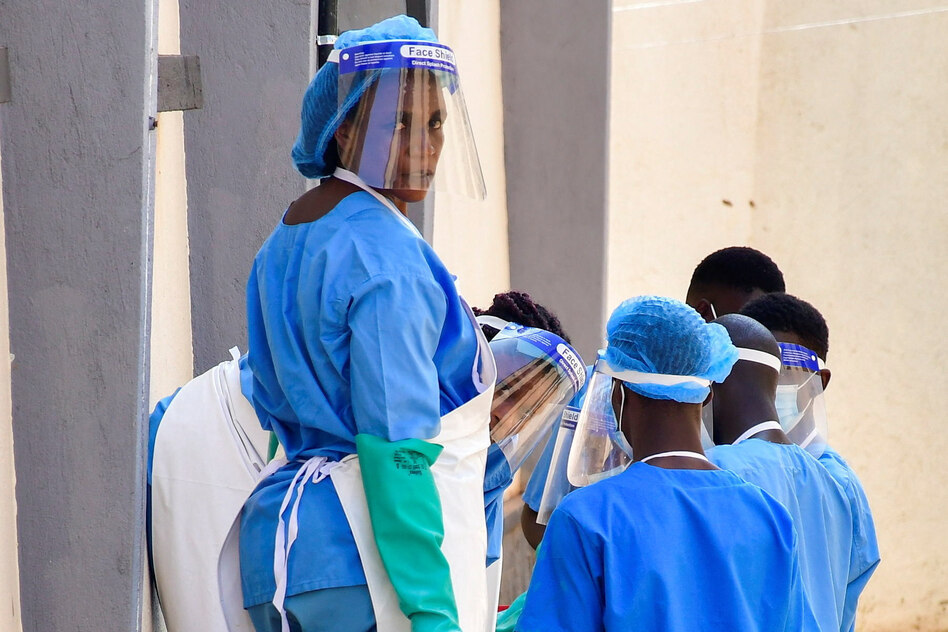
The smell of chlorinated water and cleaning products permeates the air at the Ebola isolation ward at Mulago National Referral Hospital. In the state-run facility, just four kilometers north of Kampala city center, healthcare workers walk a fine line: They want to save lives and at the same time have to protect their own.
They are at the center of Uganda's fight against the rare but deadly Ebola Bundibugyo virus, which has killed between 30 and 50 percent of those infected in previous outbreaks. After the most recent outbreak in May 2026, 18 of the 20 cases recorded in Uganda were treated in this ward. 15 of the patients came from the neighboring area of the DR Congo. According to the Uganda Ministry of Health, as of July 4, 2026, 16 people have been discharged as recovered after treatment. Two patients died and two others were still being treated.
Of the five infections acquired in Uganda, four were in healthcare workers who had treated Ebola patients in private facilities. According to the ministry, the fifth person was a driver who had transported one of the patients.
Colleagues from 16 African countries are taking part in the 5th Africa workshop of the taz panter foundation. A 64-page, elaborately designed magazine was also created. It can be ordered now by email to stiftung@taz.de with the subject “Afrika-Magazin” and your name and postal address. Thank you!
The magazine's texts also appear here on taz.de.
Would you like to support the taz Panter Foundation:
• or via the foundation’s account details:
And so concern about infection is growing among those who are at the center of fighting the epidemic - healthcare workers.
Joseph Gavin Nyanzi from the Uganda Medical Association says health workers are struggling to adequately protect themselves. The reason for this is the limited availability of personal protective equipment. “The healthcare workers are very unsettled,” he says. The shortage of protective equipment affects both state and private institutions. “Where this protective equipment is not available, we recommend that our colleagues initially suspend treatment of patients until they themselves are protected,” says Nyanzi.
Support the taz panter foundation and its international projects with a donation. Learn more
Christopher Wagobera is a doctor and Ebola expert at Mulago National Referral Hospital. He says that medical staff carry out their duties with the utmost care, following strict regulations to prevent infection. As long as these are strictly adhered to, medical staff can “safely interact with the public” after treating these patients, says Wagobera.
The Ugandan Ministry of Health had previously stated that there was a lack of financial resources for measures to combat Ebola. At the same time, discussions were underway with international donors about support for the fight against Ebola.
By the end of May, donors had pledged more than $100 million in aid to Uganda and the DR Congo to combat Ebola. In June, the Ministry of Health in Kampala complained about financial bottlenecks. It remained unclear whether the promised funds would be paid out in time to close the gaps.
Health Secretary Diana Atwine said the government had to raise funds itself because it could not predict how much support it would receive from partners. She did not name a specific amount. With cross-border measures, Uganda wants to contain infections in the epicenter of the outbreak in the DR Congo. To this end, temporary testing and treatment centers are to be set up in the affected areas. Infected people should be identified and treated as early as possible before they enter Uganda for medical care. Meanwhile, both countries were suffering from the consequences of the outbreak. Companies in the affected border regions are also affected. “Markets have been temporarily closed, flights have been suspended and passenger traffic at the borders has decreased significantly,” reports Atwine. “That’s why we want this Ebola outbreak to end quickly.”
"President Museveni has made it very clear that we don't need outside help to save Ugandans. We will find the money," said Alan Kasujja, the director of the Uganda Media Centre. Kasujja coordinates the government's communication on the fight against Ebola. "We will sort it out ourselves. If people are willing to support us, that's good. But until then, we won't wait for someone to come and save us."
The financing packages promised so far are to be used for the care and treatment of sick people, the provision of personal protective equipment, risk and crisis communication, the involvement of the population, logistics, the tracing of contact persons and the coordination of measures. At the end of May, the US government increased Ebola aid by around $160 million. This was intended to finance up to 50 Ebola treatment clinics in the affected areas. A further $300 million was promised for broader humanitarian efforts in the affected region.
It remained unclear for a long time when the funds would actually be paid out. Uganda had originally planned to fully set up the temporary testing and treatment centers in the DR Congo at the beginning of June. According to the Ministry of Health, the central team was only deployed on July 5. A larger medical team, two mobile laboratories and logistical support are on the way to the DR Congo. The initiative is intended to reduce the number of Ebola patients coming to Uganda for treatment. This should help the outbreak end more quickly.
Uganda is relying on its own resources and international support to contain the Ebola outbreak. However, given the existing funding gaps, it is unclear whether the necessary resources for protective equipment, diagnostics and treatment will be made available in a timely manner.
Read the full story at the source
Source: taz