
Germany · taz · · 2h
G7 measure against high fuel prices: Environmentalists criticize the release of oil reserves
Deutsch (original) · Auto-translated to English
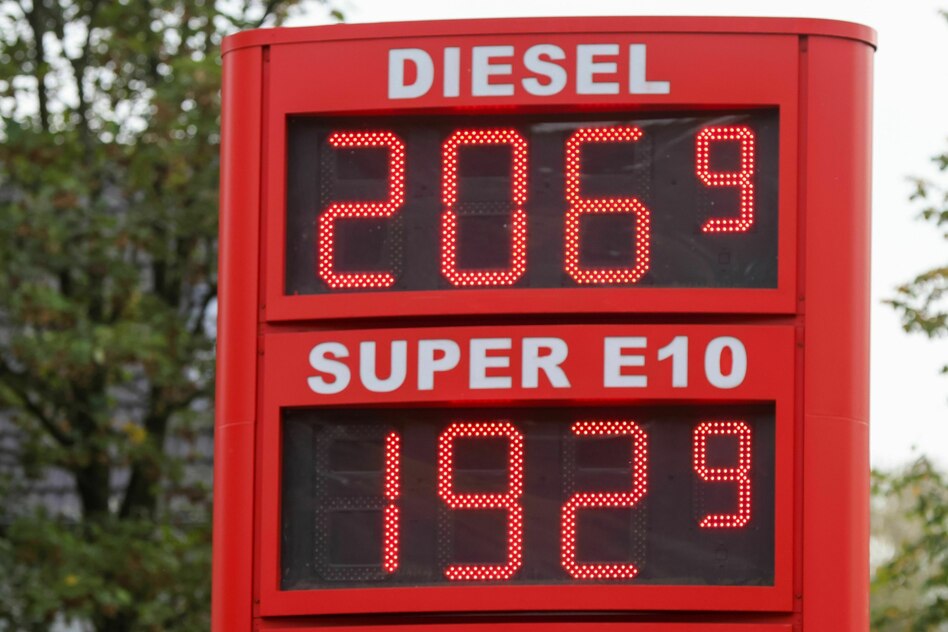
dpa/afp | Environmentalists and Greens are against the release of oil reserves by the European G7 states. Europe should not give in to “threats” from the USA, criticized Greenpeace. “The dependence on gasoline and diesel makes us vulnerable to geopolitical blackmail,” says the environmental protection organization. “The release is a mistake, worse still: political stupidity,” said Green energy politician Michael Kellner. “The reserves are there for real emergencies and not for an American president who is losing his skin during the election campaign.”
The European G7 states decided on Friday that 100 million barrels of crude oil and diesel would be released over the next four months under the coordination of the International Energy Agency (IEA). The amount roughly corresponds to the daily demand for crude oil that the IEA assumes worldwide. The signal to the market: There is enough oil available, there is no threat of a shortage. The G7 includes Germany, France, Italy, Great Britain, the USA, Canada and Japan.
The measure is intended to curb oil prices, which have been soaring for months because of the war in the Middle East. Tankers continue to be attacked in the Strait of Hormuz, which is important for global energy trade, and the USA is moving more warships to the region, according to media reports. That's why fears of supply bottlenecks are growing. That drives up prices.
Since the beginning of the year, Brent crude oil has become more than 60 percent more expensive, which has now led to a rise in global inflation. The mark of 100 US dollars per barrel (159 liters) was exceeded. The G7 want to slow the rise in oil prices. Because it arrives at the gas station and puts a strain on consumers and the economy. Germany is already counteracting this with the controversial fuel discount until the end of the year.
The released quantities from Germany's oil reserves will now be sold at current market prices. They should actually serve to avert a shortage, not to reduce petrol and diesel prices.
However, US President Donald Trump announced that he would consider banning the export of diesel from the USA. This could bring relief to fuel prices in his country. However, the G7 declaration now expressly states that member states will not impose any such restrictions.
Germany has high refining capacity and is therefore hardly dependent on diesel imports. The bottom line is that in the first half of 2026, more fuel was exported than imported. A total of 15.8 million tons of diesel came from domestic production - an increase of 9.4 percent compared to the same period last year, as calculated by the Federal Statistical Office. When it came to diesel fuel, Belgium (55.1 percent) and the Netherlands (39.7 percent) were the main suppliers of the total of just 858,000 tons that Germany imported. In addition, 2.06 million tons of diesel were exported.
With regard to Trump's statements about a possible export ban, the Federal Ministry of Economics said: "The basic rule is: the market must not be unsettled." Germany also holds oil reserves to compensate for supply disruptions. According to the Federal Ministry of Economics, these oil stocks could be used to compensate for a loss of all imports for three months. The ministry emphasized that the release does not pose a risk to energy supplies.
According to the comparison app “Tankerkönig”, fuel prices fell slightly on average nationwide by Sunday following the G7 decision. For Super E10 it's a little over two cents per liter, for diesel it's more powerful at around 6 cents.
However, drivers are hardly relieved. Like the fuel discount, the release is a band-aid that can only provide short-term relief, said Samina Sultan from the German Economic Institute (IW).
Read the full story at the source
Source: taz