
Germany · taz · · 40m
Consequences of the hot summer: “All you see is dried mud”
Deutsch (original) · Auto-translated to English
taz: Mr. Treichel, what is the current level of the Oder?
Dirk Treichel: At the Schwedt pumping station at 514 centimeters. That is 19 centimeters above sea level and significantly less than the long-term average low water level.
born in 1968 in Oberstdorf/Allgäu, studied “Forestry” at the University of Göttingen and “Ecology” at the University of Vechta with a focus on nature conservation. He has been head of the “Lower Oder Valley” National Park in northern Brandenburg since 2005.
taz: You say a floodplain without water, that sounds like a bad joke. What is the situation?
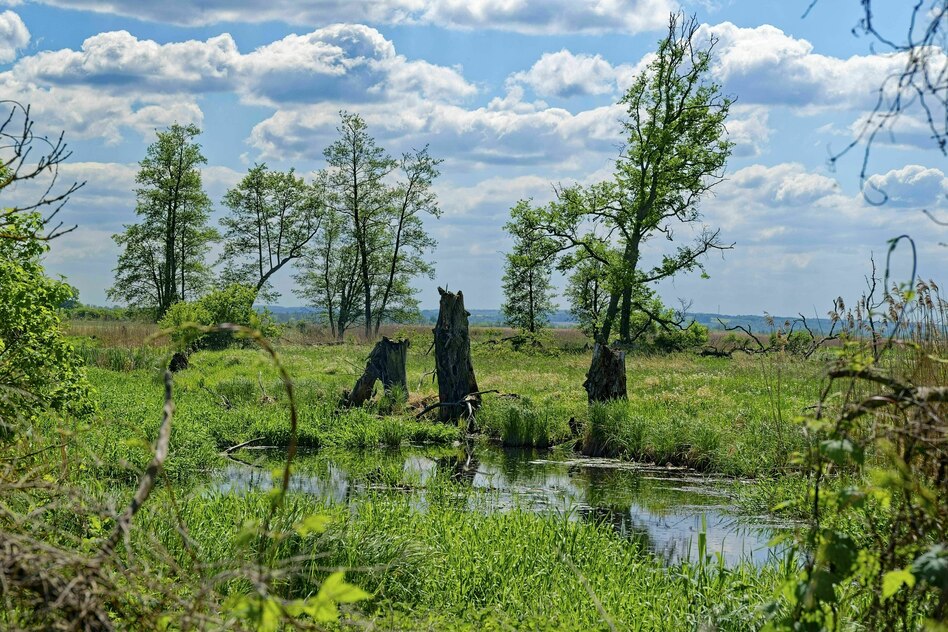
Treichel: I have been working in the national park for over 30 years now. There has never been a situation like this year. Of course we also had low water at times, and that's normal on a river. But after this summer, the national park's bodies of water, waterways and ditches are almost completely gone: if you look in there, all you see is dried mud.
Treichel: We are the only floodplain national park in Germany: For centuries, people have tried to canalize and straighten the Oder and its tributaries in order to quickly drain the water from the landscape. Because this did not happen completely in our area - or could be partially reversed - animal and plant species that are specialists have settled here: Over the course of evolution, they have adapted to this alternation between dryness and flooding by the Oder.
taz: But then these specialists would have to be able to cope with drought?
Treichel: Not over such a long period of time! When it comes to plants, the umbel, for example, is such a specialist: it cannot survive drought for too long. When it comes to fish, it is the mudwhip that is costing its livelihood in such extreme droughts as this summer, and when it comes to amphibians it is the fire-bellied toad or the tree frog. Science tells us that hot and dry summers will increase. Other species that are much more competitive will displace these specialists: for example the terrestrial riding grass Calamagrostis, an invasive species. It copes much better with drought and is already increasing massively in the higher edge areas of our floodplains.
taz: The national park is threatened if the specialists disappear?
Treichel: We are of course doing everything in our power to work against it. There are various projects underway in the national park to improve water retention. For example, we are currently tying the Welsensee oxbow - a floodplain body of water - back to the Oder area so that it can flow through. And of course I associate my job with the hope that we will still be able to develop and maintain a Noah's Ark on 10,000 hectares here. But one has to be very clear: we cannot completely isolate ourselves from the brutal influence of climate change...
taz: ... especially since the Oder is to be deepened to enable more shipping. What does this mean for the floodplains?
Treichel: The aim of the river work is to narrow the cross-section of the Oder with groynes - i.e. dams in the river - so that it flows faster. As a result, the river carries more sediment and burrows itself deeper. As the channel becomes deeper and deeper, more water naturally flows out of the floodplain.
taz: Can't you stop the work?
Treichel: Nature conservation associations and the state of Brandenburg had filed a lawsuit against the cross-border environmental impact assessment and were proven right by the Higher Administrative Court in Warsaw two years ago: the cross-border environmental impact assessment did not meet the necessary requirements. But now this cross-border test is being improved: Poland wants to expand the river because the country is building a large container port at the mouth of the Oder in the Baltic Sea. And the Federal Ministry of Transport also wants the expansion: the basis is a German-Polish agreement from 2015.
t az: Work is on hold at the moment. Are you afraid that climate change and the expansion of the Oder will destroy Germany's only floodplain national park?
Treichel: Basically yes! The expansion projects come from a time when the full force of climate change was not yet visible. And of course a floodplain landscape itself can help to mitigate the consequences of global warming. The times when economic considerations took precedence over those of nature conservation must be a thing of the past.
Read the full story at the source
Source: taz