
Germany · taz · · 2h
Debate about replacing the chancellor: A silence says more than 1000 words
Deutsch (original) · Auto-translated to English
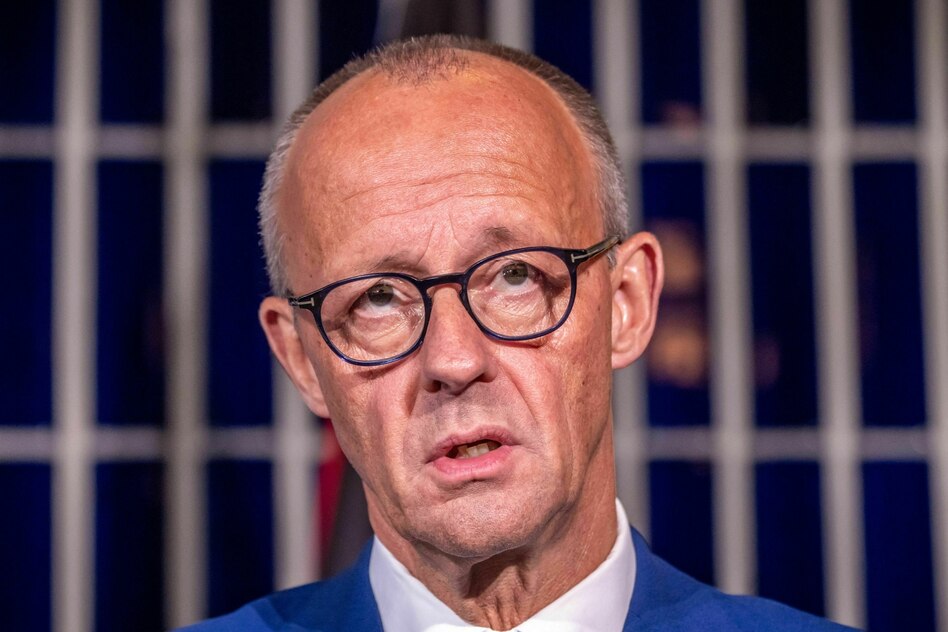
In controversial debates, it is sometimes more meaningful to look at who does not want to comment. In the discussion about the suitability of Friedrich Merz as Federal Chancellor that had boiled over within the CDU and was now driven by the media, the treasurer of the Junge Union, Clara von Nathusius, confirmed that her party had a massive credibility problem in the ARD program Report from Berlin, which was also related to Merz. “And that is why there are no more elections to be won with this Chancellor,” she concluded and, when asked, explained that the Chancellor should not run again.
Nathusius is a member of the federal board of the Junge Union. When taz asked JU chairman Johannes Winkel whether she was only speaking for herself or for the entire board, there was no response by the time of going to press. Winkel is otherwise not afraid of publicity. In the dispute over pension reform, he pushed the parent party ahead of him and just a week ago renewed his demands for the Commission's proposals to be implemented quickly.
A request to the chairman of the influential middle class parliamentary group in the Union faction, Christian von Stetten, as to whether the group continued to support the Chancellor also remained unanswered by the time of going to press. The JU and the business wing were once Merz ultras and had supported him in his three attempts to become CDU chairman.
The taz did not receive an answer to the question of how securely Merz was in the saddle from the Christian Workers' Association, CDA. Its chairman Dennis Radtke made critical comments about Merz after the state elections in Saxony-Anhalt, which were disastrous for the party: “If the Chancellor regularly antagonizes half the country with certain statements, that is counterproductive,” said Radtke in Focus. And now? Be silent.
The reluctance may also be due to the fact that the CDU is trying not to further inflame the unpleasant discussion. Nevertheless, it is striking how long it took to find supporters. The new Secretary General Franziska Hoppermann stood behind the Chancellor and Federal Chairman on Friday, but that is also part of the job description.
He still believes in the Chancellor, said Union parliamentary group vice-president Mathias Middelberg on Deutschlandfunk on Monday, and called the discussion unnecessary. The deputy CDU chairwoman, Education Minister Karin Prien, warned on Sunday in the Miosga program that “we would all do well to calm down a bit now.” These are not flaming eulogies, but rather an attempt to extinguish the fire.
Merz also tried from afar to restore discipline within his own ranks. Germany plays an important role, especially in security policy, “for the fate of the European continent,” said the Chancellor in English in Rovaniemi, Finland, on the sidelines of an international meeting on Arctic policy. That's why he's trying to "convince my colleagues, friends, my party, my group that this is much more important than some of the domestic policy debates we're currently having."
The Chancellor actually only received heavy support from Bavaria. CSU boss and Prime Minister Markus Söder said via Bild am Sonntag that the CSU would “under no circumstances” overthrow the chancellor. And from the CDU? “I am not responsible for the CDU, I am not the chairman.” After all, the medium-sized business association, MIT, said in a statement for Spiegel that it was definitely behind the Chancellor.
Is that enough? If the CDU does even worse than feared in the state elections in Berlin and Mecklenburg-Western Pomerania on Sunday, the debate is likely to start again with force.
Read the full story at the source
Source: taz