
Germany · taz · · 1h
Film “Aftershock”: The second victim is herself
Deutsch (original) · Auto-translated to English
The television series “The Pitt,” which is rightly showered with praise and Emmys and is set in the emergency room of a US hospital, has been described by some, not entirely wrongly, as competency porn. Despite all the hectic pace, staff shortages and lack of money, lives are being saved all the time, someone is being resuscitated here at the last second, and the worst is being prevented with a risky operation there. The pace is high, the tension is enormous, a few fates, lots of threads per episode. Dealing with the inevitable dying and death is still highly competent.
The Danish hospital drama “Aftershocks” offers a contrast. For ninety minutes it essentially focuses on a single case, a doctor, yes, a decision. The place is a neurology ward. Here too, staff is scarce. A doctor is unavailable, a young assistant doctor slips into his role and feels overwhelmed by the task of making initial diagnoses.
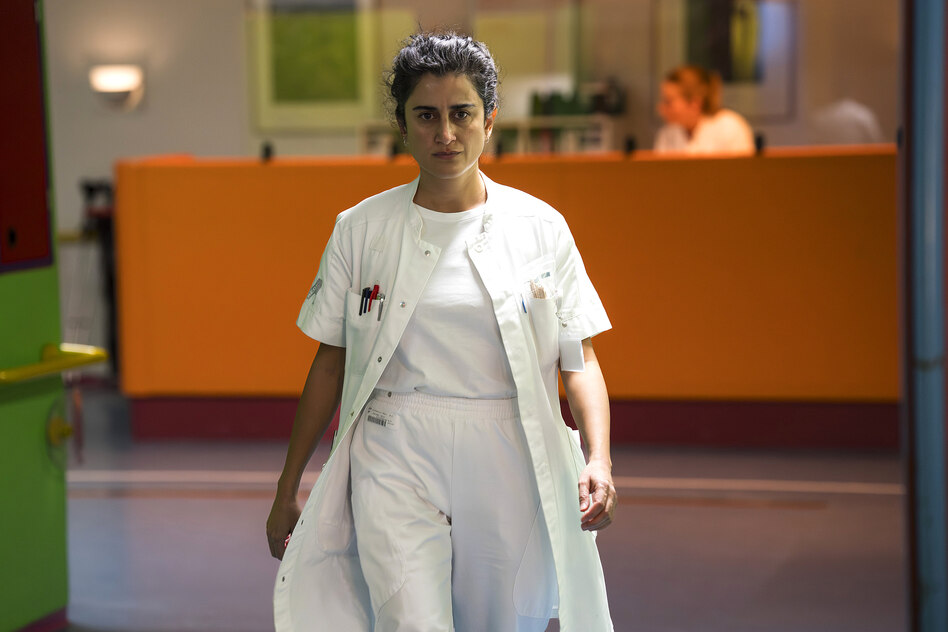
At the center of the film is another doctor, Alexandra (Özlem Sağlanmak), more experienced but also still young, with two small children at home. She has just weaned her youngest, and in the changing room that morning her shirt gets wet with breast milk through her bra.
“Aftershock” (Denmark 2025, directed by Zinnini Elkington). The DVD is available in stores from around 11 euros.
A young man, just eighteen, comes to the ward accompanied by his mother (Trine Dyrholm). He had a severe headache, Alexandra was called for help by the young doctor, the usual tests did not indicate a serious illness. A detail that the young doctor points out is overlooked.
The young man is released, collapses in the hospital corridor and falls into a coma. An MRI reveals a life-threatening cerebral hemorrhage. The neurosurgeon considers an operation to be excessively risky and the chances of survival if it is not performed are greater. It turns out: he can no longer be saved.
Director Zinnini Elkington, whose debut is Aftershock, started out as an actress. She's not in this, but Aftershock is clearly a film focused on performance. The script is not primarily interested in the institution, but in the doctor as a person, the decisions she makes in seconds and their far-reaching consequences.
More serious for the patient, of course, but also terrible for them, who have to deal with every mistake that happens and the feelings of guilt that come with it. “The second victim” of the original title: That is herself.
From the first to the last picture, the focus is on her. The hospital is both a real and symbolic place. The colorful patterns on the wall, especially the bright red staircase, are psychological spaces to which the character reacts. The blows that the soundtrack repeatedly rains down on her are an external expression of internal stress. Özlem Sağlanmak plays her doctor Alexandra as a woman whose sovereignty cannot withstand this life and death situation.
“Every doctor has his graveyard,” says a colleague in consolation. Another makes it clear to her how unlikely such a brain hemorrhage was in a young man. For balance, the script brings a second medical story into play on this one day that “Aftershock” tells of. An elderly woman whose symptoms suggest stroke.
Here, too, Alexandra has to decide on the treatment within a very short time and without any certainty. In this case, she is fine and is assured of the eternal gratitude of the survivors. “That’s my job,” says the doctor. This film mainly tells about the other half of the truth.
Read the full story at the source
Source: taz