
Germany · taz · · 45m
Extreme heat at NFL game: When shoes melt
Deutsch (original) · Auto-translated to English
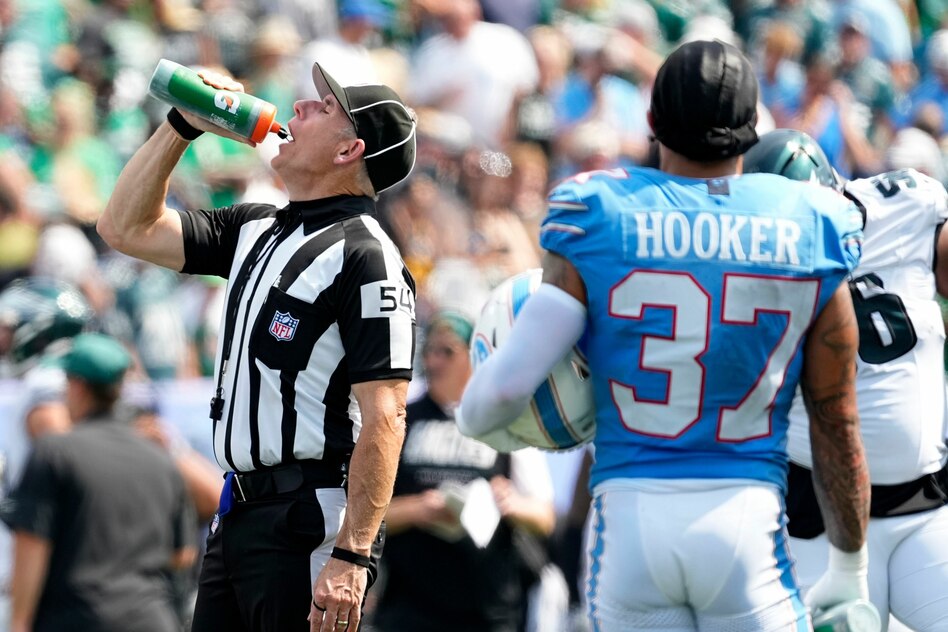
The National Football League certainly doesn't treat its professionals with consideration. Extreme heat was expected in Nashville on Sunday. But the integrity of TV revenues comes first above all else. So no thought was given at all to whether the game between the Tennessee Titans and the Philadelphia Eagles (8:24 p.m.), scheduled for 1 p.m. local time, could be postponed to the evening hours.
The consequences were almost apocalyptic. The burning midday sun heated the artificial turf to almost 70 degrees with outside temperatures of 35 degrees. Eagles offensive lineman Cam Jurgens said after the game that his feet were “burning and still hurting.” The players had to cool down the melting soles of their shoes with water during the game so that they could still provide some grip on the artificial surface. Even Eagles coach Nick Sirianni was given an IV immediately after the game to prevent dehydration.
A week earlier, at the Titans' season opener against the New York Jets, those involved reported similarly challenging conditions. Jordan Mailata called on the players' union on Sunday to commit to requiring all NFL clubs to play on natural grass in the future. However, especially in such extreme weather conditions, providing playable natural grass is extremely expensive. Recreational sports clubs certainly couldn't afford that.
The NFL has had no shortage of warnings in recent years. It wasn't until 2024 that a study by the company Climate X came to the conclusion that NFL stadiums would face climate-related costs of $11 billion by 2050. In addition to repair and replacement measures, the increased insurance costs for the stadium operators are also included in the price.
The recent trend in the NFL to replace open stadiums with indoor ones could be interpreted as an initial reaction to such predictions. More important, however, is the interest in creating pleasant conditions for the audience at appropriate ticket prices. In addition to the Cleveland Browns and the Jacksonville Jaguars, the Tennessee Titans are also planning a move in Nashville. It should be ready next season. The cost is said to be at least $2.1 billion.
Then the Tennessee Titans games will be able to be cooled down to pleasant temperatures, but the impact on the climate will be further increased by the immense energy consumption.
The NFL, like so many other sports leagues with international appeal, prides itself on sustainability strategies, reducing CO2 emissions and reforestation programs. However, environmental activists criticize these measures as alibi initiatives and greenwashing. It is criticized that the global expansion of the league with guest games in England and Germany, for example, is leading to excessive CO2 emissions.
The death of a college player recently caused great excitement in the USA. Arizona State University's Matthew Mayich suffered heat stroke in August during his first practice after summer break. The extreme exercise program of an ex-elite soldier in extreme temperatures had taken its toll on him.
This understanding of competitive sport in the NFL community, which heroizes absolute toughness, does not necessarily encourage a rethink. Eagles veteran Lane Johnson rated Sunday's game as "one of the five toughest games" of his career. There was definitely a bit of pride there.
Read the full story at the source
Source: taz