
Climate taz
Finally not a new record: less CO2 from coal, oil and gas
Emissions from coal, oil and gas are falling for the first time in years. But not enough to reduce global greenhouse gas emissions overall. more...
Deutsch (original) ·Auto-translated to English
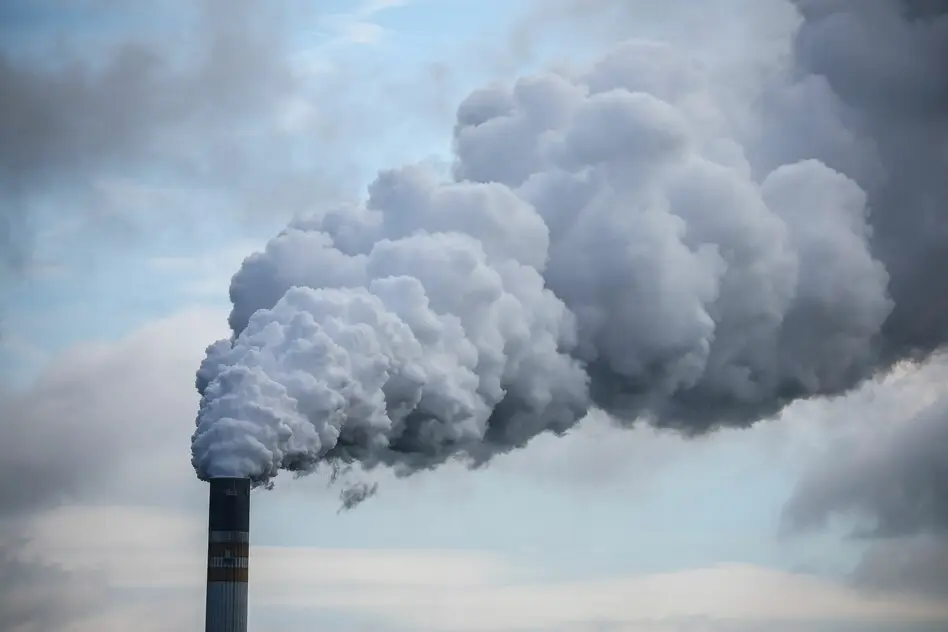
There is also good news in the climate crisis: CO2 emissions from fossil fuels are expected to fall by 0.4 percent in 2026 compared to the previous year to 38.2 billion tons. According to a report by the Global Carbon Project (GCP), this long-awaited turnaround, the first decline in fossil emissions in many years, is due to another crisis: the energy shock caused by the Iran war and the closure of the Strait of Hormuz. This means that 1.9 percent less oil will be burned this year.
The turnaround is “encouraging,” said Pierre Friedlingstein from the Global Systems Institute in Exeter, who led the study. However, growth in the area of sustainable energies is still insufficient. Unfortunately, a “reduction that is partly due to geopolitical shocks is not a sustainable climate solution,” said Friedlingstein. The Global Carbon Project's analysis was published on Tuesday in the journal Earth System Science Data. From Germany, the Alfred Wegener Institute in Bremerhaven and the University of Munich were involved.
The use of fossil fuels is the main cause of man-made climate change. About 85 percent of global greenhouse gas emissions come from burning coal (about 39 percent), petroleum (34 percent) and natural gas (21 percent).
Last year, emissions from fossil fuels still increased, by 1.1 percent. In the previous ten years, the increase was an average of 0.8 percent each year; there was an economically-related dip during the Corona pandemic.
Overall, according to GCP, global CO2 emissions will continue to rise in 2026: According to the analysis, in the current year they are expected to be 43.3 billion tons, i.e. above the 42.8 billion tons from 2025. The reason is an increase in so-called land use emissions.
"In particular, fires in drained peatlands and from the degradation of forests in equatorial Asia caused more emissions. The first signs of the beginning of El Niño can be seen here," explains Clemens Schwingshackl from the University of Munich, who coordinated the determination of land use emissions in the study. According to the analysis, the impact of this year's particularly strong El Niño on emissions will only become apparent next year.
Another reason for a decrease in climate-damaging exhaust gases this year: more renewables. Solar and wind energy as well as electric vehicles absorb two-thirds of the increase in CO2 that would otherwise arise from the growing global appetite for energy.
Despite all the optimism, the report emphasizes that growth in sustainable energies is not fast enough to permanently reduce global fossil CO2 emissions. In order to limit global warming to 1.5 degrees above pre-industrial levels, as envisaged in the Paris Climate Agreement, the world should only emit 150 billion tons of CO2. This carbon budget would be exhausted in less than four years at current emissions.
Decarbonization is at least making significant progress: between 2016 and 2025, the number of economies that were able to reduce their CO2 emissions from fossil fuels while increasing their economic growth rose to 40 - almost twice as many as in the previous decade. These 40 countries account for 26 percent of global CO2 emissions from fossil fuels.
This was particularly evident a few days ago in China, the largest emitter in the world. CO2 emissions from fossil fuels and cement production in the People's Republic fell by 3.1 percent in the third quarter of 2026 compared to the same period last year. This is the largest quarterly decline since the Covid lockdowns in 2022. One of the reasons was that electricity generation from coal fell by 3.3 percent. Solar, wind and nuclear power plants, on the other hand, together delivered 110 terawatt hours more than a year earlier.