
Germany taz
Electrical engineer on Antarctica: “I thought I played guitar a lot”
Michael Trautmann was a technician at the Neumayer III research station in Antarctica. For months all he saw was ice cream – and the same eight people. more...
Deutsch (original) ·Auto-translated to English
taz: Mr. Trautmann, you spent a total of 70 weeks as an electrical engineer at the Neumayer III research station in Antarctica. What did you see when you woke up in the morning and looked out the window?
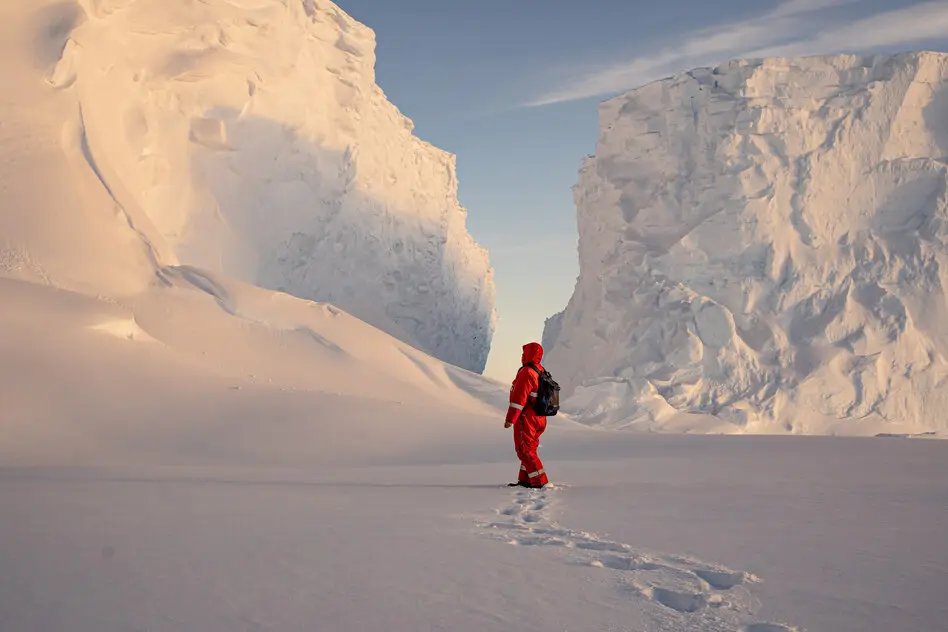
Michael Trautmann: An ice landscape and icebergs six kilometers away. Behind the icebergs came the open sea in summer. In winter the sea is frozen over and many icebergs freeze solid again. Early in the morning you may see the northern lights. When it storms, you can't see anything anymore. Just white.
taz: What about the day-night cycle?
Trautmann: In winter it is dark for two months, in summer it is light for two months. In summer it is monotonous, but in winter the landscape becomes colorful. The snow reflects the sky and glows green or magenta.
taz: What was your everyday work like on the station?
Trautmann: You get up around seven o'clock. In summer you have to make sure you get enough sleep because you don't get tired when it's always light. The day starts with a team meeting and then there is all sorts of technical work. I was on the station as an electrical engineer, but my work was only ten percent electrical engineering and the rest everything else. For example, we replaced a combined heat and power plant. Or I repaired snowmobiles and snowcats. Or the sewage treatment and wind turbines were maintained.
33, was born in Brake, trained as an electrician and then studied electrical engineering in Wilhelmshaven. He was at the Neumayer Station III between December 2021 and February 2023, and at the Kohnen Station from October 2023 to March 2024. He is currently working as a senior electrical engineer at the Alfred Wegener Institute in Bremerhaven in the Polarstern II project directorate.
Trautmann: In winter you have your own room. In the summer there is a handover, where you share a room with your predecessor for six to eight weeks. During the summer expedition I had a snowcat that I slept in. It had a cabin in the back. You can imagine it like a camper.
taz: In winter there are only nine people who live together on the station for eight months. How do you get everyone to get along?
Trautmann: We had four months of preparation, during which we mostly lived together in shared apartments. We completed courses together and traveled to the Alps together, where we rappelled into a crevasse and spent the night in a tent. It was about seeing where our limits lie and whether the team gets along. It may be that during this time a person is replaced or realizes that it is not a good fit. But that wasn't the case for us.
“70 weeks of Antarctica – wintering in eternal ice”: lecture by Michael Trautmann with pictures and video sequences; November 7th, 3 p.m. to 5 p.m., Zeise Cinema, Hamburg
taz: How did you spend your free time on the station?
Trautmann: At the beginning I thought I would play the guitar a lot, but then I didn't do that much. I was outside a lot and took photos.
Trautmann: We had relatively slow internet. We had to coordinate if someone wanted to stream a film or Bundesliga. Then everyone else had to leave. That has changed with Starlink. Now there is internet as fast as at home.
taz: “Time stretches” is what the play “Polaris” says about life on Neumayer Station III. Is that correct?
Trautmann: The time went by quickly for me because I had a lot to do. We joked that we could introduce the 36-hour day when it stopped getting dark. And we had communal activities in our free time. Spade throwing, for example.
taz: Why do you need spades at the station?
Trautmann: The station is on stilts. We had to seal them so that the space under the station didn't fill with snow.
Trautmann: In summer the average temperature is minus 5 degrees. But in winter it gets down to minus 48 degrees. It makes you think twice about going out.