
Germany · taz · · 1h
The truth: beastly beautiful
Deutsch (original) · Auto-translated to English
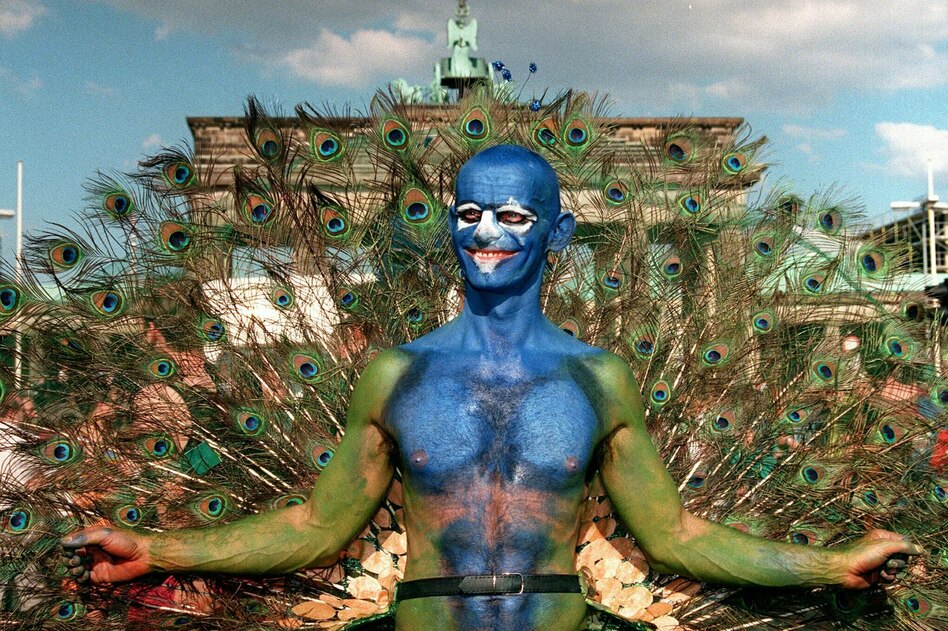
The Swiss animal film researcher Christine Noll says: “If there were no animals, no one would be beautiful anymore.” However, that wouldn't stop anyone from making themselves attractive and beautifying themselves anyway. The cosmetic surgery practice “Capital Aesthetics” advertises with the slogan “Beauty on Kurfürstendamm”. Her Berlin practice "stands for modern aesthetic medicine, plastic surgery and innovative laser treatments at the highest medical level. Our goal is to achieve natural results..." Oh no.
The French writer Annie Ernaux discovered a luxury boutique for liturgical clothing in Rome. In her book “In the Pictures” (2026) she writes: “The left shop window is reserved for the men’s regalia, the cassocks and magnificently embroidered vestments in pink, silver and gold.” In the window on the right, the one for women, only civilian clothes are on display: skirts, blouses and shapeless jackets in brown, gray and dark blue, things that were fashionable in the provinces in the 1950s. The church, true to its theory of a natural order, apparently thought that only men could be beautiful and seductive; the males' plumage was magnificent, the females' plumage dull.
The church follows Darwin in this fashion, although he made it clear that we were not created by God in his image, but are descended from monkeys and that beauty in the animal world is due to sexual selection - the "survival of the prettiest". For Darwin, in addition to natural selection, it was essential to the development of species, i.e. the song and the magnificent plumage of the male birds or the antlers of the deer serve to enable the females to allow them to mate. The males present themselves and the females choose the most beautiful, strongest and healthiest - supposedly because they need a partner with “good genes” for their young, as the neo-Darwinists never tire of claiming.
In his book "What is art for? Aesthetics after Darwin", the literary scholar Winfried Menninghaus developed a sociobiology - by drawing a line from the peacock cartwheeling to the Neanderthal man painting his body in colorful colors and beyond to us. One review states: "Menninghaus mentions the Trojan War when it comes to animals competing in bloody battles for females, who then make their choice."
Aside from the fact that you can't just judge people from animals, but only from churchmen, when it comes to beauty, it's usually exactly the other way around: In our case, it's mostly women who spend a lot of money and even with pain to make themselves beautiful, put on make-up every day and think about what they'll wear in order to appear attractive, while men are constantly walking around in jeans, T-shirts and sneakers, perhaps with a beard and tattoos.
The cultural scientist Friedrich Kittler takes a somewhat more nuanced view than Menninghaus of the Trojan War and its cause, Helena, about whom a frivolous US Greekist said: “A Helena is the measure of beauty that it takes to sink 1,000 ships.”
Not everyone was of this opinion at the time. Kittler explained in the magazine Cicero: "Let's just compare the different reactions to Helena. Helena, the most beautiful of all women, whose abduction triggered the Trojan War. In Homer, in the third canto of the 'Iliad', the ancient Trojans say: We should give Helena, the bitch, back to Menelaus, her husband, then we would have peace and no more war. Then she comes. And the old men see Helena and say: No, so immortally beautiful, against such a woman there’s nothing you can say.”
And further the cultural scientist Kittler: "Euripides says in 19 plays that Helena is a whore, and in one play he says that she is a faithful wife. And Horace writes in the 'Satires': Long before Helena, pussies - literally: cunnus - were the smelliest reason for war. So three sexual morals at three times, one of which bows to beauty, the second denigrates beauty as self-indulgence, and the third in the beautiful Perceiving the smelly, that is, the obscene.”
For the US writer Susan Sontag, female beauty refers to a "paradox"; in her essay "About Women" (2004) she says: "Being beautiful makes you unique, extraordinary. But being beautiful also means conforming to a norm or rule."
Darwin's idea of sexual selection was first thought to be wrong by the co-author of his theory of evolution, Alfred Russel Wallace, and then by the Basel biologist Adolf Portmann. The latter wrote: “Above all, observation did not provide any conclusive evidence of choice on the part of the females.”
Darwin, like many other biologists, apparently "generalized too quickly," although he was "understandably particularly impressed by birds with strong sexual dimorphism" - that is, where one can see clear differences between males and females. "But he was unlucky, especially with the most impressive examples of this species, the peacock and the Argus pheasant. Here there is no choice by the females, said animal psychologist and director of the Zurich Zoo Heini Hediger. The situation is similar with the birds of paradise, weaver birds and silky starlings, which sometimes "courtship completely on their own."
The ruffs, on the other hand, which Hediger also mentions, do courtship in groups, but on the one hand the “spectacular fights” of the males are “harmless mirror fights” and on the other hand the females take no notice of it: “They don't even look at it.” The behavioral scientist G. Dennler de la Tour observed that, in a completely anti-Darwinian style, it is the ruff that has been defeated in a duel, which, as soon as it has recovered, goes to the females and mate with them one after the other, while the winners fly away.
The experience of presenter Sophie Passmann is also anti-Darwinian in a certain way when she states in her book “Pick Me Girls” (2021): “At puberty at the latest you are confronted with the golden rule, which is not written anywhere but is considered universal: the male gaze is the highest currency.”
Read the full story at the source
Source: taz