
Germany · taz · 7h
The truth: Big balls, revealing females
Deutsch (original) · Auto-translated to English
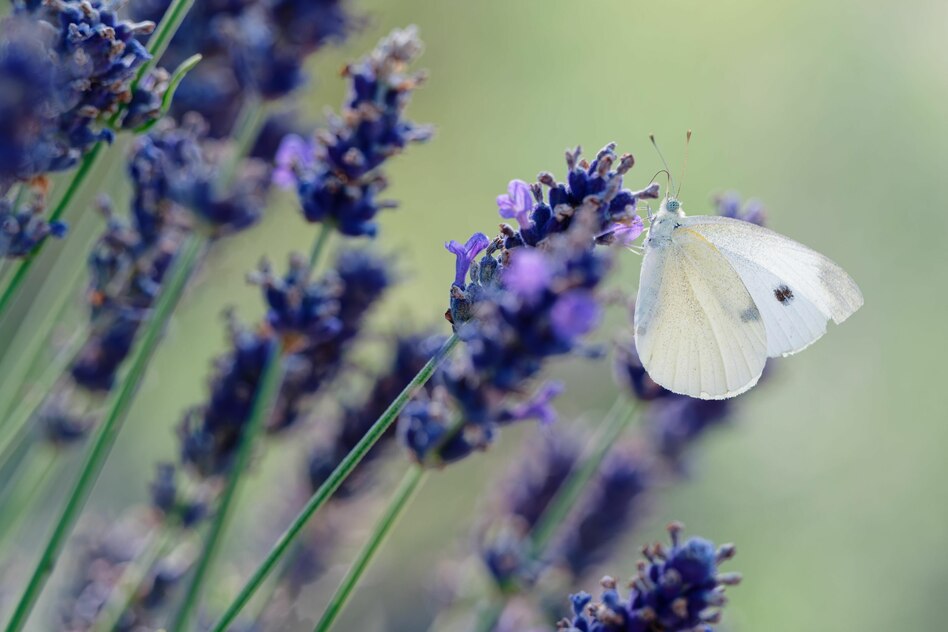
I have never seen so many white butterflies in Berlin as I did this year. Maybe it's the disappearance of songbirds; there are hardly any sparrows left. They are becoming fewer and fewer because there are fewer and fewer insects that they need to raise their young. On the other hand, their disappearance allows more insects to survive. It is possible that more and more allotment gardeners have stopped killing cabbage white butterfly caterpillars with poison.
The allotment garden colonies are also becoming fewer and fewer, giving way to new building projects. Nabu mentions a third possibility for the increased occurrence of cabbage white butterflies: These are not the large and small cabbage white butterflies that are native here, but rather a southern European species, the karst white butterfly, which has “only been spreading in our country for a few years”.
On mein-schoener-garten.de it says: “Identify and combat cabbage white butterflies”. On nabu.de, however: "Identify and settle cabbage white butterflies. Anyone who plants cabbage in the garden can hope that cabbage white butterflies will leave their eggs here." That’s the beauty of “Freedom & Democracy”: everyone can say whatever they want. The disadvantage: It usually only comes out as pros or cons. Death or life. And never whether, for example, the souls of deceased people turn into butterflies, as some indigenous tribes claim.
To combat these soul savers, mein-schoener-garten.de recommends protective nets, mixed cultures and parasitic wasps. And instead of spraying insecticides, it's better to collect the caterpillars from the leaves. But afterwards it's better not to throw them into the neighbor's vegetable garden, but rather kill them. The caterpillars of the large cabbage white butterfly have come up with something of their own to combat their predators: they absorb the hot mustard oils from their food plants, which are inedible for birds, and also scare them off with their warning coloring.
There are around a thousand species of white butterfly, 51 species live in Europe, although in this country you mostly see the small and large cabbage white butterfly. Their sexes differ: the large cabbage white butterfly has black tips on its forewings, the females' wings also have two black dots. In the small cabbage white butterfly, the male has a gray spot on the upper side of the forewing, while the female has two spots of the same color.
Both types of white butterflies were particularly feared after the war, because at that time a lot of cabbage was still planted and the caterpillars of the cabbage white butterflies lived on it, as their name suggests. While our diet slowly became more varied, the cabbage white butterfly caterpillars found it increasingly difficult to find food because less and less cabbage was being grown.
These butterflies are, so to speak, losers of peace and prosperity. But at some point they got the hang of things by switching to other cruciferous plants and the large nasturtium. On nabu.de it says: “If they occur in large numbers, they can also eat larger cabbage fields bare, but usually they only gnaw on the cabbage leaves, so that the vegetables can still be eaten.”
Elsewhere, however, the conservationists write: The caterpillars of the greater cabbage white butterfly “can consume an entire head of cabbage within a few weeks.” The small cabbage white butterfly, on the other hand, is “more flexible; its caterpillars also eat rapeseed, field mustard, rocket and more”. Nevertheless, it is considered the “more important pest” in agriculture and vegetable cultivation. It should also be mentioned that “the caterpillars are very sociable”. This is especially true for the large cabbage white butterfly, which sticks its eggs in groups on the underside of leaves, while the small cabbage white butterfly lays its eggs individually. Both caterpillars shed their skin four times, with their light yellow basic color becoming slightly darker each time.
The Schleswig-Holstein Chamber of Agriculture reports: "The largest contiguous cabbage-growing area in Europe is located in Dithmarschen on the west coast... In addition to white cabbage, there are smaller areas of red cabbage, savoy cabbage and cauliflower, as well as Brussels sprouts and other types of cabbage such as Chinese cabbage, broccoli and kale, as well as kohlrabi."
At least on the large cultivated areas in Dithmarschen, the caterpillars of the cabbage white butterflies will probably be combated with poison. While many butterflies can no longer eat in the adult stage and only live for a few days, the white butterflies have a proboscis with which they like to drink water in large groups from puddles. They also feed on the nectar of many flowering plants.
With the metamorphosis of the short-lived butterflies that no longer eat, one may wonder whether their much longer life as leaf-eating caterpillars does not constitute their very existence. As butterflies, all they care about is mating, after which they die, just like many flowers.
The philosopher Theodor Lessing said that some flowers could be described as “a fixed insect” – and conversely “many insects, especially bees and butterflies, as freely moving flowers”.
The cabbage white butterflies can be seen from March to late autumn, but there are two to four generations that mate one after the other during the eight warm months and lay eggs from which their caterpillars then hatch, with the last ones born surviving the winter in pupation.
The zoologist Lucie Cooke claims in her book “Bitch – A revolutionary look at sex, evolution and the power of the feminine in the animal kingdom” (2023): “the bigger the testicles, the more revealing the females”. With regard to the male of the greater cabbage white butterfly, this means: "It has testes that correspond to its appetite for cabbage plants, which is enormous. The male of the greater oxeye, for example, has comparatively tiny testicles. This reflects the different mating strategies of the females - those of the greater cabbage white butterfly are polyandrous [they practice "polymany], whereas the females of the greater oxeye are not."
It should be added: The mating behavior of the great white butterfly usually begins in the early morning hours when the males are looking for females - and not the other way around.
Read the full story at the source →
Source: taz