
Politics · taz · · 1h
Debate about high fuel prices: Government is negotiating a fuel discount
Deutsch (original) · Auto-translated to English
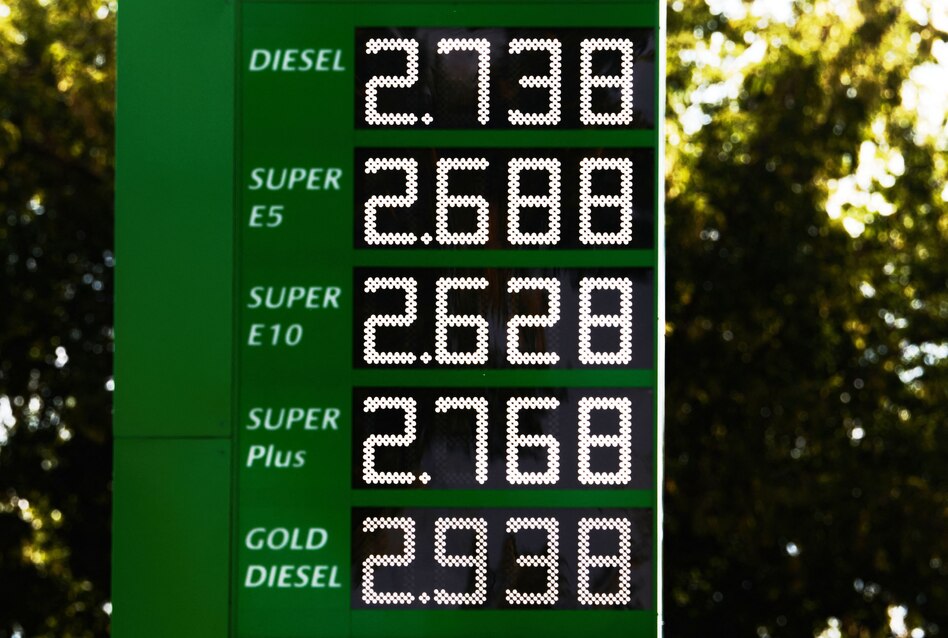
Shortly before the state elections in Mecklenburg-Western Pomerania and Berlin, the federal government is negotiating on Friday evening how the price of gasoline and diesel can be reduced through political means. Without a final agreement being announced, it was probably, among other things, a combination of a fuel discount and a fuel price cap. The Union and the SPD are now in a hurry because the high fuel costs may have played a role in the AfD's good performance in the state elections in Saxony-Anhalt two weeks ago.
Because of the Iran war and the oil companies' pricing policy, prices at gas stations have reached around 2.45 euros per liter of diesel and 2.30 euros for E10 gasoline over the past few days. A tank filling can then cost 120 euros or more.
The details of an agreement were still unclear in the evening. The fuel discount should start on October 1st and apply until the end of the year, according to media reports. In return, the energy tax could fall by 14 cents per liter. Together with the correspondingly lower VAT, the relief would amount to around 18 cents per liter. The largest part is likely to reach the drivers, but the gas station companies will probably also keep a part.
There was already a similar fuel subsidy from May to June 2026. The possible relief from the reduced energy tax was around 17 cents at the time. However, the gas station companies did not pass them on completely to the customers. The fuel discount cost the federal government around 1.6 billion euros.
The fuel price cap could take effect from January 1, 2027. It is possible that this will establish a government price cap that is based on the actual development of the oil price. Belgium and Luxembourg practice similar models. The SPD had spoken out in favor of it, while CDU Economics Minister Katherina Reiche was critical.
The tricky question with the price cap is: who bears the costs? If the upper limit is too low, the oil companies' profit margins will shrink or they will even incur costs. But the companies won't want to pay for them alone. So a few billion euros would have to flow from the state budget.
Since the normal federal budget, apart from the major investment programs, is already on edge, the additional expenditure is causing Finance Minister Lars Klingbeil (SPD) some problems. That's why negotiations on Friday also took place between the federal and state governments, which are supposed to make a contribution.
The reduction in VAT for petrol and diesel, which was recently favored by the Union, initially played no role in the reports. Chancellor Friedrich Merz and CDU General Secretary Franziska Hoppermann could imagine a reduction in VAT on fuel from 19 to seven percent. That would correspond to a reduction of 20 to 25 cents per liter at the petrol pumps. However, small and large companies benefit little from this because they have the VAT paid refunded by the tax office anyway.
There was also initially no mention of the discussed subsidies for petrol costs for all citizens or at least private households with low incomes. The federal government is working on a direct payment mechanism that would fundamentally make such transfers possible. The economists Monika Schnitzer and Gabriel Felbermayr spoke out in favor of this variant.
Read the full story at the source
Source: taz