
Germany · taz · · 2h
Civil War in Sudan: The Revolution That Ended in War
Deutsch (original) · Auto-translated to English
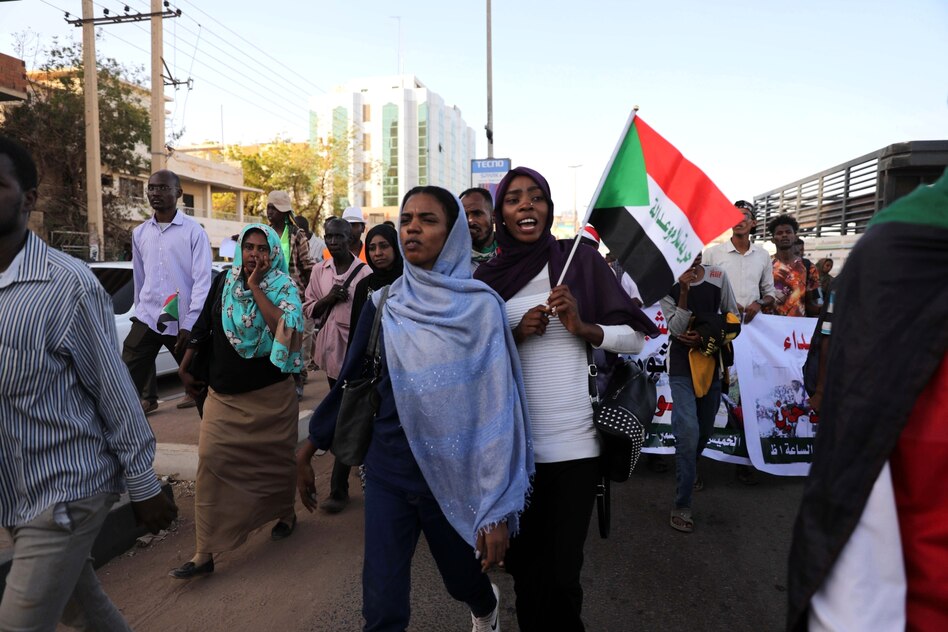
It was December 19, 2018 when the December Revolution began in Sudan. It began with protests against the country's economic collapse, led by the Sudanese Professionals Association (SPA), a coalition of independent professional associations. The SPA emerged underground in 2016 because independent trade unions were largely banned under the rule of long-term Islamist ruler Omar al-Bashir.
What began as a demonstration against rising living costs grew into a nationwide mass movement. The demonstrators' cry was: “Tasqut bas” – “He should just fall”. On April 11, 2019, Omar al-Bashir was overthrown - after 30 years of authoritarian rule.
The revolution is internationally considered one of the most peaceful in recent history. For many Sudanese, it was the most important revolution the country has ever experienced. But the story was not over with the fall of the dictator al-Bashir.
Colleagues from 16 African countries are taking part in the 5th Africa workshop of the taz panter foundation. A 64-page, elaborately designed magazine was also created. It can be ordered now by email to stiftung@taz.de with the subject “Afrika-Magazin” and your name and postal address. Thank you!
The magazine's texts also appear here on taz.de.
Would you like to support the taz Panter Foundation:
• or via the foundation’s account details:
According to leaked documents, leading representatives of the Islamist movement and parts of the military remained in close contact even after the change of power. Their common goal: to overthrow the revolution and the civilian interim government.
For more than two years they hindered the work of the civil government. They finally struck on October 25, 2021. The military staged a coup and spoke of a “correction of the revolutionary course”. In fact, it dissolved the interim government, arrested Prime Minister Abdalla Hamdok, and suspended the Committee to Dismantle the Power and Economic Network of the Former Regime.
But the coup initially met with fierce resistance on the streets. The very next morning, hundreds of thousands demonstrated, organized by the civil resistance committees. The motto: “No negotiations, no partnership, no compromises.” The international community froze aid payments to Sudan. A period of political instability followed. Hamdok briefly returned to office, but resigned permanently shortly afterwards.
Under pressure from the protest movement as well as the African Union and international mediators, an agreement was reached for a civilian government brokered by the UN transition mission UNITAMS. Above all, the Islamist movement and its allies in the military saw this as an opportunity to crush the revolution by force - with the help of Islamist militias such as the Al-Barab' ibn Malik Battalion.
Support the taz panter foundation and its international projects with a donation. Learn more
The agreement failed over the question of how the paramilitary Rapid Support Forces (RSF) should be integrated into the regular armed forces (SAF). Scheduled meetings were repeatedly postponed. The military leadership and the RSF increasingly carried out their conflict publicly. On April 11, 2023, the two sides were no longer willing to sit at the same table together. Four days later the first shots were fired. An SAF unit attacked an RSF base in the Madinat al-Riyadiya sports complex in Khartoum. A few hours later, Sudan was at war.
It is estimated that over 100,000 people have been killed since then. In August 2026, the UN estimated the number of people displaced by the conflict at a total of 11.3 million. Around 4.6 million people have fled abroad and around 6.5 million are on the run within the country. Most of those affected are women and children.
The collapse of public services is particularly dramatic. More than 90 percent of health and education facilities in the country are reportedly damaged or destroyed. Mortality is increasing rapidly, especially among newborns and children. The UN speaks of the world's worst humanitarian crisis.
All attempts at political mediation have so far failed - also because foreign powers keep the conflict going for strategic and economic interests through arms and drone deliveries, financial resources and political support.
The United Arab Emirates is considered the RSF's main foreign supporter. The militia reportedly receives weapons, drones and other military equipment through the UAE, as well as help recruiting foreign fighters. The Emirati government rejects the allegations. A key interest of the UAE is expanding its influence on the Red Sea and access to Sudanese gold and other economic resources.
Egypt, Iran and Turkey are primarily on the SAF's side. Egypt has close historical and security relations with the Sudanese army. For Cairo, the shared border and the conflict with Ethiopia over the use of the Nile are of great importance. Iran and Turkey have supported the SAF with drones and military technology. Saudi Arabia is also politically closer to the SAF, but at the same time is trying to act as a mediator and protect its interests on the Red Sea.
Moscow wants to expand its influence on the Red Sea and is seeking access to a naval base in Port Sudan. While Russian actors initially maintained relations with the RSF, Russia has increasingly moved closer to the SAF.
After the war began on April 15, 2023, Europe responded with humanitarian aid, sanctions against actors financing the war and diplomatic efforts to reach a ceasefire.
The start was the Sudan conference in Paris, organized by France, Germany and the EU. At the time, donors pledged $2.1 billion in aid and called for an end to the fighting and unhindered access for humanitarian aid.
This was followed by the Sudan conference in London in April 2025. A further 522 million euros were promised there. The Sudanese government boycotted the meeting because of the UAE's participation. The Berlin Sudan Conference in April 2026 finally ended with the provision of over 800 million euros. The final declaration called for an end to the war “without foreign interference.”
Despite all the conferences, billions in aid and sanctions, the war continues. Because it is not only a domestic power struggle, but also an arena for regional and international rivalries.
Read the full story at the source
Source: taz