
Germany taz
Movement in Berlin's Kantstrasse: Battleground bicycle lane
The back and forth of Berlin's transport policy can be seen on Kantstrasse. It is to be hoped that the new left-wing majority will finally put an end to this. more...
Deutsch (original) ·Auto-translated to English
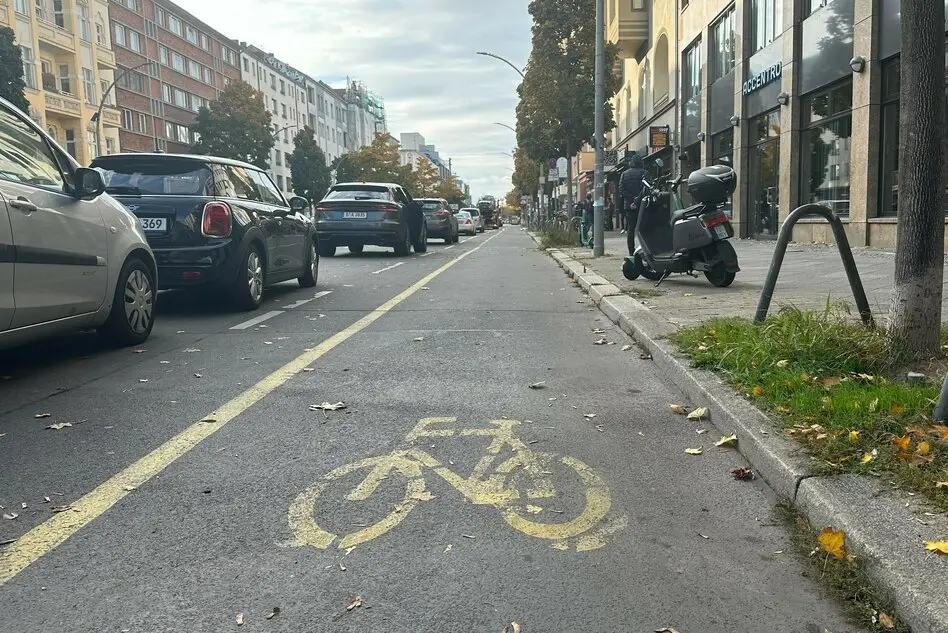
Berlin's Kantstrasse is not one of the capital's most prominent thoroughfares. Like the much better known Ku'damm, it stretches for kilometers through the middle-class west, but in many places it seems rather faceless. After all, you can eat good Asian food here - and watch a contemporary street fight for years.
As in the case of Friedrichstrasse, which was made a car-free zone by the Greens and promptly reopened to motor traffic by the then ruling CDU, the major breaks in transport policy become visible in Kantstrasse: Who is allowed to take up more space? And how much is the safety of weaker participants worth to us?
Cycling has never had an easy time on the busy east-west connection. That only changed after a terrible accident in 2020, in which a man on a bicycle was killed by another man behind the BMW steering wheel. Under pressure from civil society groups, a pop-up bike lane that is also suitable for pandemics was created, reasonably protected between the sidewalk and a former vehicle lane, which is now used for parking and deliveries.
This text first appeared in wochentaz, our weekly newspaper from the left!
Every week, wochentaz is about the world as it is – and as it could be. A left-wing weekly newspaper with a voice, attitude and the special taz view of the world. New every Saturday at the kiosk and of course by subscription.
That was under a red-green-red Senate - the CDU and the FDP, a small party active in the west of Berlin, predicted the economic end of the business at hand. Even if that didn't happen: When the CDU came back to power in 2023 and was allowed to regulate traffic throughout the city, it did its best to reverse the changes.
Senator Ute Bonde's house also used an innovative safety argument: the bike-friendly arrangement no longer leaves any space for the professional installation of fire engines. A Charlottenburg district councilor - and a party friend of Bonde - even threatened to ban living on the upper floors on Kantstrasse.
When it became apparent that the CDU would be one of the losers in the elections this September, the Senate administration accelerated its plans to reverse the cycle lane, which was still not “permanent” and remained in a quasi-pop-up limbo: it put out to tender construction work to create a bus lane that would be shared by bicycles. Now German Environmental Aid came onto the scene. She supported a citizen who feared a loss of security as a result of this with his urgent action before the administrative court.
The application was withdrawn when Bonde's administration assured that the bike lane would not be touched until the end of the year (when red-green-pink is expected to take over business in Berlin). At least that's how the environmental aid group understood it, which then - and not the only one - noted with indignation that vehicle delivery zones were suddenly marked off in the cycling area.
Last plot twist for now: A week ago, the “Resistance Collective”, a product of the decay of the “Last Generation”, simply grabbed a paint roller one night and made the fresh white markings unrecognizable with asphalt gray. The group announced online that they would not accept a scorched earth policy: “If you take the bike path away from us, then we will bring it back, meter by meter, piece by piece.”
In order to avoid further episodes - or even seasons - of the long-tiring drama “Kantstrasse”, it is urgent that the new left-wing majority in Berlin pull itself together. And then a temporary solution from the Corona days finally becomes the new normal.