
World · taz · · 56m
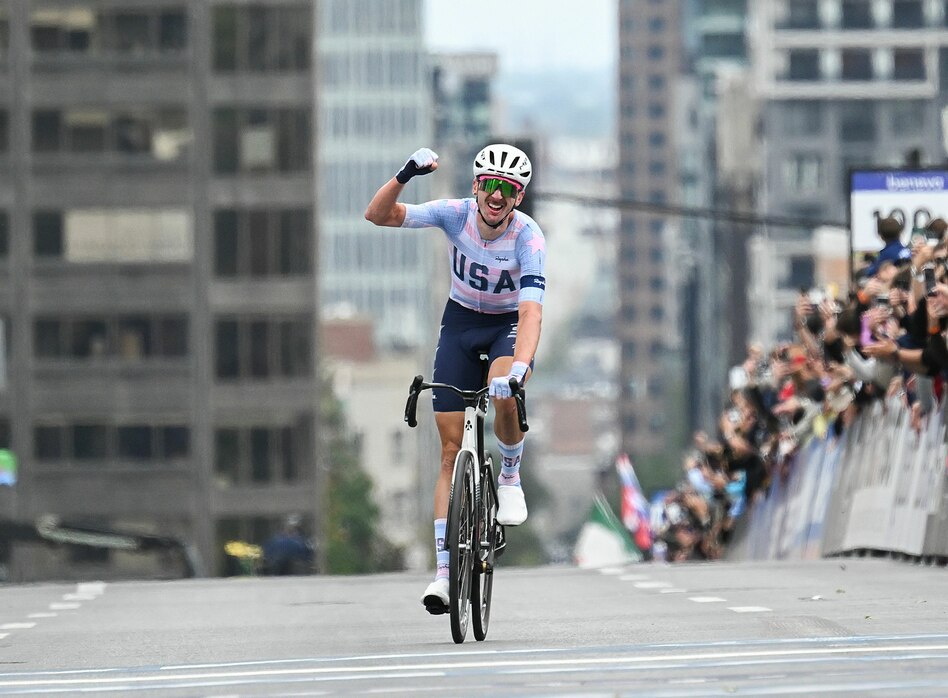
Surprise victory at the World Cycling Championships: wonderful radio silence
Deutsch (original) · Auto-translated to English
Rarely has a beaten man appeared so happy. Mathieu van der Poel “only” came third in Montreal. “Only third” is what you have to say for an athlete who has already become world champion on the road and gravel and has won the rainbow jersey in cyclocross eight times. But now the Dutchman only came third, one place lower than his grandfather Raymond Poulidor at the World Cup 52 years ago in the same city. PouPou's grandson smiled anyway. He was just proud of himself. “Of course I would have preferred to get the rainbow jersey,” he admitted. “But I did the race I wanted to do,” he told Dutch television.
And what a race he ran! With 80 kilometers to go, he followed a seemingly cheeky attack on the mud and asphalt by his long-term rival, Wout van Aert. One might have thought that the rivalry, which dates back to 2011, had clouded his senses for a moment.
However, there was a big plan behind it. “I wanted to make the race tough and, above all, I wanted to be ahead of the favorites’ attacks on the small ramp.” So he gratefully accepted his old rival's invitation - and distanced himself from him just ten kilometers later.
He still didn't win because the other favorites behind him didn't want to give up. They were largely on their own, which made the chase even more impressive.
The eventual winner McNulty was not left to his own devices. Three Americans made it into the top 10. And they harmonized perfectly. McNulty also benefited from his local knowledge and the route profile. He himself won the one-day race in Montreal in 2025. The former junior world champion in the time trial also had the perfect legs for the more than 30 kilometer long solo ride.
As an outsider, he was also met with arrogance in the ranks of the French team. They wanted to make the 273 kilometer long race difficult for their young star Paul Seixas right from the start and drove many helpers from other teams out of their shoes at enormous speed. However, Seixas' helpers also pulled the plug themselves. Early on, a tactical reaction was no longer possible. Seixas had to work hard himself. In the end he paid for this with convulsions.
The fact that it was so wild that even the highly favored Belgian team didn't seem confident in some race situations was also due to the lack of radio. Van der Poel, the most active driver in the World Championship race, clearly enjoyed it. "This is the best thing ever: racing without earplugs. That always makes for the most exciting races. Then you really have to drive instinctively and that's exactly what I like to do best," he exulted.
What was also missing besides the earplugs, and given the extremely exciting race, was probably missed by only a few honest hearts, was the great dominator of cycling. Tadej Pogačar did not start due to injury. Otherwise, the Slovenian's, of course, very epoch-making solo escapes would nip any spirit of initiative in the competition in the bud, but now all forces could develop freely. The French played their part with Seixas.
Van Aert's move was more of an act of desperation. Co-captain Remco Evenepoel admitted his discomfort early on. "I just wasn't good enough today. It's stupid that this happened on a day like this," Evenepoel summed up.
In general, the behavior in front of the microphones was an exact reflection of the race: tough, direct, without frills or excuses. One would like to see more races without radio - and a Tadej Pogačar who, after his recovery, will let the others do more for the benefit of cycling.
Read the full story at the source
Source: taz