
Germany · taz · · 3h
The Berlin Left calls for a luxury villa tax: 3,000 luxury properties would be affected in Berlin-Grunewald
Deutsch (original) · Auto-translated to English
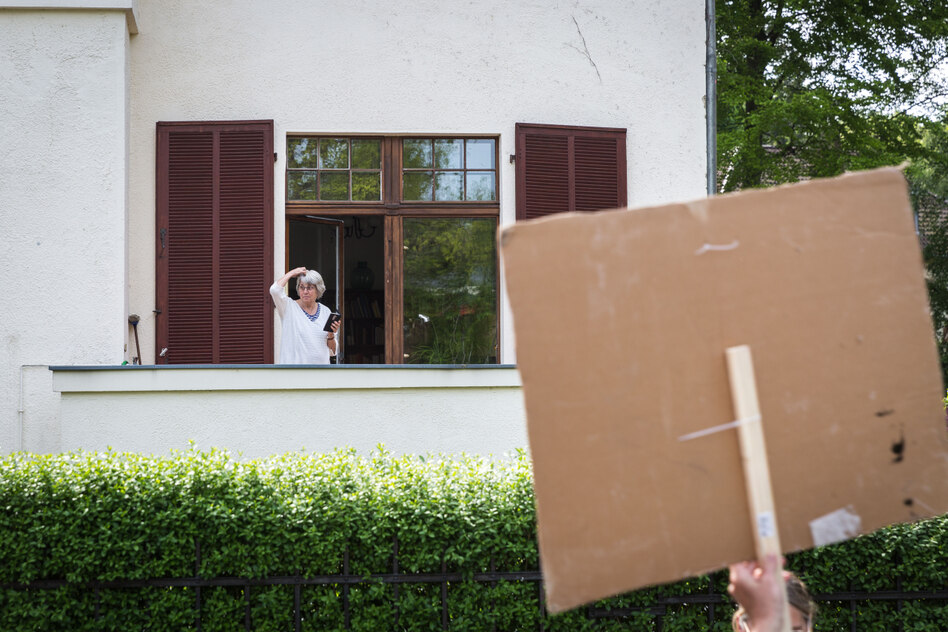
During the election campaign, the Left is calling for a luxury villa tax for Berlin. “We want to make the rich and super-rich in Berlin pay more,” explains Niklas Schenker, rental policy spokesman for the Left Party. And where villas are traditionally located - in the quiet Grunewald - a sprightly woman with a barking wire-haired dachshund on her hand complains: "Sure, only the rich should pay!"
Since the end of the 19th century, upper-class villas have stood around the magnificent Bismarckallee. At that time, the properties in the Grunewald villa colony were mostly sold with an area of at least 1,200 square meters, too expensive for the middle class.
Hildegard Knef, Helene Lange, Romy Schneider – they all lived in the tranquil district. Bankers, industrialists and the well-heeled educated middle class created their own cultural scene here at the beginning of the last century. Today celebrities like Sarah Connor, Paul van Dyk and Olli Schulz own properties. Even Justin Bieber briefly resided here in a magnificent villa in 2016.
"I don't understand why. Why four million of all things?", a chic young man shakes his head at the left's idea that a luxury villa tax would be due for properties worth more than 4 million. Together with his wife, he proudly pushes his stroller across Johannaplatz.
The Left, in turn, explains that they are aiming for an overall package of three measures: an increase in the property transfer tax, a higher property tax for luxury properties and a progressive increase in the second home tax. The reform package should bring in 300 million annually, for example to finance the rent cap for municipal apartments.
Simply increasing the property transfer tax from the current 6 percent to at least 6.5 percent - as in Brandenburg - would have brought 82.5 million euros more into the coffers last year. “We want to use the additional income in the millions, for example, to finance the development of our authority against illegal rents and to strengthen social housing in Berlin,” explains Niklas Schenker from the left-wing faction when asked by the taz.
On a side street from Johannaplatz, another couple is waiting in front of the high school for their son's parents' evening. They willingly enter into conversation. “Since I don’t own a villa, I don’t have a problem with that,” laughs the former SPD voter. He also considers himself and his family to be part of the “normal middle class”. Although the two live in Marienfelde, their son has to go to school in Grunewald. “I think in other countries the wealthy are much more willing to pay more.” And he himself would willingly give up more of his income, even if they don't live in a million-dollar villa.
The young couple with the mint-colored stroller, on the other hand, believes that Berlin has more of a spending problem. Their families have lived in the city for many generations and so they see problems in the increase in value of their parents' property in Zehlendorf. The house is now worth over a million euros, even though her parents once bought it for much less. The inheritance taxes could possibly force the two of them to sell the house, says the young doctor, visibly moved. “This may sound like a luxury problem, but for the people who live here, it's not a property worth millions, it's their parents' house,” agrees her husband.
The Left currently assumes that around 3,000 luxury properties in Berlin will be affected. It is not yet clear how high the actual revenue from this new tax would be. Hamburg is a pioneer; after introducing such a tax, the city state generated around 4 million in additional revenue last year. The left is more concerned with a steering effect in order to counteract speculation, explains the housing policy spokesman.
The outraged woman with her dachshund, on the other hand, is not opposed to the AfD, because the salaries of politicians like “Fritze Friedrich” are absurd. “Officials can also be asked to pay!” suggests her equally indignant companion. But with a villa tax it stops: “Those who live in a villa have done something for it!” Or they would have inherited and are now looking after their property. She claims that 140,000 millionaires left Germany last year and took “their bundled coal” with them. In fact, according to estimates by research firm New World Wealth, more than 140,000 millionaires emigrated last year - worldwide.
And according to the UBS Global Wealth Report, Germany ranks fourth internationally in terms of the number of millionaires, with around 2.6 million people who own more than a million US dollars - and the trend is rising.
In the luxury market, real estate companies advertise a “continuous increase in value” in the capital. Luxus.immo offers properties in Grunewald worth between 8,000 and 20,000 euros per square meter. Koenigsallee, just a few meters away, is one of the most expensive streets in Berlin. “Compared to other German luxury locations such as Munich or Hamburg, Berlin still offers an attractive price-performance ratio with significantly greater cultural diversity and international flair,” it says online. The total price for individual properties with gigantic parks ranges up to 25 million euros.
The chic American woman, whose small half of her house is near Johannaplatz, sees things completely differently than the two complaining women. She works in administration and is enthusiastic about the tax idea: “Yes, I think it’s a good thing.” She complains about the low property taxes in Berlin. For them, a villa tax would strengthen the solidarity of the welfare state and counteract social division, because for them it is unfair that billionaires pay relatively less taxes than the working middle class.
The young Pakistani who is just getting out of his leased Mercedes on a side street thinks so too. He works in a bank and has tax class I. “Half of my income goes towards insurance, taxes and pensions.” He also believes it is unfair that the middle class is burdened so heavily with taxes and is in favor of higher taxes on people who have “millions and millions”. He only lives in rent.
If you look around Grunewald during the week, you won't come across any super-rich people. Rather, a well-earning middle class often strolls home around the green Johannaplatz. The rich and famous either want to live in seclusion here or use the properties purely as investments.
Administrative employees, master craftsmen, doctors, pensioners and international people - of all those interviewed, two couples and a woman were vehemently against a villa tax and five respondents were clearly in favor of it.
There was only one thing everyone agreed on: Berlin has a housing problem.
Read the full story at the source
Source: taz