
Germany · taz · · 2h
Out for “ZDF Magazin Royale”: The royal gap
Deutsch (original) · Auto-translated to English
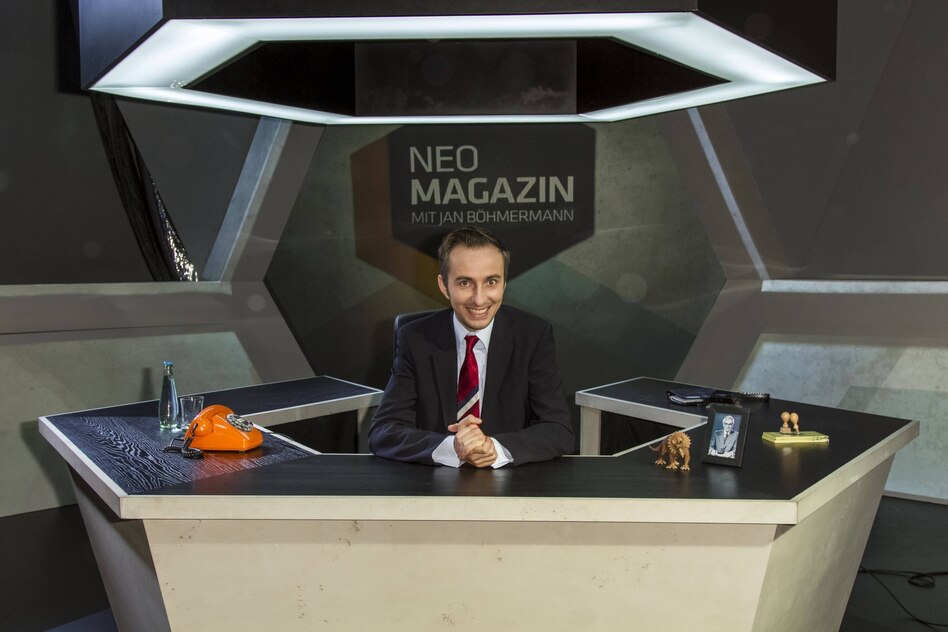
A 21-year-old who loves turtles and trains, and his father, who drinks several beers a day and cries at banalities: These are not real people, but actors, smuggled into RTL's reality format “Daughter-in-Law Wanted”. The “Neo Magazine Royale” revealed how the show exploits and exposes its protagonists. This requires investigative journalism. Jan Böhmermann did that. Especially from 2020, when the “Neo Magazin Royale” became “ZDF Magazin Royale” and the new team placed more focus on research. But now the show from the production company entertainment television Ehrenfeld UE GmbH is over: on December 18th, after around six years, the 187th and final episode will be broadcast on the main channel.
Some media suspect that this is due to increasing program complaints. Others suggest that investigative journalism and satire no longer work well together. It was actually very clear, insiders reported to the taz: Böhmermann, not ZDF, wanted to end the show. Böhmermann did not respond to the taz's query by the time of going to press. ZDF only announces that it is currently in “good discussions with Jan Böhmermann about a possible new show concept”. Böhmermann himself explains in a press release: “I would like to do another show again!”
But with what staff? According to the production company's works council, almost all of the currently around 80 employees will lose their jobs at the end of the year. A maximum of 3 people should remain employed in 2027. Some employees – from editors to human resources managers – no longer hope to be employed by the production company. On Linkedin they show themselves “open to job offers”.
Alexander Hesse, managing director of the production company UE GmbH, points out that the majority of the affected employment relationships are “limited to the duration of production, as is customary in the industry” and end with “the expiry of the agreed contract period”. All employees knew the “duration of the ZDF production contract of one year”. And: “According to the current status, a maximum of 4 operational dismissals will be announced.”
“The workforce and the works council were informed verbally by Jan Böhmermann and the managing director on Friday, September 18, 26, at 3 p.m. of the decision that the operations of the entertainment television Ehrenfeld UE GmbH will be almost completely discontinued from 2027,” the works council tells the taz. An hour later, the online magazine DWDL reported. Hesse says: “The workforce was informed promptly after Jan Böhmermann informed the ZDF management that he wanted to start something new and the resulting effects on operations were sufficiently foreseeable.”
Furthermore, according to Hesse, the employees were informed together about the “current situation and the further perspectives, which are unfortunately still unclear at the moment”. “The works council was informed in advance.” The workforce was informed about the possible scenario that the fixed-term employment contracts could not be extended in July and again at the works meeting on September 18, 2026.
A show based on one man ends and dozens of people lose their jobs. At the same time, it was precisely this increase in personnel that was the concept of the show from the beginning and distinguished it from formats like “extra3”.
The end of the show didn't come as a complete surprise. This time she only received a one-year contract and not, as before, multi-year contracts. The number of episodes per year was also reduced from 33 to 22. Could this also have something to do with repeated program complaints? In 2025, for example, the German federal police union DPolG complained together with trade unionist Manuel Ostermann about a program that discussed the reception of Afghan refugees and possible security problems with the federal police in Pakistan. These and many other program complaints were unsuccessful. But not a complaint from the Independent Commission for the Comprehension of Child Sexual Abuse about a program about alleged ritual violence. It resulted in the corresponding program being removed from the media library.
“I’ve been surprised for a while that ZDF had supported the show for so long,” says Katharina Kleinen-von Königslöw. She is a professor of communication sciences at the University of Hamburg. “No satirical format on public television has lasted so long and withstood such massive attacks.” One must remember that public broadcasting was “very cowardly” when it came to satire. For many years there was hardly any political satire, and the few attempts were usually stopped relatively quickly because the programs repeatedly caused outrage.
But for years, an audience of millions watched Böhmermann as he and his team uncovered letterbox companies or discussed poor working conditions in workshops for disabled people - while the journalism industry was actually in crisis. Because “ZDF Magazin Royale” effectively combines research with satire.
Precisely because classic media have lost their reach due to social media, among other things, formats like Böhmermann's are particularly relevant, says Kleinen-von Königslöw. They gave investigative research the necessary public attention. “This is the only way political or economic actors actually come under pressure to change their behavior,” says Kleinen-von Königslöw. “Without political satire, I don’t see how investigative journalism will regain its importance in the near future.” As a society, it would do us well to look at politics, economics and power with humor. “Because satire also helps people understand what social norms are.”
The hope is all the greater that a new program, or even better several programs, will close the royal gap again. Not only for the many employees, but also for the democratic public.
Read the full story at the source
Source: taz