
Germany · taz · · 3h
Coming to terms with the Jammeh dictatorship: A generation demands accountability
Deutsch (original) · Auto-translated to English
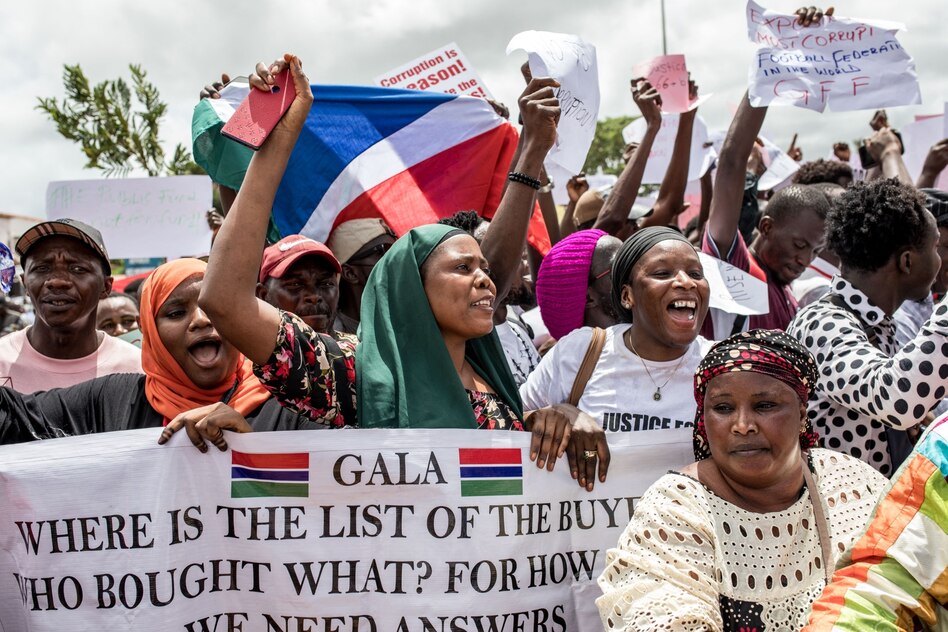
Dictator Yahya Jammeh ruled Gambia for no less than 22 years - with serious human rights violations such as extrajudicial killings, arbitrary arrests and the enforced disappearance of people. In 2016, current Prime Minister Adama Barrow won the presidential election and ushered in a new democratic era in the country.
A commission appointed by Barrow's government concluded in 2019 that Jammeh had embezzled or stolen the equivalent of at least $360 million in state funds since 1994. The Organized Crime and Corruption Reporting Project estimated the damage at around $975 million. The clique around Jammeh plundered the central bank, state-owned telecommunications and oil companies, the pension fund and foreign aid money and illegally exported tropical wood.
After Jammeh was forced into exile in 2017, Barrow's government confiscated and sold assets such as luxury cars and aircraft to return the assets to the state budget. But not everyone in the country agreed with her actions. There was a suspicion that assets were sold below their market value.
Colleagues from 16 African countries are taking part in the 5th Africa workshop of the taz panter foundation. A 64-page, elaborately designed magazine was also created. It can be ordered now by email to stiftung@taz.de with the subject “Afrika-Magazin” and your name and postal address. Thank you!
The magazine's texts also appear here on taz.de.
Would you like to support the taz Panter Foundation:
• or via the foundation’s account details:
In 2025, young people founded the citizens' movement Gambians Against Looted Assets (GALA). She demanded transparency about the valuation methods, the proceeds generated and the buyers. This had a special meaning for GALA: the sale was seen as a symbol of coming to terms with the Jammeh dictatorship. If these goods themselves were sold in an opaque process, the entire reparation process would be damaged.
“We had questions about the sale of these assets,” says GALA’s Omar Camara. “I firmly believe that we as citizens – especially we young people – need to ask these questions when institutions fail in their duties.” The group used peaceful protests to demand accountability and the rule of law.
Support the taz panter foundation and its international projects with a donation. Learn more
After the first GALA protests, the Gambian National Assembly decided in May 2025 to set up a special committee. He should investigate whether the sales of Jammeh's assets were legal and transparent.
But the population's frustration ran deeper - and the protests continued. GALA challenged the established structures and demanded a political culture of transparency and citizen participation. She relied on education via social media, political education, legal steps - and repeatedly calls for more accountability from the government.
Persistent power outages and problems with the water supply brought the state energy and water company Nawec under fire. GALA denounced the impact on households, businesses, schools and health facilities and a lack of accountability in the energy sector. The group presented a petition to Nawec representatives. The company then announced measures to stabilize supplies.
“We are determined to create new opportunities for citizen participation and to hold government institutions accountable,” says Omar Camara. The state responded with increasing repression.
In April 2026, GALA activists took to the streets in the city of Brufut. They protested against the arrest of siblings Ousainou Bojang and Amie Bojang. The two had previously been acquitted by the highest court of charges of killing two police officers in 2023. Now the police had taken her into custody again on their own initiative. The police used tear gas and water cannons against the GALA protests.
In May 2026, GALA activists gathered at the Youth Monument in the city of Kanifing to celebrate the anniversary of their movement's founding. The police arrested 13 people and clashes broke out. The incident sparked a new debate about the right to peaceful assembly in the country.
“When movements challenge the status quo and those in power, harassment, threats, intimidation and discrediting campaigns are a common response,” says Omar Camara. The challenge is to involve citizens in the struggles despite institutional resistance, disinformation and limited resources.
Gambia's dictator Jammeh came to power in a military coup in 1994. In the early years, his government was supported by Western countries. When they later withdrew, China established closer diplomatic relations. Qatar and other Gulf states temporarily invested in infrastructure projects.
The change of power in 2016 highlights the limits of international democracy promotion. Neither the initial support of Western states for Jammeh nor the later closer relations with China and the Gulf states decided the end of his rule. The decisive factor was broad domestic political mobilization. At the same time, the changing partnerships showed that authoritarian governments can find foreign policy support even if they violate democratic standards. For movements like GALA, this means that the fight for democracy and accountability must be waged primarily at home.
If an independent voice from civil society can help change laws, that is important, says Camara. “But changing people’s attitudes about accountability is even more important in the long term.” Camara says he believes real change is possible when young people come together with a common voice.
He emphasizes that democracy cannot exist through elections alone. Many young Gambians also expect jobs, justice and real future prospects from her. Whether these expectations are fulfilled will also depend on whether the population is willing to actively participate. “The decisions made today will shape the future of the country for generations to come,” says Camara.
Read the full story at the source
Source: taz