
Germany · taz · · 2h
Amateur clubs in the DFB: In the shadow of the Strahlemann at the top
Deutsch (original) · Auto-translated to English
Hardly anyone in German football is able to stir up enthusiasm like Jürgen Klopp. This has been noticeable since the press conference to nominate the squad for the first international matches under his aegis. In all his appearances, Klopp tries with a lot of verve to make people forget the sportingly boring months under his predecessor Julian Nagelsmann. And Klopp pulls out all the stops to achieve this - with big words and a symbolic cap from the supplier, which he wears like a service hat when he stands on the line at the games.
Klopp doesn't choose the big words for nothing: According to the former Liverpool coach, his team should help to create a feeling of unity again and reconcile the country through football. He doesn't even want to deal with the racism that parts of the team encountered after they lost the Nations League game against Greece. To do this, he wants to “take back the flag,” as he said. The black cap with the inscription “One in 83 million” is symbolic of this idea.
Since taking office, Klopp has not said a single word about a social field for which the German Football Association, as his employer, also bears responsibility and in which many of these 83 million people are active. This refers to amateur football with its almost 24,000 clubs organized under the umbrella of the German Football Association and their more than 8 million members. In their everyday club life they face problems such as dilapidated sporting infrastructure, fewer and fewer active volunteers and ever higher bureaucratic hurdles.
This is one of the reasons why the grassroots perception of the world's largest sports association has been rather negative for a long time. Not much is likely to change with Klopp as the guiding star of German elite football. Because there is an imbalance that is often overlooked. When public attention focuses on the association's headquarters in Frankfurt am Main, what is happening on the country's countless sports fields quickly gets lost.
The 180 million euro new building of the campus, as the DFB calls its headquarters, million-dollar severance payments for Nagelsmann and his coaching team and a suspected donation of one million euros to the foundation of Klopp's former employer Red Bull - just juggling such monetary contributions causes club representatives to shrug their shoulders. The taz asked some of them.
“In Frankfurt, money plays no role at all, while here we have to fight for every sports field and changing rooms have not been renovated for decades,” says Stephanie Hannemann, who is responsible for girls’ soccer at TuS Weitefeld-Langenbach in the Rhineland. She adds: "There is no cooperation and cooperation on equal terms with the DFB. It's not always about money, because the association can't solve everything with that."
Tim Frohwein, a sociologist and amateur football expert from Munich, shares this view: "There is a big gap between amateur and professional football. What happens at the top, especially when a lot of money is involved, can hardly be conveyed at the grassroots." Frohwein emphasizes: “Many people in amateur football are frustrated because the DFB no longer sees what they do.”
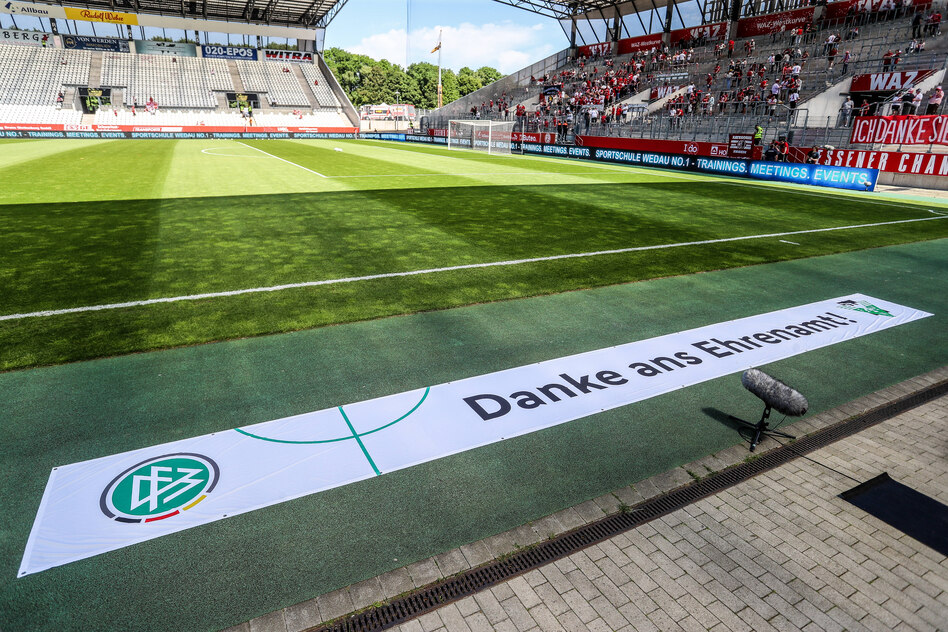
Recognition and appreciation – the DFB can gain a lot back with this, emphasize both Hannemann and Frohwein. “Posters, communication campaigns and action days are all well and good, but the DFB should represent the interests of amateur football more strongly in practice,” criticizes Hannemann.
For Frohwein, recognition should not just be a “gala at which a few volunteers are honored.” The DFB must show that it “really wants the people there” to “work together on problems and challenges and to say, we see what you are doing and we like it.” One thing is clear to him: "German amateur football has enormous potential. This particularly affects social functions, for example when it comes to the integration of children and young people. However, the clubs need concrete support on site, for example from sports social workers, because otherwise this potential cannot be leveraged."
Younis Kamil, a sports scientist with a doctorate and first chairman of ISC AlHilal Bonn, emphasizes that the DFB also needs to be protected because state and regional associations have at least as much responsibility here. Nevertheless, he says: "In the external perception, the DFB is too much about competitive football and not enough about social cohesion. Winning and losing are only parts of what the DFB has defined as its task in its statutes. The good and important steps in the area of social responsibility are not communicated sufficiently widely."
The campus in Frankfurt is representative of this development in elite promotion. Kamil can therefore understand that the DFB can be perceived as distant. “That fits with the social climate, because even in politics, ‘those up there’ are apparently far removed from people’s reality,” he says.
From there, Jürgen Klopp would like to set the direction of German football from now on and, as one of 83 million Germans, “take back the flag”. But if football is actually supposed to make a contribution to social cohesion, looking at the national team is not enough.
While the DFB team played its first four international matches under its new coach, thousands of volunteers worked on the country's sports fields and clubhouses to keep amateur football going - but without pay, not in front of a television audience and without the black cap of the DFB supplier. You can buy them on November for 30 euros. Amateur football will not benefit from this.
Read the full story at the source
Source: taz