
World · taz · · 56m
24,000 bars in Italy closed: The little escape, the time out – soon over?
Deutsch (original) · Auto-translated to English
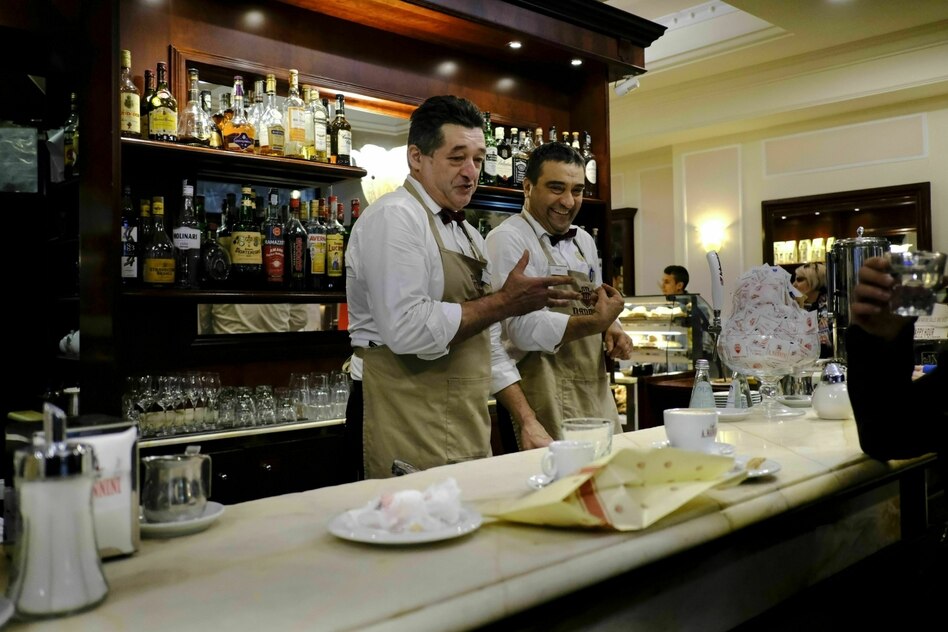
The train stops at Brenner. And that can take time now. Shall we do it? Sure, of course! Get off the train and into the first bar on Italian soil. A cappuccino in the classic brown cups, a cornetto con crema and the question for a glass of tap water, which is always answered in a friendly manner. Or, depending on the time of day, you might prefer an espresso; or a toast from the contact grill and an aperitif. And then the sprint back to the train.
That's how it used to be, in the old days, when a German cappuccino consisted of stale filter coffee with spray cream. There were things in the Italian bar that we wanted - and they were served with a casualness and speed that was immediately conveyed to you. The holiday began at the counter, standing there we became temporary Italians.
And the Italians themselves? According to new figures, they're no longer in the mood for their bars. Or rather, no money left for the little escape, the time out, for which the car is often parked in two rows - I'll be right back anyway!
Now there is talk of “economic desertification”. And that means that in Italy, which has chronically low growth and high inflation, it's now time to get down to business, to the bar.
The taz is an independent, left-wing and opinionated daily newspaper. We have been arguing in our comments, essays and debate texts since the taz was founded in 1979. We often cannot and do not want to agree on an opinion. That's why you'll find some completely opposing positions here - all part of the very broad left-wing spectrum of opinions.
24,000 of them have disappeared in the last six years, the equivalent of 11 per day. A good seven billion have been taken off the balance sheet in terms of consumption, employment and tax revenue. Only the south and the islands are still holding out. But even in the mega-tourist city of Rome, there are almost three thousand of the small bars missing that provide the population with social contacts over espresso, simply called caffè in Italy, from early morning to early evening.
But many reports on the topic say that they no longer go out at all; smart working is to blame. Technically, machines with “stable brewing pressure,” as the trade press puts it, have become smaller and are found in many households. Or you can just use the good old Moka machine on the stove.
You definitely save money. If you drink three espressos in the bar every day, add a morning coffee with brioche and an early evening glass of wine or beer, you'll quickly reach 10 euros a day, even in regions that are still cheap, or at least three hundred euros a month. And this in a country where gross wages fell by 1.6 percent between 1990 and 2024, while they rose by 35 percent in the OECD countries.
This poor Italy recently featured in an interesting debate. After a hike through a mountain valley in Lombardy, the writer and teacher Christian Raimo noticed the “desertification” mentioned above - economically, culturally and socially.
His observation that in the village bar - if there is one at all - there were only "six or seven older men in the morning who were already drinking at that time and trying to get on the bartender or throwing disgusting jokes at her" led to a remarkable shitstorm.
The bar, like the inn, is defended, even if you don't go there anymore. And the people who still do it can't be that bad, because they keep a kind of national shrine running.
The dreariness that now characterizes many bled-out rural areas in Europe should under no circumstances be described in such a way that the people there are exactly as they were made to be: dreary.
The Italian bar has always been an institution that transcends generations and classes. But if there are no more young people, the wealthy withdraw from the outskirts and the newcomers are not welcome - then the bar and with it a part of Europe will die.
Read the full story at the source
Source: taz