
World · taz · · 2h
1,682 days of war in Ukraine: How to survive a “drone safari.”
Deutsch (original) · Auto-translated to English
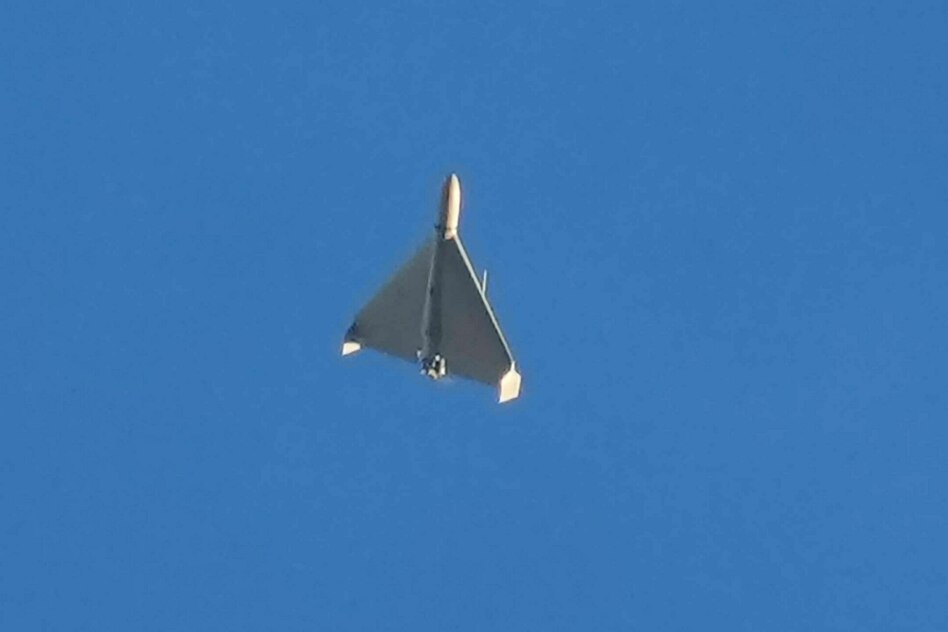
I n Ukraine, training for media professionals working in conditions of modern war is becoming increasingly popular. The key word here is “modern”. Because appropriate EU courses will hardly teach them how to protect themselves from drones. However, I have already taken part in the NGO 2402 Foundation's “Hostile Environment Awareness Training + drones” training program several times. And every time I learn something new.
For the people of Ukraine, war has become part of everyday life. Despite the mortal fear of air raids and fighting, life goes on: people go to work, school and university. They love, laugh, get married, have children, go on vacation. They mourn, worry - and hope for peace. ➝ to the column
How do you react when there is potential danger?
The most effective and at the same time most pointless advice from soldiers is: do not go where it is dangerous. But of course that's ultimately part of our journalistic work, because we can't completely stop going to Kramatorsk, Kharkiv or Kherson.
That's why the first safety rule is: Don't attract attention! For example, don't wear military clothing - although quite a few journalists would like to look like Rambo. The inscription “Press” on the car or clothing should also be avoided, although this is actually the international standard to underline the civilian status of a media employee. But the Russians are not interested in this “civilian status”: journalists at the front are often killed precisely because of this label. That's why it's better to hide the protective vest under a jacket or shirt.
Freelance journalist and local producer from the Ukrainian port city of Odessa. Since the beginning of the major Russian offensive in Ukraine, he has accompanied foreign journalists, including to the frontline areas. The author was a participant in an Eastern Europe workshop organized by the taz Panter Foundation.
Yes, and then of course the car. Absolutely no white, red, camouflage or armored SUVs. In Ukraine there are already informal rental companies where you can rent a twenty-year-old station wagon for trips to dangerous areas. The smaller a car is and the worse it looks, the less likely it is to become a target for an FPV drone.
During training we learned how to operate different drone detectors. They receive the signal from the drone camera and show exactly what the drone pilot sees on the display. If you see your own vehicle, you are in the drone's sights. Unfortunately, the detectors do not detect fiber optic drones. That's why you have to monitor the sky at the front in the old fashion with natural detectors - with eyes and ears. And you shouldn't forget the “lurking drones” that wait for you on the street and can take off at the right moment.
This article was made possible through the financial support of the Forschungsfonds Ausland e. V. You can support the research fund through a donation or membership.
How do you protect yourself when the drone is already close?
On the highway you can try to escape at speeds of over 100 mph. If this is not possible, you should get out of the car and look for the nearest shelter as quickly as possible: a cellar, a ravine or even a bush.
During the training there was the following simulation: You walk through a city wearing a heavy protective vest and helmet. You are chased by a drone. We were able to witness how the instructor piloted this drone. Like a real drone hunter going into a frenzy, he shouted: "He's shown himself! He's running, he's running!", and chased the participants. Most of us were essentially “killed”.
I am grateful for this tough school. Because on my next trip to the Donbas, real drones were circling above us. This even happened once during an interview and we had to retreat to a mobile shelter. Another time we climbed deeper into the bushes and tried to blend in with the surroundings. The most important thing is: we stayed alive.
In contrast to military personnel, journalists are not allowed to use weapons according to international regulations. A journalist must be perceived as an impartial observer and not as an armed participant in the conflict. However, when you're hiding under a bush from an attacking drone, you can't help but wonder: Should some of the rules be reconsidered?
Read the full story at the source
Source: taz