
Politics Real Media
Two films – ‘We, The Hated’ and ‘NAZA’
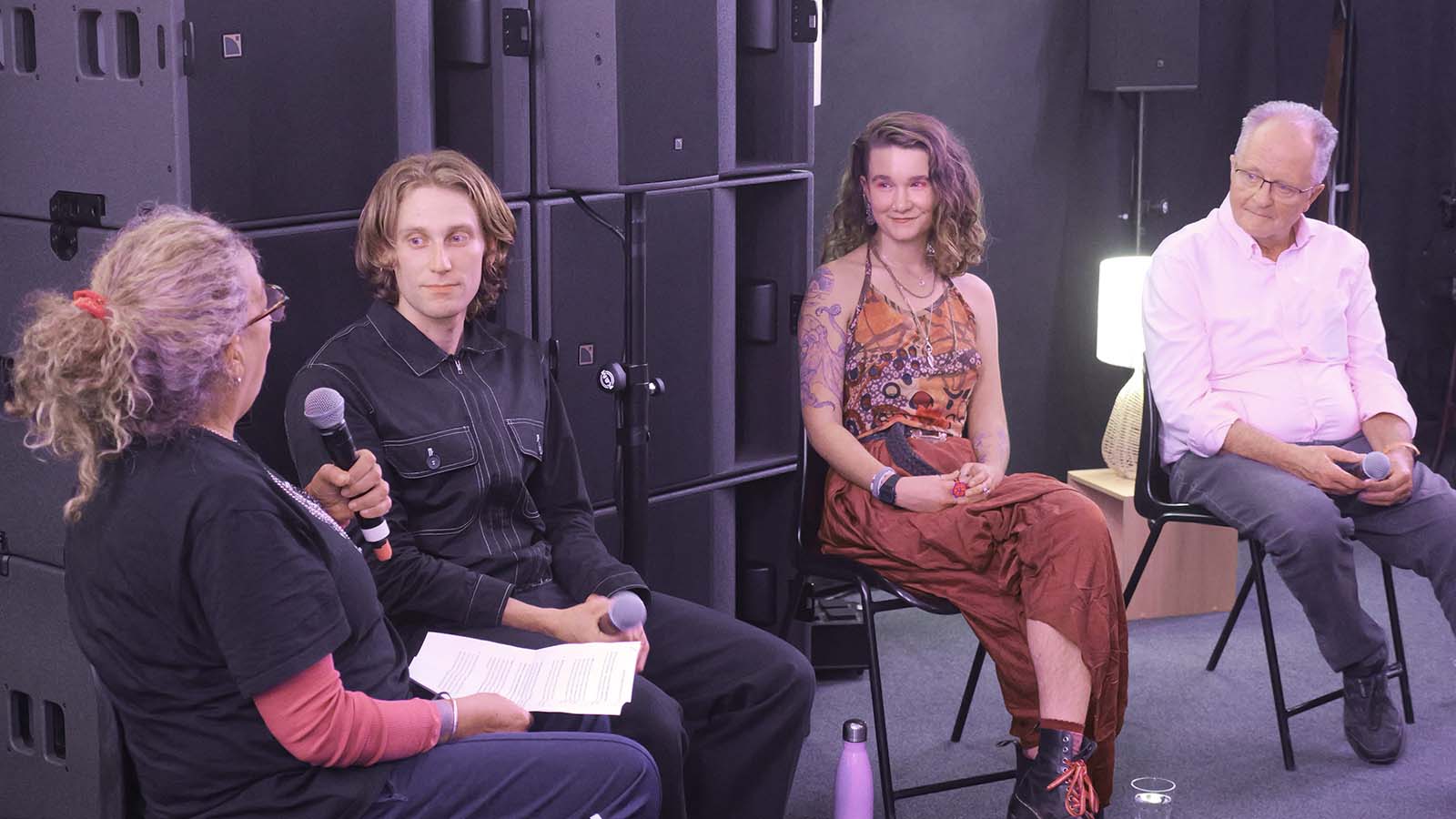
In the week that Andy Burnham’s Labour government announced the go-ahead for the North Sea Jackdaw natural gas field, director Rich Felgate held a private screening of his new film ‘We, The Hated” – v
English (original) ·Read in Deutsch ⇄
Our review - the voice from below versus the voice from above
In the week that Andy Burnham’s Labour government announced the go-ahead for the North Sea Jackdaw natural gas field, director Rich Felgate held a private screening of his new film ‘We, The Hated” – very much a personal and insider story of the rise and fall of the Just Stop Oil direct action group.
Ahead of its more general release, the film has had a very positive reception, screened as ‘official selection’ at several film festivals including Sheffield Doc Fest, it was the closing film at the CentScotDocuFest, and has just been awarded the BFI Filmmaker Award 2026.
During Real Media’s extensive coverage of the Just Stop Oil movement, Rich Felgate would often be seen capturing what must have been thousands of hours of footage. He could have created a timeline archival documentary, or a more action-packed depiction of the movement’s escalating publicity stunts. Either might have worked well, but instead, and what has undoubtedly attracted the professional accolades, is that Felgate and his editors have created a deeply personal story, centred around his relationship with JSO activist and co-founder Indigo Rumbelow, who was given a 30-month custodial sentence in May last year after being found guilty of ‘conspiracy to commit public nuisance’.
The film follows Indigo’s journey along with three other activists, focussing very much on the personal cost of standing up for climate justice. Jane was deeply aware of the upset she was causing her blind husband, who disagreed with her commitment to action. Phoebe faced the full wrath of the media after the Van Gogh ‘Sunflowers’ action (which caused no damage to the painting) – she described her TV interviews with GBNews as a worse experience than her two-year prison sentence. And vicar Mark described receiving ‘polite silence’ from the church – he received a 5-week sentence for slow marching.
A major theme emerging from the film was the corporate and state media’s constant vilification of JSO’s tactics, with claims that the group was ‘losing support for its cause’, while broadly avoiding any meaningful coverage of that cause itself. The coverage seldom promoted the evidence behind JSO’s claims, the mirroring of those claims by respected organisations such as the UN, WHO, IEA and IPCC, or the fact that so many people in the Global South were already losing their homes, their livelihoods, and even their lives, due to global climate change.
The private screening this week was packed with concerned individuals, including the co-founder of several climate movements, Roger Hallam, who is still under harsh licence conditions after spending several years in prison for his part in planning the JSO M25 actions. He and four others (the Whole Truth Five) received draconian and repressive prison sentences, attracting the attention and concerns of multiple human rights organisations and UN rapporteurs.
This film sets out to amplify the voice from below – the stories of ordinary people (albeit with unusual bravery, commitment and humanity) coming to the realisation that they hadn’t just picked a fight with the oil industry, but as Indigo said “with the government, the police, the courts, and the media”. With its warmly personal narrative, it confronts the ever more urgent reality that supposed democracies are choosing to crack down on dissent and criminalise protest, rather than to address the issues raised by citizens, who find themselves with no alternative other than to rebel.
When editing began, there was some hope, perhaps, of a happy ending – in April last year JSO announced the end of their campaign after the government had committed to no new exploration licences. But today, the Jackdaw North Sea gas licence has been authorised.
A Supreme Court ruling in 2024 (instigated by protest campaigners) forced decision-makers to include end-user carbon emissions in their planning assessments. The original environmental statement for Jackdaw in 2022 estimated total emissions of just over half a million tonnes for the period of its life-cycle. Due to the ruling this has now been revised to a figure more than 40 times greater. Every year, global emissions are still rising. Almost all climate scientists agree that remaining within the IPCC’s 1.5˚ warming barrier is now impossible, and that it has already likely been breached, well ahead of schedule.
The following evening there was a public screening of NAZA at the Kiln Theatre in north London. This film has been released with much interest and hype, following its longest ever standing ovation and the Special Jury Prize at the Venice Biennale Film Festival.
For the most part, this 77-minute documentary comprises a series of interviews, filmed on Tel Aviv rooftops and anonymising the interviewees – among them high-level Israeli intelligence officers as well as soldiers – that reveal an appalling level of criminal disinterest, built into the system, around civilian deaths and collateral damage.
The word NAZA comes from the Hebrew nezek agavi which means collateral damage. A NAZA number (meaning how many innocent victims are expected to be murdered) is assigned to drone and bomb strikes against alleged Hamas operatives in Gaza. The numbers are beyond sobering – often into dozens, sometimes into the hundreds – and they expose the genocidal lie that Israel has ever tried to minimise civilian casualties.
The officers refer to an AI-aided targeting system ‘Lavender’ which even in the earliest moments of Israel’s attack held detailed information on 37,000 potential human targets. The level of surveillance revealed is extraordinary and lends support for the often-touted description of Gaza as an open-air prison. One telling revelation was that Israel insisted on installing the Gazan telecommunications systems back in the 1960s – demonstrating their intent even then. In the film we hear soldiers speak about the widespread tapping of phones so they can simply listen in to conversations. Everything is analysed by AI and one system is known as “Where’s Daddy?”, because those words, heard from a small child, will give a clue as to when a target will arrive home, where his family will then face annihilation.
International law demands that civilian casualties must be proportionate to military gain, but testimony in the film suggests that the highest levels of government put pressure on the IDF to increase the number of targets, leading to huge numbers of people with tenuous links to Hamas becoming victims, slaughtered along with their families and friends. According to the whistleblowers the AI systems are built that way, as “it is easier to bomb them at home”.
There is no disrespect intended in this review to the journalist film-makers Yuval Abraham and Rachel Szor. They knew that they would face horrific abuse and the wrath of the Zionist war machine and Israeli media for their work, but went on to produce this document, deeply important in its role to further shift public opinion towards the inevitable conclusion that we are watching a continued Genocide. We also acknowledge the Jewish group Na’amod, for sponsoring screenings, especially among Jewish communities. They have been calling for an end to Israeli occupation and apartheid for nearly a decade.
The reservations we raise stem from a belief that journalism can only fulfil its function of holding the rich and powerful to account, when it properly platforms the voices of the oppressed, disaffected and vulnerable. Apart from a surprisingly short sequence near the end, where it tries to convey the real results of targeting decisions, by showing a distraught Palestinian father crying out the names of his children as he searches amongst the rubble of his bombed home, the only other sense of victimhood is in the repeatedly voyeuristic shots of Tel Aviv high-rise apartments, presumably meant to elicit discomfort. The artifice that a camera watching comfortable Israeli citizens through their apartment windows is in any way parallel to the constant noise of drones hovering day and night above the devastated homes in Gaza, armed and poised to kill at any moment, sums up why we describe this film as the view from above.
The filmmakers have responded to criticisms that there are no Palestinian voices in the film, and that is not our main criticism. What we say is that there were still ways, within the constraints the directors set themselves, to alter the angle of sight. While viewers may leave the cinema with a sense of horror about the technology, there is a real danger that by giving an unconditional voice to the operatives who spoke, there is also an element of empathy because they were ‘just following orders’.
Let us please always remember who the real victims are here, and not allow The Guardian or the no doubt comfortably well-off jurors of major film festivals to normalise or excuse Genocide. The software described in this film is designed by people who know what they are creating.
According to Dr Shir Hever, an expert on the Israeli weapons company Elbit Systems, software of this type was being constantly “improved” at the TDL facility in an Elbit factory in Ulm in Germany, the subject of a direct action by five activists who broke in and allegedly committed €1 million of damage there in September last year. Those five have been in German prisons ever since, and have now been subjected to what lawyers describe as a ‘show trial’. Meanwhile the 24 Israelis interviewed in this film, many of whom are directly complicit in the most heinous of war crimes, remain anonymous, their consciences perhaps salved by their whistleblowing, and The Guardian continues to tell us how many Palestinians ‘have died’ rather than how many Palestinians Israel ‘has killed’.
NAZA is on release now, and will also be available for free screenings from next month. Despite our criticisms, we urge communities to seek it out and watch it.